Washington pauses key defence cooperation mechanism with Canada, raising concerns while Carney insists alliance stability remains intact for now.
-
US suspends Canada defence board amid diplomatic tensions
-
Carney downplays Washington’s decision, urges calm bilateral relations
-
Canada assesses impact on ongoing defence cooperation frameworks
-
Analysts warn rising strain between Washington and Ottawa ties
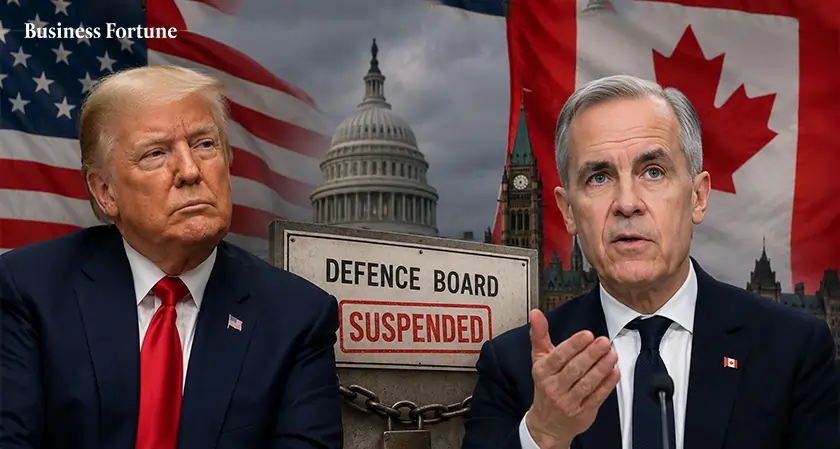
Prime Minister Mark Carney’s government is under renewed diplomatic pressure after the US decided to suspend a long-standing bilateral defense cooperation mechanism with Canada, with Carney downplays Washington’s decision and raising concerns about the future of North American security coordination.
The Permanent Joint Board on Defense, a body created in 1940 to coordinate military planning between the United States and Canada, will be temporarily suspended and reviewed. The board has long supported cooperative threat charges and long-term continental security planning, making it one of the most important foundations of defense partnerships between the US and Canada.
According to claims, US representatives justified the decision by expressing worries about Canada's defense commitments, including what they described as insufficient progress toward fulfilling agreed-upon capabilities and budget targets. An already delicate bilateral relationship has been further strained after a top U.S. defense official stated that there were "gaps between rhetoric and reality" in alliance burden-sharing expectations.
The declaration coincides with Canada's ambitions to raise military spending dramatically. Carney's government has committed to meeting NATO's 2 percent of GDP defense spending target by 2026, speeding up previous deadlines and justifying the change as a reaction to growing insecurity around the world.
Prime Minister Carney has attempted to minimize the implications of the suspension despite the U.S. decision, characterizing it as a procedural review rather than a breakdown in unity. He has made it clear that Canada is still fully committed to NORAD and other important defense alliances and that senior-level communication with Washington will continue.
Increased investment in Arctic defense, domestic military procurement, and new industrial ties with allies are just a few examples of the major reorganization of Canada's overall security strategy, according to officials in Ottawa. The administration has also cited recent efforts to increase Canada's strategic autonomy within current alliances and fortify its place in NATO.
Analysts hope the pause reflects rising US pressure on allies to raise defense spending and minimize reliance on American capabilities. Also, it highlights a broader reevaluation of burden-sharing within NATO and North American defense frameworks, especially in light of the ongoing progress of worldwide security threats.
Defense planners on both sides of the border are expected to pay close attention to any disruption to the Permanent Joint Board on Defense's work because it has traditionally been seen as a stabilizing institution in Canada-US military relations.
Both governments are expected to continue consultations for the time being, with officials indicating that the review may result in modifications rather than a permanent suspension. However, the incident highlights a more circumspect and transactional stage in one of the closest defense alliances in the world.
Thus, Business Fortune is of the view that this signals a more transactional era in Canada-US defence cooperation ahead.


.webp)