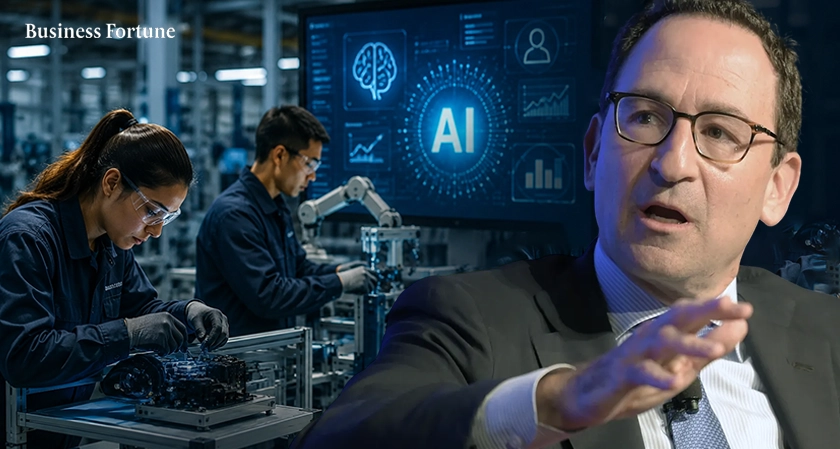
Blackstone COO Jon Gray says AI may replace many office jobs but it is also creating huge demand for skilled trade workers as companies invest billions in data centers and AI infrastructure.
The conversation around AI usually starts with fear. People worry that automation will replace office jobs and change entire industries. But Blackstone President and COO Jon Gray believes there is another side to the story that many people are overlooking.
Blackstone COO predicts future AI economy will depend on skilled workers. Speaking at the Milken Institute, Gray said that while generative AI could replace millions of white-collar jobs, it is also creating a major rise in blue-collar jobs connected to building data centers and other physical infrastructure.
So where are the new jobs actually coming from
Gray pointed to QTS, one of Blackstone’s major data center companies, as a clear example of this shift. QTS operates and develops more than 75 data centers around the world, and the demand for workers is rising fast. About 10,000 people were working on QTS construction sites last year but that number is expected to grow to 40,000 by the end of this year.
According to Gray, AI is not only about software and digital tools. It also depends on huge physical infrastructure projects, from energy systems to massive data centers. “Between the energy, the physical infrastructure, the data centers, the reindustrialization, something very powerful is happening,” Gray said.
Why AI companies are spending billions on data centers
The rapid growth of AI is creating huge demand for data centers across the world. According to McKinsey & Company, global spending on data centers could reach nearly $7 trillion by 2030, showing just how fast the industry is expanding. As more companies invest in AI infrastructure, the need for skilled workers is rising sharply. Electricians, pipefitters, and HVAC technicians are now playing a key role in building the systems that power the AI economy.
If the demand is rising, why is there still a shortage
That is the biggest challenge, according to Gray and other industry leaders. Even though wages are increasing and opportunities are expanding, companies still do not have enough skilled workers to fill these jobs.
The U.S. Department of Education estimates that nearly 2.1 million skilled trade jobs could remain vacant by 2030. If the shortage continues, it could cost the economy almost $1 trillion every year.
Many experienced workers are reaching retirement age, while fewer young people are entering trade careers. Now, as AI infrastructure projects grow rapidly, the demand for electricians, plumbers, technicians, and construction workers is rising much faster than the available workforce.
Companies respond to the demand
The growing demand for skilled workers is now forcing companies to take action. Gray believes businesses cannot ignore the problem anymore, especially as AI infrastructure projects continue to expand.
To help close the gap, Blackstone’s charitable foundation launched a $3 million training program called Blackstone Skilled Futures. The initiative works with Arizona State University, Maricopa Community Colleges, and local nonprofits to prepare more workers for skilled trade jobs. At the same time, QTS is continuing to expand its data center projects in Phoenix.
Other companies are making similar moves. Lowe’s has pledged $250 million to train 250,000 people in trades for next 10 years. BlackRock has also announced a $100 million investment in skilled-trade training programs. Lowe’s CEO Marvin Ellison believes, while automation may replace many office and administrative roles, skilled trades could become one of the strongest sources of new jobs in the coming years.
As Business Fortune observes, Gray’s bigger message is that AI is not only changing technology, it is also changing the job market itself. While many people focus on digital careers, some of the biggest opportunities may actually come from building the physical systems that power the AI economy.


.webp)