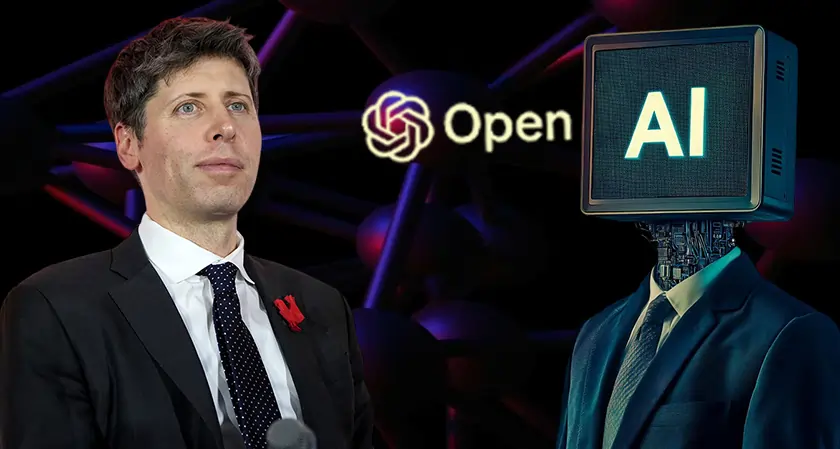
The company is revising its US Department of Defense contract to prevent domestic surveillance and strengthen safeguards after public and internal concerns.
OpenAI's CEO, Sam Altman, acknowledged that the recently signed contract with the US Department of Defense was hurried and poorly communicated, and the company has moved swiftly to amend it.
On Friday, the Pentagon and the company reached an agreement that allows the Pentagon to use the company's AI models in sensitive military operations. The agreement was reached just hours after US Defense Secretary Pete Hegseth and rival Anthropic's negotiations broke down.
A few days later, Altman admitted his mistakes. In order to ensure that its AI systems shall not be purposely used for domestic surveillance of US individuals and natives, he said OpenAI was negotiating with the Defense Department to alter the contract. He acknowledged that the rollout looked opportunistic and sloppy, adding that better communication was necessary due to the intricate nature of military AI deployments.
Altman highlighted that OpenAI thought the current US legal system was robust enough to stop abuse. However, he acknowledged the worries expressed both publicly by critics and internally by staff members who were concerned about the possibility of mass surveillance made possible by AI.
The agreement will forbid intentional tracking or surveillance of US individuals under the amended provisions, including by using personally identifiable information obtained through commercial means. Also, Altman confirmed that intelligence agencies like the National Security Agency will not be included in the agreement for the time being.
Contractual safeguards apparently caused Anthropic's talks with the Pentagon to fall through. Dario Amodei, its chief executive, had pushed for stringent bans on deadly autonomous weaponry and widespread domestic surveillance. Anthropic contended that current legislation might potentially allow widespread AI-based surveillance, arguing instead for more promised restrictions, while the Defense Department advocated for language permitting all lawful use.
According to Altman, OpenAI felt more at ease depending on legal safeguards than on specific restrictions found in the contract. He did, however, acknowledge the delicate nature of using advanced AI systems in military applications and stated that the corporation would move forward more carefully.


.webp)