Best Companies of the year 2026
Business Fortune
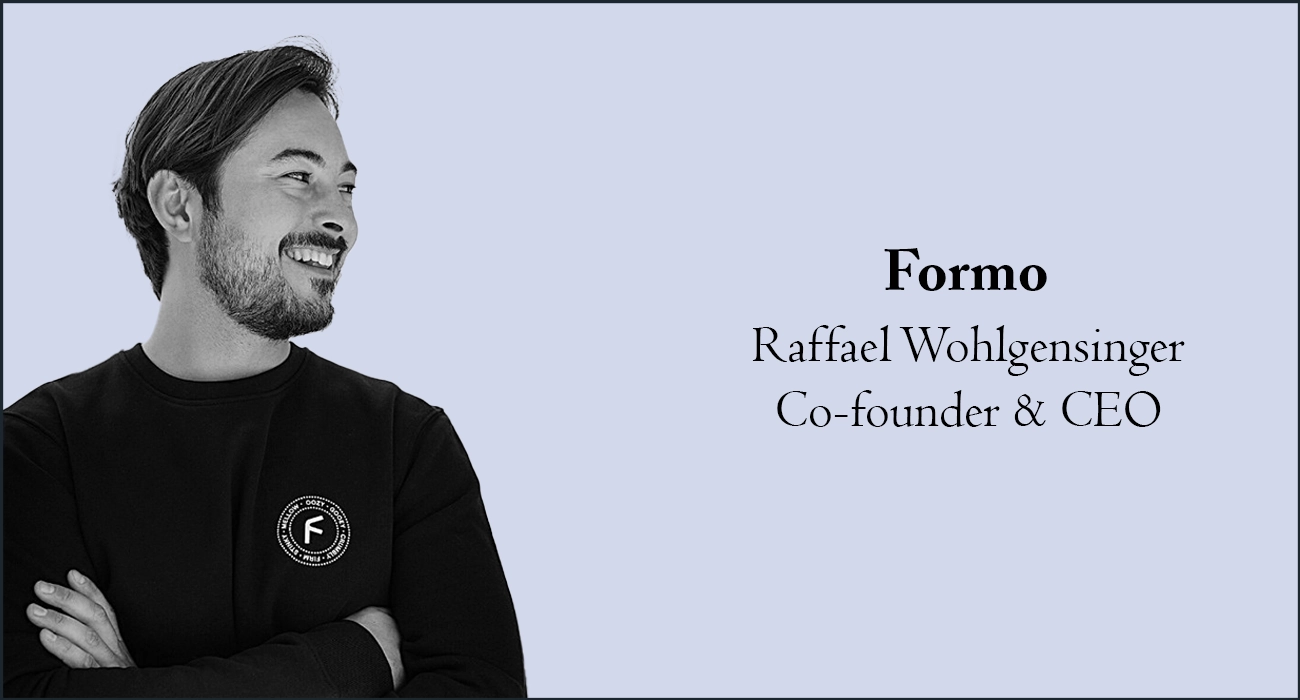
Founded in 2019 in Berlin, Formo is part of a new generation of food biotechnology companies rethinking one of the world’s oldest food systems: dairy. Rather than working within the constraints of traditional livestock farming, the company uses precision fermentation and microbiology to produce dairy proteins without cows.
At its core, Formo is not trying to imitate cheese—it is attempting to rebuild it from the molecular level. By programming microorganisms to produce nature-identical milk proteins, the company creates the foundation for cheese that behaves, tastes, and melts like conventional dairy, but with a significantly lower environmental footprint.
From its headquarters in Germany’s fast-growing FoodTech ecosystem, Formo has quickly positioned itself as one of Europe’s most closely watched cellular agriculture startups.
Precision Fermentation as a New Food System
Formo’s approach sits at the intersection of biotechnology and food tradition. Instead of relying on animal milk, the company uses fermentation processes in which carefully selected microorganisms are “trained” to produce dairy proteins. These proteins can then be combined with fats and cultures to create cheese-like products.
This method—often referred to as precision fermentation—is widely seen as one of the most promising alternatives to industrial dairy. It allows companies like Formo to decouple dairy production from livestock farming entirely, potentially reducing greenhouse gas emissions, land use, and water consumption associated with conventional milk production.
While the technology is highly advanced, the company’s ambition is simple: to make animal-free dairy indistinguishable from the real thing in taste and texture, not just an alternative, but a replacement.
The Cheese Challenge: Taste, Scale, and Acceptance
Unlike plant-based substitutes that often struggle to replicate dairy’s complexity, Formo focuses on producing real milk proteins rather than plant analogues. This distinction is critical. It allows the company to create cheese with more authentic melting behavior, creaminess, and flavor development.
Its early products have centered on softer cheeses, developed using fungal fermentation techniques and traditional cheese-making processes adapted for novel proteins. More advanced products, including harder cheese formats, are part of its longer-term roadmap as production scales and regulatory pathways evolve.
However, like much of the cellular agriculture industry, Formo operates within constraints. Regulatory approval for novel fermentation-derived dairy proteins remains a slow process in many markets, particularly in the European Union. As a result, the company has taken a phased approach, bringing early products to market while continuing to develop next-generation dairy proteins behind the scenes.
Scaling Biology: From Lab to Global Food Infrastructure
Beyond product development, Formo is increasingly focused on industrial scale-up—a challenge that defines the entire category of alternative proteins. Producing fermentation-derived dairy at commercial volumes requires significant bioreactor capacity, optimized microbial strains, and cost-efficient downstream processing.
To support this transition, the company has attracted substantial investor backing, including participation from major food industry stakeholders and climate-focused venture capital firms. This capital is being used not only for R&D, but also for building infrastructure capable of bringing fermentation-based dairy into mainstream retail channels.
Formo’s long-term ambition is not niche positioning, but system-level replacement of conventional dairy components across multiple food categories.
A Different Kind of Food Revolution
What sets Formo apart from earlier waves of “alternative dairy” companies is its refusal to treat compromise as the end goal. Rather than designing substitutes for ethical or environmental consumers alone, the company frames its products as mainstream food innovations—designed for taste-first adoption.
This reflects a broader shift in FoodTech: sustainability alone is no longer enough. The next generation of food systems must compete on cost, accessibility, and sensory experience. Formo’s strategy sits squarely in this transition, where biology becomes infrastructure and fermentation becomes manufacturing.
If successful, the company’s work could redefine how dairy is produced globally—not by replacing consumers’ habits, but by replacing the biological systems behind them.


.webp)