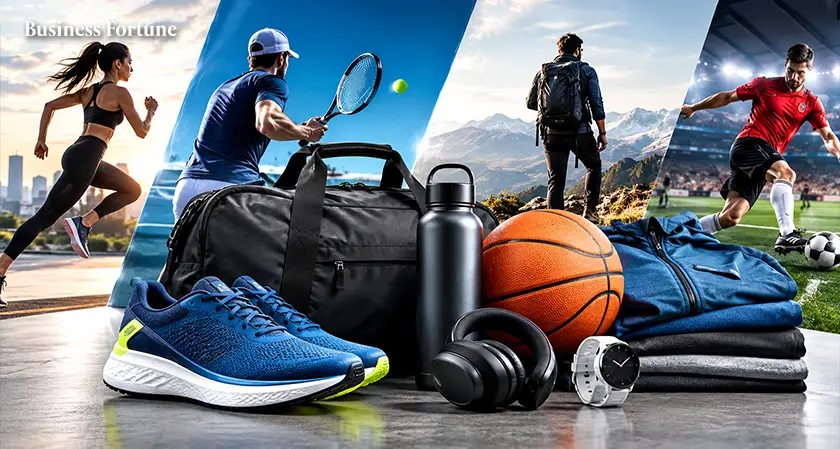
What do today’s athletes really want from their gear? The Top Sports Apparel and Gear Companies are answering with smarter designs, bold ideas, and performance-driven products
Sports apparel is not only the attire that you wear while engaging in the physical activities like . Nowadays, running shoes are casual wear, and team jerseys are used as street clothes, and activewear is considered everyday clothes. On the other hand, athletes demand quality material, light shoes, innovative design, and products tailored for specific sports.
The Top sports apparel and gear companies are responding to this change in different ways. In this Business Fortune article, we look at the major names shaping the industry in 2026, from long-established giants such as Nike and adidas to fast-growing brands such as On, Hoka, and Lululemon. We will also look at what makes these companies successful, how competition is changing, and where the sportswear market could go next.
The Sportswear Market is Getting Bigger
The global sportswear market is expected to reach about $437.4 billion in 2026, showing how far the industry has moved beyond traditional sports clothing. Growing interest in fitness, running, outdoor activities, and athleisure continues to bring new customers into the market.
The expansion has led to changes in consumer expectations. The demand is now for sportswear that is comfortable, functional, stylish, and frequently wearable even when not exercising in the gym. There has been scope for both the largest manufacturers of sportswear and smaller companies with their own identity. The consumer gains choices but for the business world, this means that getting attention is a lot tougher now.
Nike
Nike is still one of the most renowned sportswear companies in the world due to the large range of shoes and clothing lines it has, major athletes it works with, sponsorship of sports events, and the brand itself, which has played a part in shaping sports and pop culture for decades.
However, 2026 has been a difficult year for Nike. The company has been experiencing poor sales performance in certain regions such as China and competition from other brands that have been performing better in running and lifestyle segments.
It is important to note that being a leading athletic brand does not mean that it will always remain dominant. The needs of consumers are dynamic and a global leader needs to keep impressing its customers.
adidas
One of Nike's main competitors is adidas. The company ranks among the top manufacturers of sportswear in the world, its popularity being associated with its products for football, running, training, basketball, and fashion.
The financial results of the company in 2025 revealed impressive change. adidas demonstrated €24.81 billion net sales. The footwear sales were up 12% while the apparel sales went up 15%. Running has performed exceptionally well due to such items as Adizero.
The firm also expects further expansion in 2026, and that its local strategy in various markets will prove to be critical. This is important since sports tastes differ in each market. In one market, football might be key, in another running, and in yet another, cricket or outdoor sports. Adidas proves how a global brand can stay recognizable while adapting to local demands.
Puma, Armour and ASICS
There is no need for a successful sportswear company to compete in all things. Puma has been able to create an effective presence in the areas of sports, fashion, football, motor racing, and lifestyle. The company's flexibility of switching from performance products to fashionable ones has kept them relevant among different markets. It keeps concentrating on its brand-based strategy as it moves into the 2026 competition period.
Under Armour is a company with a contrasting history. Under Armour has earned a good reputation through the marketing of functional clothing and apparels designed for sports people. Its 2026 annual report indicated that the firm had been working to simplify its structure and concentrate more on where it competed and invested.
ASICS, on the other hand, is strongly linked to running and performance shoes. Running has emerged as one of the most strongly competitive areas of the shoe industry, with more and more customers desiring cushioning, comfort, lightness, stability, and special shoes.
In combination, all of these companies demonstrate the continued importance of good positioning. Customers remember a brand for what it represents.
New Names Are Changing the Conversation
Some of the most fascinating developments in 2026 come from brands which have not always been regarded as industry leaders in Sports. On has grown into a major player in high-end running shoes and is now expanding its business into the field outside running, partnering with the French soccer player Kylian Mbappe. This partnership gives greater visibility to the Swiss company as it tries to build a stronger presence in football.
Hoka is also known for having an identity related to running, as well as having unique shoe designs. New Balance has been combining their performance products with lifestyle appeal, while Lululemon has had success with their premium activewear.
The rise and growth of these brands is altering the definition of the best sportswear brands. The consumer now has options other than the usual dominant brands. Consumers can discover sportswear brands through running groups, social media, athletes, content creators, and local sports culture.
According to a 2026 brand report by L.E.K. Consulting, the top brand for men's athletic wear in the U.S was Nike followed by adidas and Under Armour, although there are some newer brands like Alo Yoga and Vuori that are gradually catching up.
Who Are the Leading Athletic Apparel Companies?
But there is no one single company that dominates all areas of the market as each company is dominant in its specific sector of the market. Nike still holds a significant presence globally in footwear and clothing. adidas maintains a solid presence in football, running, sportswear, and lifestyle categories. Puma continues to blend sport with fashion, and Under Armour is focused more on performance. Lululemon has developed an excellent activewear line.
And then there are brands like ASICS, Hoka, On, New Balance, Anta, Li-Ning, and Decathlon, all with their own unique set of capabilities. That is why the list of brands manufacturing sports equipment becomes far more extensive than it used to be 10 years ago. Now we have companies specializing in running, outdoor activities, team sports, fitness, cycling, tennis, football, and others. The most valuable opportunity does not necessarily lie with the company that spends the most on marketing. One that knows a particular sport inside out can create great loyalty among its costomers.
How Do Sportswear Companies Compete Globally?
The truth is that they compete in ways other than through pricing. Product innovations play a big role here. Huge amounts of money are invested into development of new materials, cushioning systems, lightweight fabrics, fit and manufacturing technologies. This is done to improve the product and give it an advantage over other brands.
Athletes are also an important component of the strategy. A top athlete could make an introduction to a product that reaches millions of people but today’s collaboration is becoming more personalized. Companies are looking for athletes who will help in designing their products and telling real stories.
Local knowledge is also significant. The problems being faced by Nike in China now reveal how an international company cannot adopt the same strategies all over the world because of the competition provided by the local companies like Anta, Xtep, and 361 Degrees.
But, how do sportswear companies compete globally? The modern competition includes digital sales, social media, direct sales, retail stores, community events, and retail partners.The sportswear companies also compete with their product offering, culture, technology, athletes, distribution, price, and knowledge of consumers
The Biggest Sportswear Companies Are Looking Beyond Clothing
The successful sportswear is not simply about selling more T-shirts and shoes. Companies are increasingly trying to build complete ecosystems around sports and fitness. That can include footwear, clothing, equipment, digital services, fitness communities, training content, events, and personalized experiences.
India is a good example of where this opportunity is heading. The country's sportswear industry is expected to reach around $10 billion by 2030, driven by growing interest in running, fitness, women's participation, and wider access to sports products. International companies are increasing their presence while Indian businesses are also entering the space.
Sustainability will remain another important issue. Customers and regulators are paying closer attention to materials, manufacturing, product life, and waste. Brands that can make performance products while reducing their environmental impact may have an advantage in the years ahead.
What Could Define Sportswear in the Years Ahead?
The sportswear industry is entering a more competitive phase. Even though the established companies still hold a large customer base, the small companies are showing their capabilities to compete by targeting specific groups of consumers. Technological changes are sure to continue shaping the future of shoes and clothing. Personalized design, new materials, technology of production and other factors may help to make sports equipment more effective.
This is why for the top sports apparel and gear companies, the challenge is not simply to become bigger. It is to remain useful, trusted, and interesting as consumers change. The companies that understand what people actually want to wear, play, train, and live in will be the ones most likely to make a real difference
FAQs
Which sportswear brands dominate the global market?
Nike and adidas remain two of the strongest global names, while Puma, Under Armour, Lululemon, ASICS, New Balance, Hoka, On, Anta, and other brands hold important positions in specific markets and categories.
What are the top sports equipment companies?
The answer depends on the sport. Companies such as Decathlon, Nike, adidas, Puma, ASICS, Wilson, New Balance, and specialized outdoor and fitness brands serve different equipment and performance needs.
Which sports apparel brands are growing fastest?
Growth varies by market and year, but brands such as On, Hoka, Lululemon, Alo Yoga, and Vuori have attracted strong attention, while established companies continue investing heavily in new products and markets.
What are the best sports apparel companies?
There is no single best company for everyone. Nike and adidas offer broad ranges, ASICS and Hoka are especially strong in running, Lululemon focuses heavily on premium activewear, and Under Armour is known for performance-focused apparel.
Why is the sportswear industry growing in 2026?
Growing fitness participation, running culture, athleisure, online shopping, interest in healthy lifestyles, and demand for better performance products are all helping drive the industry forward.


.webp)























Comments