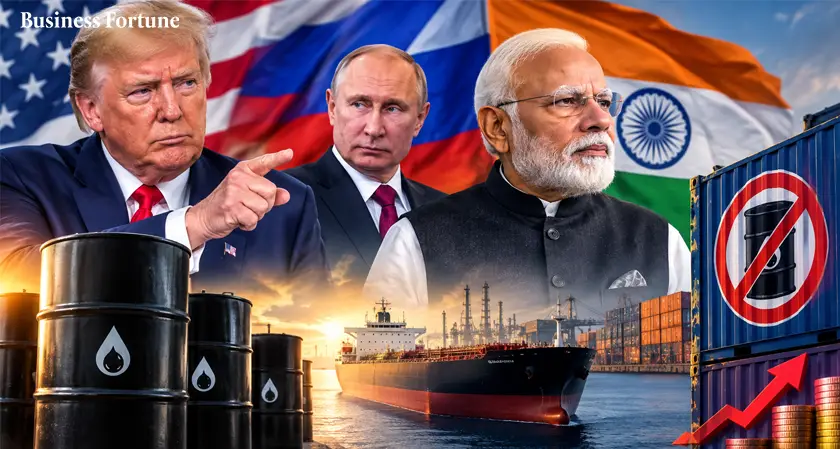
Russia sanctions bill gives Trump broad tariff powers, putting India’s Russian oil purchases, energy security, exports, and trade negotiations under pressure.
The Russia sanctions bill passed by the U.S. House on September 16 could give President Donald Trump authority to impose tariffs of up to 100% on countries continuing to buy Russian oil and gas. The 262-159 vote sends the Graham Act to Trump, putting India’s energy trade and U.S.-India ties under pressure. It also targets Russia’s energy sector and shadow fleet.
What the Russia sanctions bill means for India
The bill does not automatically impose a 100% tariff on India. It creates a framework for tariffs on the five largest importers of Russian crude or natural gas that continue qualifying purchases. Countries reducing Russian gas dependence may qualify for exemptions, while the President could waive sanctions.
According to India, it is monitoring developments and remains committed to energy security. New Delhi has told US officials the legal could affect bilateral ties and energy markets.
Key points
-
House passed the measure by 262-159 on September 16
-
Trump could impose tariffs reaching as high as 100%
-
India remains heavily dependent on imported oil
-
The bill also targets Russia’s shadow tanker fleet
-
Sanctions may be waived on national-interest grounds
Why Russian oil matters to India
Russian crude became important to Indian refiners after Western restrictions disrupted Russian markets. Discounted supplies helped manage costs, although narrower discounts and higher shipping risks have changed the economics.
Refineries process Russian oil into fuels, so disruption could affect refining margins and exports. Alternative crude and freight costs could rise if refiners diversify.
Could U.S. tariffs affect Indian exports?
The impact extends beyond energy because the measure concerns tariffs on countries buying Russian energy. Indian exporters could face additional pressure if Trump uses the authority. Electronics, pharmaceuticals, machinery and textiles have significant U.S. exposure.
The progress comes during India-U.S. trade negotiations. New Delhi has advised that the measure could strain bilateral ties.
What happens next for India-U.S. ties?
The next step is Trump’s decision on whether to sign it. After enactment, tariff provisions would depend on statutory conditions and presidential decisions.
For India, the challenge is balancing affordable energy against trade costs. The outcome will depend on oil prices, supplies, freight costs and exemptions.
Thus, Business Fortune believes that India now faces a delicate balance between energy security, Russian oil purchases, and potential U.S. trade pressures.
FAQs
What does the Russia sanctions bill mean for India?
The bill could expose India to U.S. tariffs of up to 100% if it continues qualifying purchases of Russian energy.
Will India immediately face a 100% tariff?
No. The legislation authorizes the President to impose tariffs, but the final rate and application would depend on subsequent presidential action.
Why does India continue buying Russian crude?
Russian oil has been an important source of crude for Indian refiners and has helped support the country’s energy security and supply needs.
How could the bill affect India’s economy?
Higher U.S. tariffs could put pressure on Indian exports, while shifting to alternative crude supplies could raise energy, freight and insurance costs.
What happens next to the Russia sanctions bill?
The legislation now goes to President Donald Trump for consideration. Its eventual impact will depend on whether it is signed and how its provisions are implemented.


.webp)
































Comments