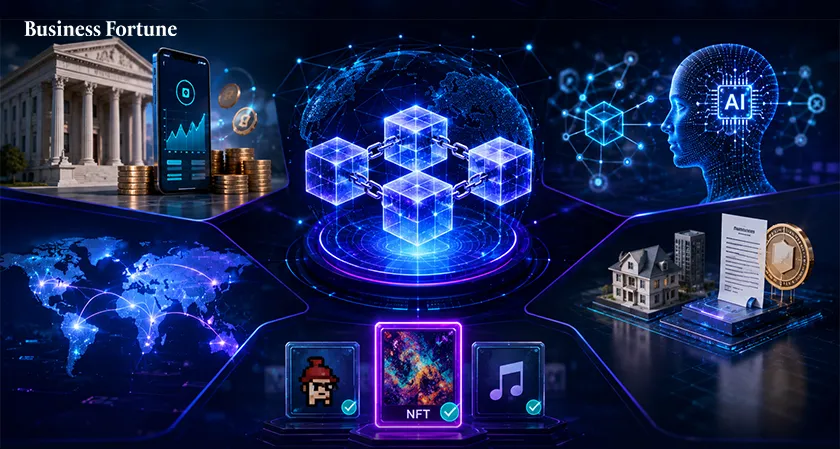
The Top 5 blockchain trends of 2026 reveal how blockchain is moving beyond crypto speculation and becoming practical infrastructure for finance, AI, ownership, gaming and the digital economy.
Blockchain Is Done Waiting
The Top 5 blockchain trends of 2026 tell a very different story from the blockchain headlines of a few years ago. The industry is no longer simply asking whether blockchain can change the world. The bigger question now is; how quickly can it become part of everyday business?
That shift is important. Blockchain's next chapter isn't necessarily about creating another cryptocurrency that makes headlines for a week. It is about building financial rails, digital ownership systems, intelligent applications and connected networks that quietly work behind the scenes.
Think of it this way: blockchain may be moving from the flashy showroom to the engine room; and 2026 could be the year that engine starts running at full speed.
- DeFi Grows Up and Enters Mainstream Finance
Decentralized finance or DeFi has spent years being associated with crypto enthusiasts, experimental protocols and eye catching yield opportunities. That image is changing.
One of the top blockchain trends 2026 is the growing relationship between traditional financial institutions and decentralized financial infrastructure.
Why does this matter?
Traditional finance has enormous amounts of capital, but it can also involve layers of intermediaries, lengthy settlement processes and geographical restrictions. DeFi offers a different model, where blockchain based protocols can automate transactions through smart contracts.
The future may not be a simple battle between banks and DeFi platforms. Instead, the two could increasingly overlap. Banks could use blockchain infrastructure for settlement. Institutions could interact with tokenized financial products. Regulators could establish clearer frameworks for blockchain based financial services.
The exciting part is that users may not even notice the technology. Just as most people don't think about the servers processing an online payment, future financial customers may simply use financial products powered by blockchain without ever needing to know it.
That's when blockchain becomes truly mainstream.
- AI and Blockchain Become an Unexpected Power Couple
Artificial intelligence and blockchain have dominated technology conversations independently. In 2026, their convergence could create something even more interesting.
The combination is among the most important blockchain technology trends 2026 with potential applications ranging from AI powered smart contracts to decentralized data marketplaces and adaptive governance systems.
Imagine a smart contract that doesn't merely follow a fixed set of instructions but can interact with AI systems to analyze information and trigger appropriate actions. Or consider data. AI needs enormous quantities of data to become more capable. Blockchain meanwhile can provide mechanisms for recording ownership, provenance and transactions involving digital information.
Put the two together and new business models become possible. Users could potentially be rewarded for contributing valuable data. AI agents could interact with blockchain networks to execute transactions. Decentralized applications could become more responsive and automated.
Of course, combining two complex technologies isn't magic. Security, privacy, accuracy and regulation remain major challenges. But that's exactly what makes this trend fascinating. Blockchain could provide AI with trust and traceability, while AI could provide blockchain applications with intelligence.
- Real World Assets Finally Get a Digital Twin
For years, tokenization sounded like one of those futuristic blockchain concepts that was always "coming soon." Now, it is becoming considerably more tangible.
Tokenization involves representing real world assets on a blockchain. Those assets can include property, commodities, carbon credits and other forms of value. Among the latest blockchain trends, the rise of real world asset tokenization could have one of the biggest impacts outside the traditional crypto ecosystem.
Why? Because blockchain doesn't have to represent only digital coins. It can also represent claims connected to physical or financial assets.
Consider real estate. Buying an entire property can require significant capital and involve complicated legal and administrative processes. Tokenization could potentially divide ownership or economic exposure into smaller digital units, depending on the legal structure. That opens the door to a fascinating concept: fractional value exchange.
The bigger opportunity, however, extends beyond the Middle East. Tokenized bonds, commodities, funds, carbon credits and other assets could eventually form a much broader digital marketplace.
The catch? A token doesn't automatically create legal ownership just because it exists on a blockchain. Regulation, custody, identity verification and enforceable rights all matter.
In other words, tokenization isn't simply about putting an asset on chain. It's about connecting the digital token to something meaningful in the real world.
- Blockchain Networks Stop Living in Separate Islands
Imagine having five smartphones that can't call one another. That's roughly what a fragmented blockchain ecosystem can feel like.
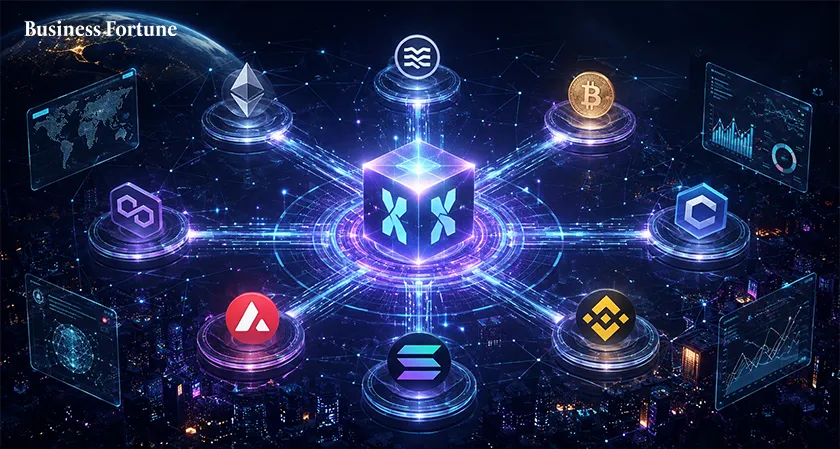
Different networks have different architectures, applications, assets and communities. Without interoperability, moving information or value between them can be complicated. That's why cross chain connectivity is emerging as one of the key emerging blockchain technologies to watch.
This matters enormously for DeFi. A financial application shouldn't ideally have to live inside one isolated ecosystem forever. Users want flexibility. Developers want access to different networks. Businesses want systems that can communicate.
Interoperability could make that possible. Instead of thinking of blockchains as competing islands, the industry is gradually moving toward a connected archipelago.
And that could unlock more sophisticated applications. Imagine a decentralized application using one blockchain for security, another for speed and another for specialized data; all while users experience the system as a single product.
That is the promise of a more connected blockchain ecosystem. The challenge is making those connections secure.
Cross chain bridges have historically been attractive targets for attackers, meaning interoperability must evolve alongside stronger security standards.
The future won't belong simply to the fastest blockchain. It may belong to the networks that can communicate safely.
- NFTs Come Back; But This Time With a Job
Remember when NFTs seemed to be everywhere? Then the hype cooled.
The fifth major trend is their transition from speculative digital collectibles toward utility driven applications in gaming, entertainment, creator economies and digital ownership. These are among the blockchain innovations 2026 could bring further into the mainstream.
The difference is subtle but important.
An NFT that exists primarily because someone hopes to sell it for more money has limited utility. An NFT that provides access to a game character, membership, event, digital product, creator community or transferable in game asset is doing something. That utility first approach could make digital ownership more sustainable.
Gaming is particularly interesting. Players already spend huge amounts of time and money acquiring digital items. Blockchain can potentially introduce ownership systems where certain digital assets can be transferred, traded or used across compatible environments.
Creators could also use blockchain based assets to build direct relationships with audiences. Instead of relying entirely on advertising or platform algorithms, creators could develop digital economies around memberships, collectibles and experiences. The NFT story, therefore may not be over. It may simply be getting a second act.
What These Five Trends Have in Common
At first glance, DeFi, AI, tokenization, interoperability and NFTs seem like completely different worlds. But they share one underlying movement: blockchain is becoming infrastructure rather than spectacle.
The future of blockchain may depend less on convincing people to buy tokens and more on making blockchain useful enough that people don't care they're using it.
That's a major psychological shift. The internet became enormously powerful when people stopped talking about "going online" and simply started using online services as part of everyday life.
Blockchain could follow a similar path. A customer might invest in a tokenized asset without knowing which blockchain processes it. A bank might use DeFi infrastructure without calling it DeFi. A gamer might own an NFT without ever describing it as an NFT.
The technology disappears behind the experience. And that is often the moment technology wins.
What Could Stop These Trends?
Let's add a little reality to the excitement. Blockchain still has plenty of problems to solve. Security remains critical.
A vulnerability in a smart contract or interoperability system can have serious financial consequences.
Regulation is another major factor. Businesses need clear rules before committing substantial resources to blockchain-based products.
Scalability also matters. A technology designed for global finance needs to process huge amounts of activity reliably and affordably.
Then there is user experience. Most people don't want to manage complicated wallet addresses, understand gas fees or worry about which blockchain they're using.
The winners of the next blockchain era will therefore need to make the technology dramatically easier to use. The best blockchain application may ultimately be the one where users don't even realize blockchain is underneath it.
The Bigger Picture: From Crypto to Digital Infrastructure
The most interesting thing about 2026 isn't any individual trend. It is the direction of travel.
Blockchain is expanding beyond cryptocurrency into finance, artificial intelligence, physical assets, gaming, entertainment and data. That creates an ecosystem where different technologies can reinforce one another.
AI can make decentralized applications smarter. Tokenization can bring traditional assets onto blockchain networks. Interoperability can connect those networks. DeFi can provide financial infrastructure. NFTs can create digital ownership and utility.
Suddenly, the five trends aren't five separate stories. They're pieces of the same puzzle. And when those pieces connect, blockchain starts looking less like a niche technology and more like a foundation for a new digital economy.
Blockchain's Next Chapter Is About Utility
The Top 5 blockchain trends of 2026 point toward a blockchain industry that is becoming more practical, interconnected and institution friendly.
DeFi is moving toward mainstream financial infrastructure. AI is giving decentralized applications new intelligence. Tokenization is connecting physical assets with digital markets. Interoperability is breaking down blockchain silos. And NFTs are shifting from hype-driven collectibles toward genuine utility. None of these developments guarantees that blockchain will transform every industry. But together, they show something important; the technology is evolving.
The blockchain story of the past was often about speculation and possibility. The blockchain story of 2026 is increasingly about infrastructure and execution. And Business Fortune believes, that may be the most exciting trend of all.
FAQs
What are the Top 5 blockchain trends of 2026?
The five major trends are mainstream DeFi, AI blockchain integration, real world asset tokenization, cross chain interoperability and utility focused NFTs and digital economies.
Why is AI important for blockchain in 2026?
AI can make blockchain applications more intelligent by supporting automated decision-making, data analysis, predictive systems and smarter decentralized applications.
What is real world asset tokenization?
Real world asset tokenization involves representing assets such as property, commodities or carbon credits through blockchain based digital tokens, subject to applicable legal and regulatory frameworks.
Are NFTs still relevant in 2026?
Yes. Their potential is increasingly focused on utility rather than speculation, particularly in gaming, digital art, creator monetization, memberships and digital ownership.
What is the future of blockchain technology?
Blockchain is likely to become increasingly integrated into financial services, digital ownership, AI applications, asset markets, gaming and other forms of digital infrastructure with regulation and security remaining key factors.


.webp)





























Comments