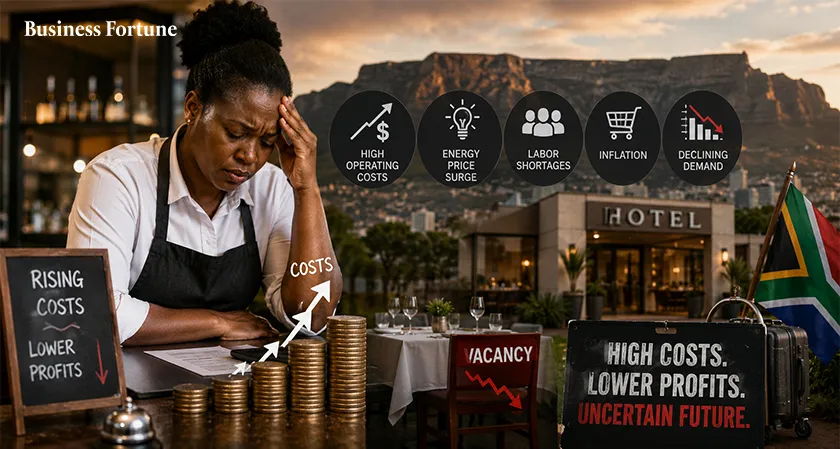
Restaurants and food operators face shrinking margins as economic pressures, higher expenses and changing market conditions reshape South Africa’s service sector.
The South Africa hospitality industry is facing growing challenges as the latest Statistics South Africa Food & Beverage Survey for May 2026 highlights weakening real income, rising operational costs and increasing pressure on restaurants, coffee shops and food operators. The sector recorded a 0.3% year-on-year decline in real income, while restaurants and coffee shops experienced a sharper 1.7% drop.
Hospitality Sector Faces Growing Cost Pressures
The report reflects a difficult reality for South African hospitality businesses, where stagnant turnover is colliding with increasing operational expenses. Restaurant owners continue managing higher electricity tariffs, food prices, wages and compliance costs, making profitability harder to sustain.
Key industry concerns include:
-
Real income decline affecting hospitality businesses nationwide
-
Restaurant costs rising faster than consumer inflation
-
Compliance demands adding pressure on small operators
-
Hospitality jobs facing increasing economic uncertainty
-
Rising utility expenses threatening business sustainability
Industry representatives note that restaurants require annual revenue growth of 10% to 15% to maintain profitability. Smaller independent businesses, often operating on margins below 5%, face greater risks when additional financial obligations are introduced.
Regulatory Balance Needed for Growth
The South African hospitality industry supports workplace and customer protection measures but believes regulations should consider economic realities. Business groups argue that new requirements must include proper impact assessments to prevent excessive pressure on small and medium-sized enterprises.
The food service sector remains one of the country’s major employment creators, providing opportunities for young workers, skills development and entry-level careers. Restaurants support wider supply chains involving farmers, suppliers and communities.
Additional challenges, including municipal charges, service disruptions and rising operational expenses, have increased pressure across the hospitality market. Industry leaders are calling for cooperation between government and businesses to encourage investment, employment expansion and sustainable growth.
The sector seeks simplified compliance processes, controlled utility increases and job creation incentives. A supportive policy environment could help restaurants recover, strengthen tourism and contribute to South Africa’s economic development.
South Africa hospitality industry, restaurant employment, food service businesses and tourism growth remain closely connected as the sector navigates uncertainty.
Business Fortune is of the view that supporting hospitality growth through balanced policies can protect jobs, encourage investment and strengthen South Africa’s economic recovery.
FAQs
Why is the South Africa hospitality industry facing financial pressure in 2026?
The South Africa hospitality industry is under pressure due to declining real income, rising food prices, higher electricity costs, increasing wages and growing compliance expenses. These challenges are reducing profit margins for restaurants and food service operators.
How much did the restaurant and coffee shop sector decline in May 2026?
According to the Statistics South Africa Food & Beverage Survey for May 2026, restaurants and coffee shops recorded a 1.7% year-on-year decline in real income, showing stronger pressure compared with the wider food and beverage sector.
What are the biggest challenges affecting South African restaurants?
Major challenges include rising operational costs, expensive utilities, food inflation, municipal charges, regulatory requirements and service disruptions. These factors are making it harder for small and independent restaurants to maintain profitability.
How does the hospitality sector contribute to South Africa’s economy?
The hospitality sector plays an important role in employment creation, tourism growth, skills development and supporting supply chains involving farmers, suppliers and local communities. Restaurants also provide entry-level career opportunities for many workers.
What measures could help South Africa’s hospitality industry recover?
Industry leaders believe simplified compliance processes, controlled utility increases, supportive government policies and job creation incentives could help businesses recover, encourage investment and strengthen long-term growth in the hospitality sector.


.webp)





























Comments