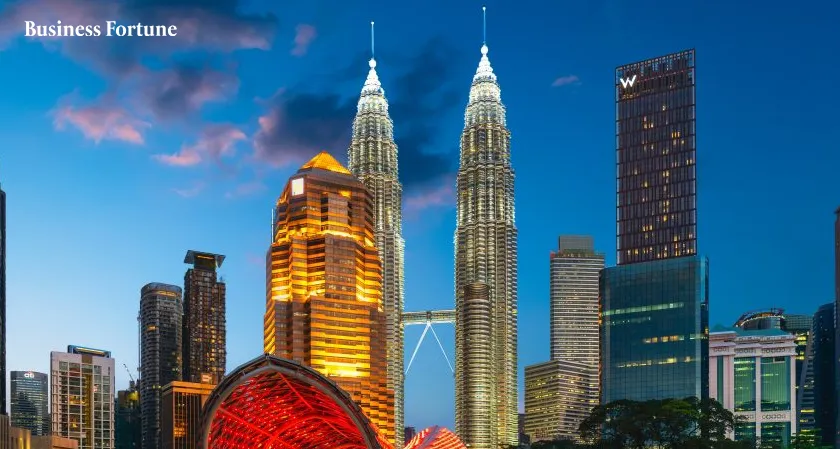
Malaysia sees stronger visitor numbers despite flight disruptions, with Asian markets offsetting declines across European and Middle Eastern destinations.
Malaysia recorded a modest rise in international tourist arrivals in 2026; with 21.12 million international travelled into Malaysia within the first half of the year despite the disruptions that were a result of heightened geopolitical unrest in the Middle East region. The Minister for Tourism, Arts and Culture, Datuk Sri Tiong King Sing, said there was a 514,958 or 2.5% increase from 20.60 million in 2025.
Middle East Conflict Disrupts Malaysia’s Flight Operations
There was great pressure on the tourism sector due to the conflict in the Middle East, which made international air travel more difficult and expensive. Data obtained from Tourism Malaysia and the Immigration Department show that 3,428 international flights were canceled between January and June, which amounts to around 3.7% of 91,486 total flights.
This interference kept rising throughout the entire period and resulted in a rise in the number of cancellations from nine in February to more than 300 in March, over 1,000 in April, and 1,419 in June. The Middle Eastern route faced more strain due to capacity of available seats falling to 806,532 from above one million.
Key highlights:
-
Malaysia welcomed 21.12 million international travellers in H1.
-
Tourist arrivals increased 2.5% year-on-year during H1.
-
Middle East tensions triggered 3,428 international flight cancellations.
-
European and Middle Eastern markets recorded significant declines.
-
Asian source markets continued supporting Malaysia’s tourism growth.
Asian Markets Help Sustain Tourism Momentum
Effects were not evenly distributed within Malaysia’s international source markets. Passengers decreased in 26 out of 50 countries that Malaysia sources tourists from, while others kept increasing. France witnessed an increase among the top European destinations, but visitors from Britain and Germany showed decline. It is the first time that Germany suffered negative growth after its post- pandemic tourist recovery period started.
Turkiye, Russia, Spain, and Poland witnessed an increase in the number of visitors, while the Netherlands, Italy, Belgium, Saudi Arabia, Oman, and Egypt saw the sharpest drop in figures.
Rising international prices of fuel caused an increase in costs for tourists traveling outwards, especially those from India, Taipei, and South Korea. However, major Southeast Asian markets like Singapore and the Philippines kept growing, along with China, Central Asia, Oceania, and North America.
In response to the situation, the tourism industry in Malaysia has started to focus more on the Asian market. Moreover, the government of Malaysia has also extended the Visit Malaysia scheme till 2027 to keep the pace of tourism alive.
Business Fortune believes that Malaysia’s resilient Asian tourism markets and extended Visit Malaysia campaign can help sustain visitor growth despite ongoing global travel disruptions.
FAQs
How many international tourists visited Malaysia in the first half of 2026?
Malaysia recorded 21.12 million international tourist arrivals during the first half of 2026, up 2.5% from 20.60 million during the same period in 2025.
How did the Middle East conflict affect Malaysia’s tourism sector?
The conflict disrupted international air travel, contributing to 3,428 flight cancellations between January and June 2026 and reducing available air capacity on Middle Eastern routes.
Which international markets helped support Malaysia’s tourism growth?
Asian markets, including Singapore, the Philippines, China, Central Asia, and South Korea, helped sustain Malaysia’s tourism momentum despite declines in several European and Middle Eastern markets.
Which countries recorded declines in tourist arrivals to Malaysia?
Tourist arrivals declined from several markets, including the United Kingdom, Germany, the Netherlands, Italy, Belgium, Saudi Arabia, Oman, and Egypt.
How is Malaysia responding to the challenges facing international tourism?
Malaysia is placing greater focus on Asian tourist markets and has extended the Visit Malaysia campaign through 2027 to maintain tourism growth and attract more international visitors.


.webp)





























Comments