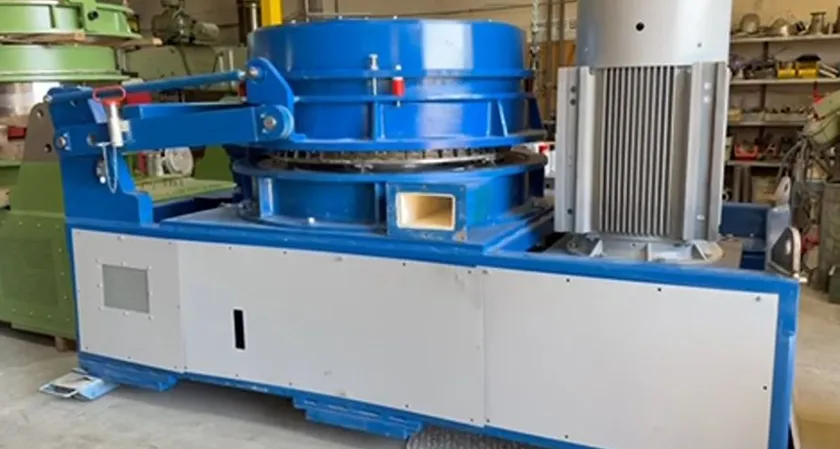
For RenX Enterprises (NASDAQ: RENX), one of the most important pieces of its manufacturing strategy is no longer sitting in Germany waiting to move. It is now on the water.
The company announced August 11that its licensed Microtec milling system has departed the Port of Hamburg aboard the NYK Meteor and is in ocean transit to the Port of Miami. RenX said arrival is expected in mid-August, while the third-party freight tracker currently estimates arrival on August 18. Following customs clearance, RenX plans to transport the system to its 80-plus-acre processing facility in Myakka City, Florida, where installation and commissioning remain scheduled for the second half of 2026.
Investors can independently follow the shipment's progress as well. In an unusual move for an industrial equipment delivery, RenX has made the shipment publicly trackable through a portal maintained by its freight forwarder, Hellmann Worldwide Logistics. The company notes that the tracking data and estimated dates are maintained by the third-party forwarder rather than RenX itself.
That transparency makes an otherwise routine logistics event considerably more tangible. After months of discussion about what the Microtec system could eventually enable, shareholders can now literally follow one of the company's most important pieces of equipment as it makes its way toward Florida.
More importantly, the shipment moves RenX another step closer to turning its manufacturing strategy into a scalable production capability.
The Microtec system is intended to become the centerpiece of RenX's transition beyond traditional waste-to-value processing and into engineered growing media produced to repeatable specifications. Once installed and commissioned, the technology is designed to precisely size, refine, and condition organic inputs into higher-value soil substrates and growing media.
The competitive significance is amplified by exclusivity. Through Resource Group, RenX holds exclusive rights to Microtec technology for biomass applications in North America, giving the company access to proprietary processing technology that competitors cannot simply replicate by purchasing the same system
That distinction is central to the larger RenX strategy.
Rather than simply processing organic material and selling relatively conventional outputs, the company is attempting to capture more value as material moves through its vertically integrated operations. Feedstock enters the system through environmental processing and, increasingly, land-clearing activities. RenX's logistics capabilities can support movement of that material. Processing and blending add additional stages of refinement. Microtec is intended to take the model further by enabling the production of engineered products for higher-value agricultural markets.
Recent developments have brought those pieces into sharper focus.
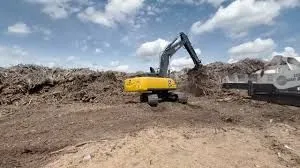
RenX recently launched a land-clearing division and announced its first purchase order, creating a business that can potentially generate service revenue while simultaneously supplying woody biomass to its Myakka City operation. The company has also expanded its logistics capabilities and brought Resource Group founder James Burnham into a full-time role leading growth and acquisitions.
Viewed separately, those developments involve very different parts of the business. Viewed as an operating system, their relationship becomes clearer.
Land clearing can generate feedstock. Logistics can move it. Environmental processing can prepare it. Advanced milling can refine it. And engineered growing media can potentially move that same underlying material into higher-value end markets.
That is why the Microtec shipment matters beyond the arrival of another piece of equipment.
The company itself describes the mill's arrival as the beginning of its next sequence of milestones: delivery to Myakka City, installation, commissioning, and ultimately first milled product. Each step would move RenX further from describing what its vertically integrated strategy is intended to become and closer to demonstrating how the pieces work together commercially.
There is also a domestic manufacturing element to the story. RenX says its model is designed around localized production using regional feedstocks and customer requirements, with the goal of shortening supply chains, improving quality control, and enhancing unit economics while serving higher-value markets.
For investors following RenX, the next milestones are therefore unusually concrete. The ship can be tracked. The equipment has a destination. Installation and commissioning have defined roles in the company's second-half 2026 plans. And first milled product represents the point at which years of strategy begin moving toward actual manufacturing output.
The Microtec mill being on the water marks a milestone reached. Installation, commissioning, optimization, and commercialization represent the next boxes to check as RenX advances from strategy toward execution. The technology around which the company has been building much of its higher-value manufacturing strategy is no longer an idea on paper or equipment waiting overseas. It is moving toward the facility where that strategy is intended to become operational.


.webp)




























Comments