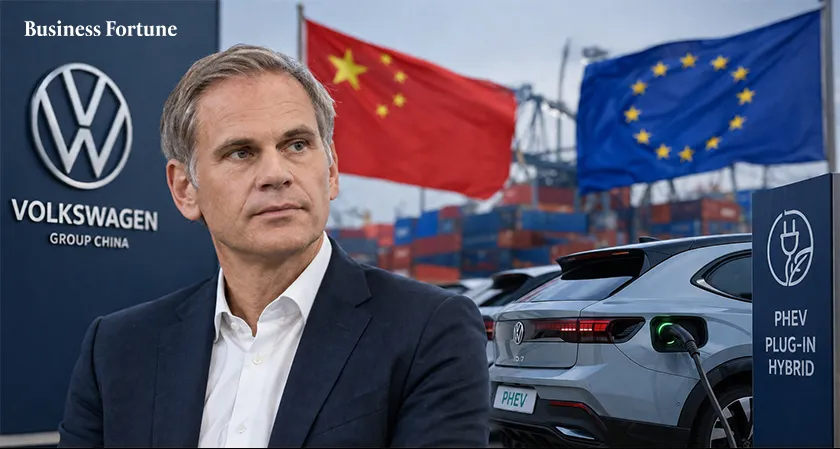
Oliver Blume highlights the impact of Chinese PHEV expansion in Europe while urging policies that ensure fair competition for automakers.
Volkswagen CEO Oliver Blume has urged the European Union to reconsider its approach toward Volkswagen China tariffs, calling for stronger measures on Chinese plug-in hybrid electric vehicle (PHEV) imports as competition intensifies across European markets. Blume believes tariff policies should create fair conditions for European automakers while addressing the growing influence of Chinese manufacturers in the region.
Blume Pushes for Balanced Trade Measures
Oliver Blume has argued that Europe needs a more effective framework to manage increasing competition from Chinese vehicle makers. The Volkswagen chief executive highlighted concerns that Chinese brands are expanding rapidly with competitively priced electric and hybrid models, creating additional pressure on established European manufacturers.
The discussion comes as Volkswagen faces challenges in China, where changing consumer preferences and stronger domestic competitors have affected sales performance. The company is working to strengthen its global strategy while adapting to a more competitive automotive environment.
Chinese Automakers Increase European Presence
Chinese automotive companies have gained momentum in Europe by offering advanced electric vehicles and plug-in hybrid models. Volkswagen believes trade policies should consider the impact of these developments on European production, investment and employment.
The company has emphasized that fair competition remains essential as the automotive sector transitions toward electrification. Volkswagen continues to invest in electric mobility, digital technology and future vehicle platforms to remain competitive.
Volkswagen Faces Broader Market Pressure
The tariff debate arrives during a challenging period for Volkswagen, with declining momentum in China and rising competition from global EV manufacturers. The automaker has been reviewing cost structures and operational strategies to improve efficiency.
Key points:
-
Blume calls for fairer European trade policies
-
Chinese PHEVs increase pressure on Volkswagen markets
-
EU tariff discussions remain central to competition
-
Volkswagen focuses on EV transformation strategy
-
China remains a critical automotive market
Volkswagen’s China strategy remains a major priority as the company navigates shifting global demand, regulatory changes and technological disruption. The automaker is balancing international expansion with the need to protect competitiveness in key regions.
The debate around China electric vehicle tariffs, European automotive competition and Volkswagen EV strategy reflects wider industry concerns about maintaining manufacturing strength while encouraging innovation. As Chinese brands continue expanding overseas, European companies are seeking policies that support long-term sustainability.
Thus, Business Fortune is of the view that Volkswagen’s tariff concerns highlight the need for balanced policies supporting innovation, competition, and automotive growth.
FAQs
What are Volkswagen China tariffs?
Volkswagen China tariffs refer to potential European trade measures targeting Chinese vehicle imports to address competitive pressures and create balanced market conditions.
Why is Oliver Blume discussing tariffs?
Oliver Blume is discussing tariffs to encourage fair competition as Chinese automakers expand rapidly across Europe with affordable electric and plug-in hybrid vehicles.
How are Chinese automakers affecting Volkswagen?
Chinese vehicle manufacturers are increasing competition for Volkswagen by offering cost-effective electric and hybrid models, putting pressure on traditional European automakers.
What is Volkswagen’s EV strategy?
Volkswagen’s EV strategy focuses on expanding electric vehicle production, developing new technologies, improving digital capabilities, and strengthening its position in future mobility markets.
Why is China important for Volkswagen?
China remains a key market for Volkswagen due to its large customer base, manufacturing presence, and significant role in the company’s global growth strategy.


.webp)






























Comments