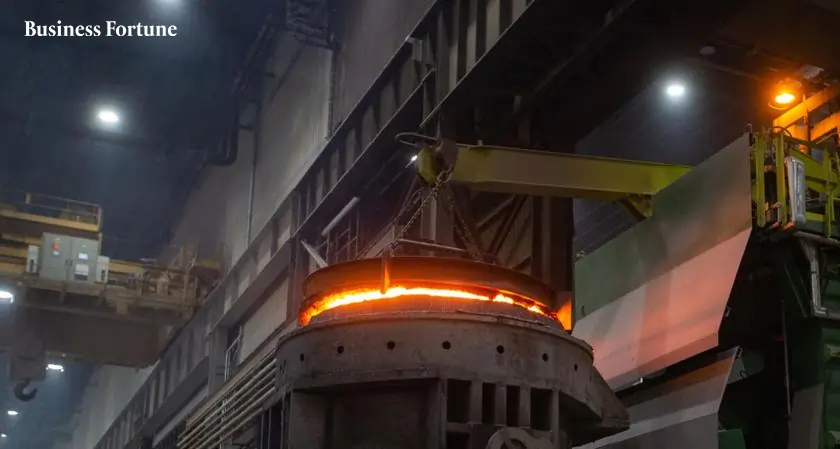
As Nippon Steel works to transform U.S. Steel, Nucor’s COO explains why his company remains focused on a different growth path.
Even though Nippon Steel acquisition of U.S. Steel has reshaped the global steel conversation, Nucor’s Chief Operating Officer Laxton believes it will have little impact on his company's future plans.
For those outside the steel industry, the two companies operate very differently. Nucor is America's largest steel producer and is known for its electric arc furnace (EAF) mini-mill model, which uses recycled steel and offers flexibility in production. Nippon Steel, meanwhile, is Japan's largest steelmaker and one of the world's biggest steel companies. In 2025, it completed its $15 billion acquisition of U.S. Steel, a deal that attracted attention from regulators, policymakers, and industry leaders.
Despite the scale of the acquisition, Laxton says Nucor remains focused on the same growth drivers that have fueled its business in recent years.
Strong Demand Is Keeping Nucor Focused
Laxton said the company is seeing the same market trends that have supported growth over the past year, and he expects those trends to continue into 2026.
In particular, demand from data centers is creating new opportunities for steel producers. As technology companies invest billions of dollars into AI infrastructure, the need for structural steel continues to grow.
According to Laxton, the biggest challenge for these projects is not money.
“The problem with getting their projects going is timelines,” he said, pointing to labor shortages and supply chain difficulties that are slowing construction projects across the country.
Nucor expects domestic steel demand to rise by around 1% to 2% next year, giving the company confidence in its current strategy.
So Why Isn’t Nucor Worried?
Nucor uses electric arc furnace (EAF) technology, which is different from the traditional blast furnace model used by U.S. Steel. Because of this, Laxton believes Nucor serves the market differently and is not directly affected by the changes happening under Nippon Steel's ownership.
At the same time, Nucor is not rushing into new international partnerships. The company says it will only consider such opportunities if they make sense for specific markets and business goals.
Nippon Steel Is Still Working on Changes
Nippon Steel says it has already identified hundreds of areas where U.S. Steel's operations can improve. And as Business Fortune observes, the company is bringing its manufacturing expertise to help improve efficiency and modernize facilities. Vice Chairman Takahiro Mori recently said progress is being made, but the company is still not completely satisfied with the speed of those improvements.
For now, Nucor appears comfortable staying focused on growing demand at home rather than reacting to one of the industry's biggest acquisitions.
FAQs
What is Laxton’s opinion on the Nippon Steel acquisition?
He believes the deal is important for the industry but has not changed Nucor’s overall business strategy or growth plans.
Why does Nucor feel insulated from the acquisition?
Because it uses a different steelmaking model and focuses on market segments that are benefiting from strong domestic demand.
How is AI affecting steel demand?
The construction of AI data centers and cloud infrastructure requires large amounts of structural steel, creating new growth opportunities.
What challenge are AI infrastructure projects facing?
According to Nucor, delays caused by labor shortages and supply chain constraints are a bigger issue than project costs.
What is Nippon Steel doing after acquiring U.S. Steel?
The company is working to improve operations, increase efficiency, and evaluate future investments in U.S. steelmaking facilities.


.webp)


























Comments