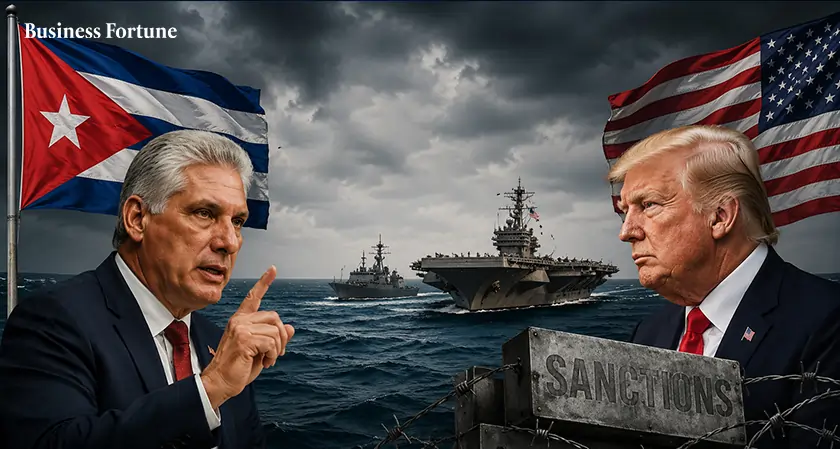
Cuba and United States tensions rise after warnings sanctions and military accusations intensify diplomatic crisis across Caribbean region heightened concern
-
Cuba warns US of severe military retaliation
-
US increases sanctions amid rising diplomatic tensions
-
Both nations exchange accusations over security threats
-
Latin America fears regional instability from escalation
Cuba warns US as pressures between the United States and Cuba have drastically intensified after Cuban President Miguel Díaz-Canel issued a grave warning that any US military action against the island nation would result in a “bloodbath with incalculable consequences.” The statement comes amid new sanctions, mounting political pressure, and claims of a military buildup in the region.
Rising diplomatic crisis between Havana and Washington
Cuban officials have strongly refuted recent US accusations that Havana is getting ready for violent military action, including claims of drone acquisitions and potential threats to US interests in the Caribbean. In response, Cuba’s warns of ‘bloodbath’ to US, while Washington has increased sanctions against important Cuban individuals and institutions, intensifying economic pressure on the already strained island nation.
Díaz-Canel asserted on social media and in official statements that Cuba poses no threat to the United States and accused Washington of using economic and political pressure to destabilize Cuba. He stated that Cuba was entitled to self-defense under international law and described the current situation as a "multidimensional aggression."
Cuba frames warnings as a self-defense stance.
The Cuban president highlighted that any military escalation would have catastrophic consequences for both Cuba and the stability of the Latin America. He advised that external interference will require the island to engage in open fight, creating security and humanitarian issues across the Caribbean.
Cuban representatives have also observed worsening domestic conditions, including ongoing energy lacks and economic hardship, which they attribute in part to restrictions on fuel imports and sanctions. Havana has called for communication while criticizing what it sees as forceful US conduct.
Regional implications and international reactions
The conflict has gained attention throughout Latin America and beyond because to worries that growing animosity could destabilize an already unstable regional equilibrium. Some international actors have advised moderation and called for greater diplomatic engagement to stop future growth.
The United States has maintained that its actions are meant to exert pressure on the Cuban government on matters of governance and regional security, despite denying any immediate plans for military intervention.
Analysts claim that the current situation, which is marked by conflicting narratives about threats to regional security, legal threats against former Cuban officials and sanctions, is one of the most challenging periods in previous US-Cuba relations.
As both sides strengthen their stances, observers tracking events in the Caribbean and Latin America continue to be deeply concerned about the possibility of further escalation.
Thus, Business Fortune is of the view that de-escalation and sustained diplomatic dialogue are essential to prevent regional conflict escalation.


.webp)