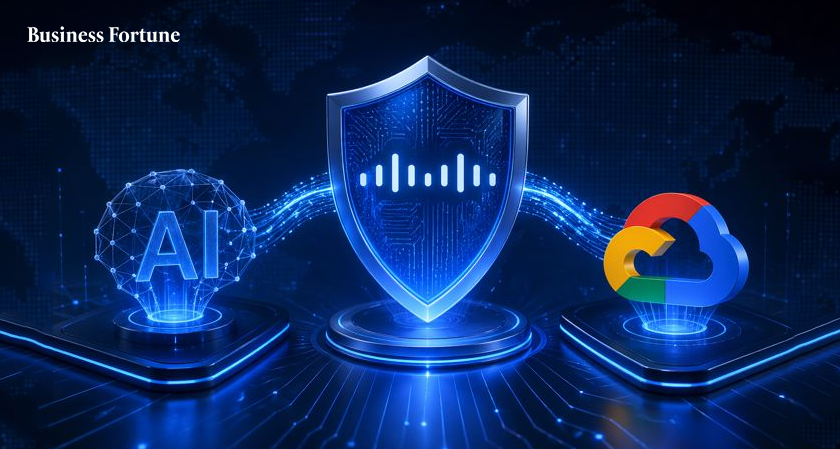
Cisco AI Defense expands to Google Cloud, offering built-in security for enterprise AI apps with real-time protection, visibility, and risk management tools.
Cisco has expanded its AI Defense platform to Google Cloud, marking a significant step in strengthening security for enterprise artificial intelligence applications. With this move, Cisco AI defense brings its AI-driven security capabilities directly into the Google Cloud environment, allowing organizations to protect critical AI systems from the start rather than adding security later in the development process.
The integration is designed to support advanced AI use cases, including applications built on Gemini and Retrieval-Augmented Generation (RAG) pipelines. By embedding security into these workflows, Cisco aims to reduce vulnerabilities and improve overall system reliability.
Cisco AI Defense now offers several key features within Google Cloud AI Security. These include AI Model and Application Validation, which uses automated red-teaming to test systems against a wide range of potential threats. Another feature, AI Runtime Protection, provides real-time safeguards against risks such as prompt injection, tool misuse, and data leaks, without requiring any changes to existing code.
The platform also introduces AI Cloud Visibility, enabling automatic discovery of AI assets like models, agents, and data sources. This helps organizations maintain centralized control and governance. In addition, AI Supply Chain Risk Management continuously scans model files and repositories to detect vulnerabilities and prevent the use of insecure components.
Cisco has integrated AI Defense with Google Cloud’s Agent Gateway using Google Kubernetes Engine (GKE) Service Extensions. This allows the system to function as an inline policy enforcement engine, monitoring and securing AI interactions in real time without altering application code or model configurations.
For organizations with strict data privacy requirements, Cisco offers a Virtual Private Cloud (VPC) deployment option. This ensures that all data, including prompts and responses, remains within the Google Cloud environment, avoiding external routing.
The expansion comes at a time when AI adoption is accelerating. According to Cisco’s 2025 Cybersecurity Readiness Index, 86 percent of organizations reported experiencing at least one AI-related security incident in the past year, while less than half have the resources to conduct full security assessments.
Cisco google cloud partnership, alongside AWS and Microsoft Azure, Cisco aims to provide a unified and consistent security framework across major cloud platforms. As Business Fortune observes, this approach helps enterprises scale AI deployments with stronger protection and better compliance readiness as AI systems move into large-scale production environments.


.webp)