Business Fortune
Winmate was founded with a clear vision: computing technology should be designed around the realities of industrial environments rather than adapted from consumer devices. Since its establishment, the company has focused on developing purpose-built computing solutions capable of performing reliably in demanding conditions where conventional systems may not be suitable. Factors such as vibration, dust, moisture, temperature fluctuations, and continuous operation have long created challenges for organizations across specialized industries.
During its early years, Winmate focused on building both engineering expertise and lasting customer trust. The company recognized that delivering reliable technology required more than product development. It required consistent quality, responsive support, and a strong understanding of the operational challenges faced by customers in the field. These principles helped shape Winmate’s long-term approach to innovation and product development.
Over time, the company has expanded its capabilities beyond industrial display solutions into rugged computing, industrial computing, edge AI, and other mission-focused technologies. Its development has remained centered on practical innovation, disciplined engineering, and close customer collaboration. By focusing on real-world operational requirements, Winmate continues to develop technology platforms designed to support customers across their deployment and operational lifecycles.
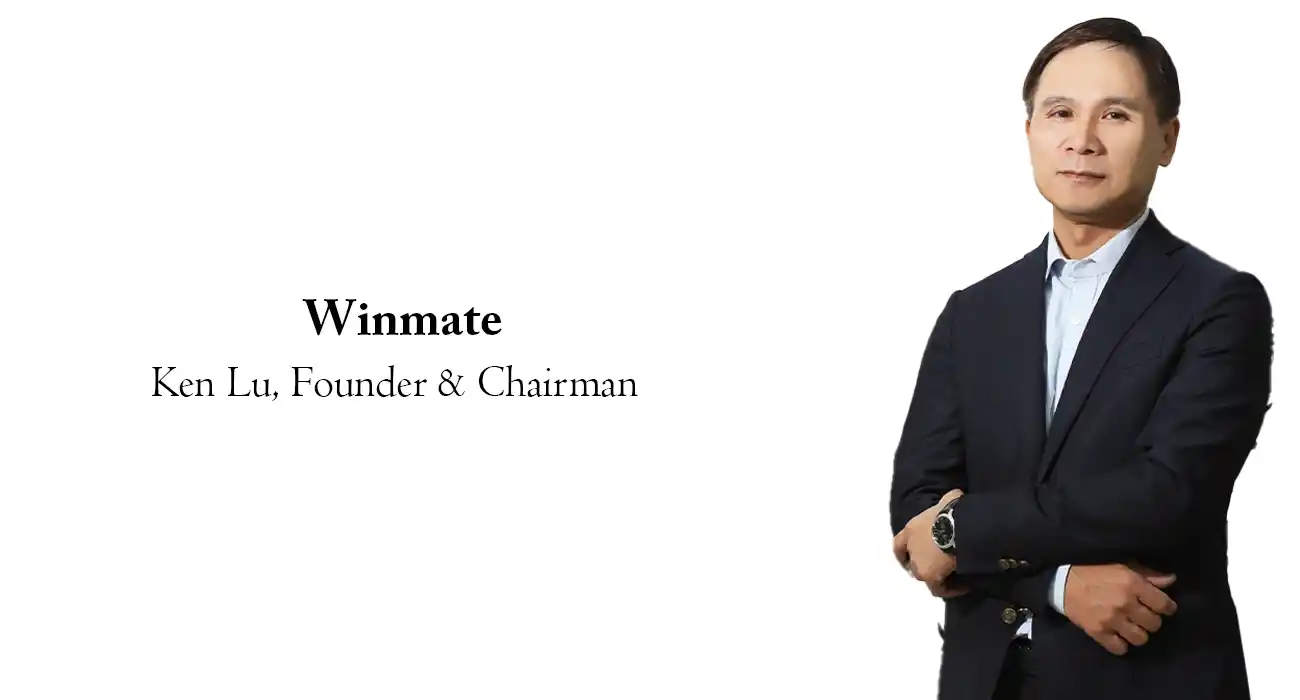
Business Fortune spoke exclusively with Winmate's Founder and Chairman, Ken Lu, on the company's transition from industrial screens to rugged computing and edge AI. The talk delves into innovation, engineering, customer collaborations, global expansion, mission-critical solutions, and Winmate's vision for intelligent industrial technology.
Interview Highlights
Winmate evolved from an industrial display company into a rugged computing leader. What milestones and decisions shaped this transformation?
Winmate’s transformation was driven by a series of deliberate decisions to expand from individual display products into integrated computing platforms. As customer applications became more complex, the company recognized the need for complete solutions that combine displays, processing, connectivity, power management, mechanical design, and environmental protection.
This led Winmate to broaden its portfolio to include industrial panel PCs, rugged tablets, vehicle-mounted computers, embedded systems, and specialized platforms for industries such as defense, public safety, healthcare, logistics, marine, energy, and manufacturing. Another important milestone was the company’s growing ability to support customization while maintaining configuration consistency and ensuring long-term product availability.
Over time, Winmate has expanded both its product portfolio and engineering capabilities to address a broader range of industrial and mission-critical applications. This evolution has helped shape the company’s direction as a mission computing platform provider, with a continued focus on reliability, application-specific design, and long-term customer requirements.
Winmate has built a strong reputation for rugged computing platforms designed for challenging environments. What core technologies, engineering principles, and customer-focused approaches make Winmate solutions different from traditional computing devices?
The difference begins with purpose-built engineering. Winmate products are designed around real-world operating conditions, including exposure to shock, vibration, water, dust, extreme temperatures, electromagnetic interference, and unstable power environments. Mechanical design, thermal management, display visibility, touch functionality, connectivity, and power architecture are considered together rather than treated as separate features.
Winmate also emphasizes platform reliability and deployment confidence. Depending on the application, products may be designed to meet relevant industrial, medical, marine, hazardous-location, or defense standards. However, certification alone is not the ultimate objective. The broader goal is to ensure that each platform operates consistently, integrates seamlessly with customer systems, and remains serviceable throughout its intended lifecycle.
Customer collaboration is equally important. Winmate works to understand operational workflows, mounting requirements, interfaces, software environments, regional regulations, and long-term supply expectations before recommending a solution. This approach helps reduce integration risks and supports more predictable deployment outcomes.
Artificial intelligence and edge computing are reshaping industrial operations worldwide. How is Winmate integrating these technologies into its solutions, and how do you see AI helping customers improve efficiency, decision-making, and operational performance?
Winmate is integrating edge AI capabilities into rugged tablets, embedded computers, industrial systems, and specialized platforms designed for field and vehicle applications. By combining accelerated computing with industrial-grade design, these solutions enable data to be processed closer to where it is generated.
This approach is especially valuable in environments where low latency, data privacy, limited connectivity, or real-time response is critical. Edge AI can support applications such as visual inspection, object detection, predictive maintenance, intelligent transportation, autonomous systems, safety monitoring, and situational awareness.
For customers, the value of AI is not simply greater computing power. It lies in the ability to turn operational data into faster, more consistent decisions. Winmate provides reliable platforms that enable AI workloads to operate beyond controlled data-center environments. By combining rugged hardware, flexible I/O, connectivity, and long-term lifecycle support, the company helps customers move AI from experimentation to practical, real-world deployment.
With a diverse portfolio including rugged tablets, industrial panel PCs, vehicle-mounted computers, embedded systems, and edge AI platforms, how does Winmate identify emerging market needs and decide which technologies and solutions to develop next?
Winmate’s product development process begins with application requirements rather than isolated technology trends. The company gathers insights from customers, regional teams, system integrators, industry partners, and ongoing projects to identify recurring operational challenges and unmet needs.
These insights are evaluated alongside developments in processors, connectivity, displays, artificial intelligence, cybersecurity, power systems, and industry regulations. Winmate then assesses whether a new technology can improve reliability, usability, integration, or overall deployment value.
The company also balances innovation with continuity. Customers in industrial and mission-critical markets often require stable configurations, long product lifecycles, and controlled changes. For this reason, Winmate does not treat every new component as an automatic upgrade. Instead, technologies are selected when they provide a clear application benefit and can be integrated into a platform with appropriate validation, supply planning, and serviceability.
Winmate has expanded its presence across global markets, serving customers in highly specialized industries. How has the company built trust internationally, and what strategies have enabled Winmate to understand and meet the diverse requirements of customers across different regions?
International trust has been built through consistency, local engagement, and a long-term approach to customer support. Winmate serves specialized industries where product failure can affect safety, productivity, or operational continuity. As a result, customers evaluate not only product specifications but also engineering capabilities, communication, quality systems, supply stability, and after-sales support.
Winmate works with regional offices, partners, distributors, and system integrators to understand local market conditions and customer expectations. This network enables the company to respond effectively to differences in certification requirements, deployment practices, language, service expectations, and procurement processes.
At the same time, Winmate maintains a common engineering and quality framework across its global operations. This balance between local responsiveness and platform consistency enables the company to address diverse customer requirements while maintaining strong control over product quality and configuration management.
For customers operating in mission-critical environments, technology reliability and long-term partnership are extremely important. How does Winmate work with clients beyond product delivery to create lasting relationships and provide continuous value?
Winmate approaches customer relationships as an ongoing deployment partnership. The process may include requirements analysis, product selection, customization, testing, integration support, documentation, lifecycle planning, and after-sales service.
Beyond the initial delivery, customers may need assistance with configuration management, component transitions, operating system updates, accessories, mounting solutions, regional certifications, or future platform migration. Winmate aims to provide visibility and continuity across these stages, helping customers plan with greater confidence.
Continuous value also comes from listening to operational feedback. Field experience can reveal opportunities to improve usability, durability, connectivity, and serviceability. By incorporating this feedback into future product and platform development, Winmate strengthens both the immediate solution and the broader customer relationship. The objective is not simply to complete a transaction, but to reduce long-term operational risk and support the customer’s evolving mission.
Looking ahead over the next five to ten years, what is your vision for Winmate’s future? How do you see the company evolving as industries increasingly adopt AI, automation, smart manufacturing, and connected technologies?
Over the next decade, Winmate aims to strengthen its position as a mission computing platform company supporting the convergence of rugged hardware, edge intelligence, connectivity, and industry-specific integration.
As AI and automation expand across factories, vehicles, field operations, healthcare environments, defense systems, and public infrastructure, customers will increasingly require computing platforms that can perform reliably at the edge. Winmate will continue investing in industrial AI platforms, advanced connectivity, modular architectures, secure system design, and solutions that can be adapted to diverse operational environments.
The company’s future direction will remain grounded in the principles that have shaped its development: reliability, customer collaboration, lifecycle responsibility, and practical innovation. Growth will not be measured solely by the number of new products introduced, but by Winmate’s ability to help customers deploy technology with confidence, maintain operational continuity, and prepare for the next generation of connected and intelligent systems.
Under The Leadership of Ken Lu
Ken Lu is the Founder and Chairman of Winmate Inc. Since establishing the company in 1996, he has guided Winmate’s evolution from its early focus on industrial display solutions to a broader portfolio of rugged and industrial computing technologies. His leadership has focused on long-term business development, strengthening engineering capabilities, and understanding the evolving needs of customers operating in specialized industries. Today, he continues to shape Winmate’s strategic direction as the company expands its capabilities in rugged computing, edge AI, and mission-focused applications.


.webp)