Most Innovative Companies to Watch 2026
Business Fortune

Tank level monitoring has long been a frustrating combination of guesswork and inefficiency in businesses that depend on liquid storage, such as chemicals, water, oil, and propane. Operators are frequently left in the dark by mechanical gauges, manual inspections, and inconsistent readings, which result in lost time, problems with the supply chain, and expensive mistakes. Accurate, real-time visibility into tank inventory remained difficult even in the age of smart technology – until Mopeka intervened.
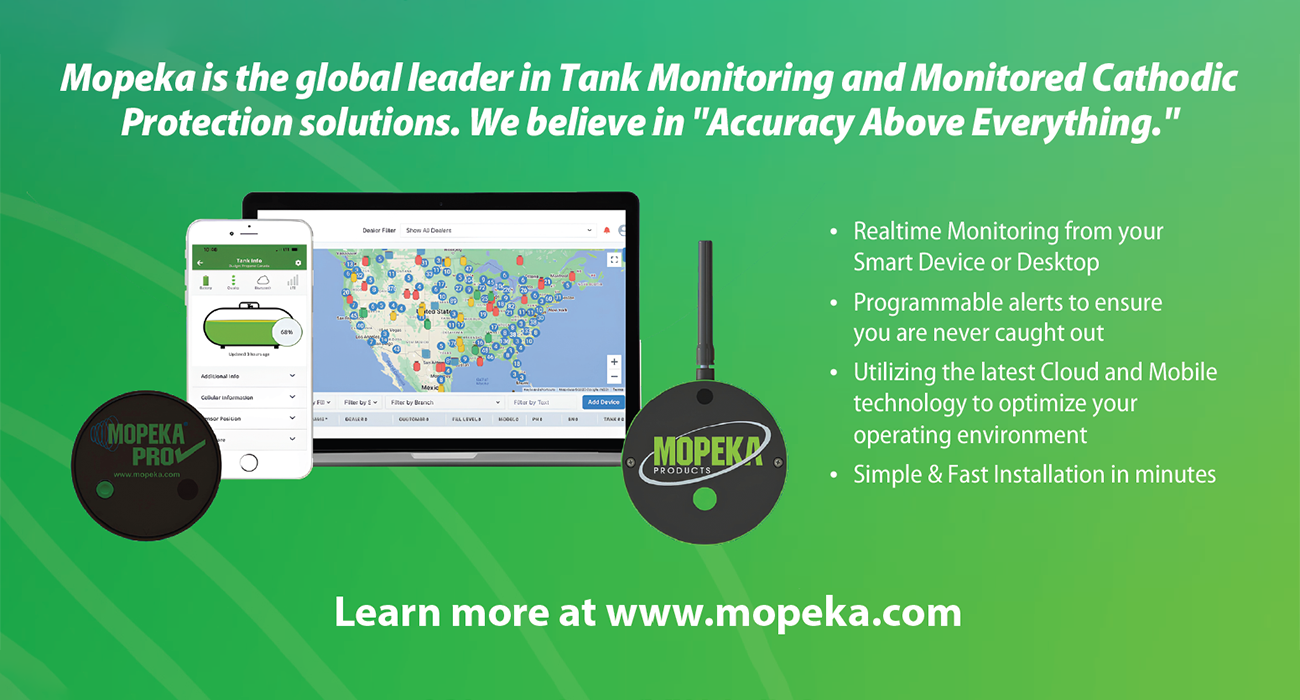
Mopeka Products, an innovator in sonar-based tank monitoring and cathodic protection monitoring, is revolutionizing the way companies monitor and handle liquids. The company uses unique sonar sensors, cloud connectivity, and user-friendly mobile apps to deliver precision within ±1% for all types and sizes of tanks. Mopeka’s solutions, which range from home propane cylinders to industrial bulk storage surpassing 90,000 gallons, provide simple installation, dependable data, and actionable insights, enabling businesses to run more effectively, safely, and intelligently.
In an exclusive interview with Business Fortune, Kevin Jaffe, Co-owner and COO of Mopeka, shares how listening to real-world frustrations led to sonar-based tank monitoring, redefining accuracy, efficiency, and visibility across liquid storage industries worldwide.
Interview Highlight
Kevin, can you walk us through the origin story of Mopeka: what was the spark that led you and your co‑founders to enter the tank‑level monitoring business, and how did you identify sonar‑based liquid sensing as the breakthrough technology? What were the early challenges you faced in translating the idea into a viable product?
Conversational Origin Story of Mopeka
Mopeka began with a simple observation: people in propane and liquid storage faced constant headaches. The founders, experienced in product design – automotive, marine, propane equipment, fuel-system controls, tank refurbishing – noticed tank monitoring was outdated. Manual checks, inaccurate gauges, wasted time, and no real tank visibility were just accepted as the norm.
The more time they spent with customers and technicians, the clearer it became: everyone had the same frustrations, and no one had a good solution.
Instead of trying to invent something out of thin air, they paid attention to those frustrations. Any time someone struggled or said, “There’s got to be a better way,” it pointed directly to an opportunity. That mindset became the foundation of Mopeka.
Why Sonar Became the Breakthrough
The team didn’t set out thinking, “Let’s use Sonar.” They simply looked for a technology that could finally give people accurate, consistent tank level monitoring without tearing into the tank or relying on unreliable mechanical gauges.
What they noticed was that other industries were already solving similar problems. Agriculture, logistics, and other sectors were using IoT and smart sensing – especially ultrasonic and sonar technologies – to measure, monitor, and automate in ways propane hadn’t tapped into yet.
-
Bringing sonar into tank monitoring just made sense. It delivered:
-
precise, reliable readings
-
non-intrusive, easy installation
-
compatibility across a variety of tank types and liquid commodities
-
a cost-effective path to real-time, connected data
Once the team paired ultrasonic sensing with modern IoT connectivity, they had something the industry had been missing for decades: a truly accurate, affordable way to know exactly what’s in a tank, at any time, from anywhere.
That idea evolved into the patented sonar platform Mopeka is known for today – now used not just for propane, but for oil, water, diesel, chemicals, and a range of other liquid commodities.
A Practical Idea That Changed the Industry
What began as listening to people’s day-to-day frustrations grew into a technology that helped reshape how the industry thinks about safety, efficiency, and visibility. Mopeka wasn’t born from one brilliant moment – it came from watching real problems, borrowing smart ideas from other fields, and building solutions that actually work in the real world.
What were some of the early assumptions you had to test about the market (consumer vs industrial), the technology, or the business model? Were there moments you considered pivoting, and how did you decide to stay the course with the ‘accuracy above everything’ philosophy?
Early on, we had to test almost every assumption – who our real customers were, how far the technology could go, and what business model made sense. At first, it wasn’t obvious whether consumer or industrial users would drive adoption. But once we started listening to consumers, dealers, distributors, and field techs, it became clear the biggest need was for change. They were burning time on manual checks and dealing with inconsistent data, and they needed real accuracy to run efficiently.
We also had to validate that Sonar could deliver the precision the industry demanded. Those early tests confirmed that if the readings weren’t dead-on, nothing else mattered. That insight really cemented our “accuracy above everything” approach.
There were definitely moments where we considered pivoting – going more consumer, simplifying the tech, or broadening the product line earlier. But every conversation with customers pointed us back to the same thing: solve the real problems with highly accurate data, and everything else will follow.
That’s what pushed us to stay the course. Once people saw the value of reliable, real-time tank visibility, adoption came naturally.
Your core technology is sonar-based tank monitoring, offering accuracy within ±1 %. Could you explain in layman’s terms how the sonar sensor works and how it differs from traditional tank gauges?
Our sonar technology works a bit like an echo. The sensor sends a quick sound pulse through the tank, it hits the liquid, bounces back, and we measure that round-trip time to figure out exactly how full the tank is – within about ±1%.
On pressurized tanks, the sensor simply attaches to the bottom. The user selects the commodity – propane, butane, water, oil, etc. – and because every liquid has its own unique density, we measure the speed of sound traveling through that liquid. The sensor uses that information to calculate the level with +/-1% accuracy.
Traditional gauges rely on floats, pressure, or mechanical parts that can stick or deteriorate. They have an inaccuracy of +/-10% of actual. Sonar doesn’t rely on the internal mechanics of floats or roto gauges. It stands independent. It’s non-intrusive, it doesn’t wear out, and it doesn’t guess.
In simple terms:
Sonar provides precise measurement!
Installation simplicity is a key feature – magnetic mounts, adhesive collars, no tank changes needed. Could you share a case example where a customer retrofit was particularly challenging, and how your solution simplified it?
One of the best examples comes from a customer who was trying to retrofit monitoring onto a large mix of older pressurized tanks – some painted, some rusted, some with uneven bottoms, and none of them designed with sensors in mind. Traditionally, a project like that would require tank modifications, welding, fittings, or installing new gauges… which is expensive, slow, and disruptive.
With our system, none of that was necessary.
Because the sensors attach magnetically (or with an adhesive collar when the surface isn’t magnetic), the team was able to install them directly on the tank bottoms without taking the tanks out of service. They simply cleaned the surface, mounted the sensor, selected the commodity in the app, and were online within minutes.
What would’ve been a costly weeks-long mechanical retrofit turned into a quick, no-tools installation. The customer went from thinking the project would require major tank changes to having the entire fleet connected and reporting accurate levels almost immediately.
It’s a great example of why installation simplicity matters so much – especially when you’re retrofitting tanks that were never designed to support modern monitoring.
You provide both hardware (sensors) and software (cloud dashboards, mobile apps). How do you ensure the entire system – hardware, firmware, connectivity, user interface – works seamlessly together?
We’ve learned that great tank monitoring isn’t just about the sensor or the software – it’s about how everything works together as one seamless experience. That’s why we design, test, and refine the entire system as a unified ecosystem, ensuring hardware, firmware, connectivity, and the app work reliably together.
On the hardware side, our sensors undergo continuous field testing with real users, not just controlled lab conditions. Every firmware update is validated across a wide range of tank types, commodities, and environments, ensuring consistent accuracy users can trust.
On the connectivity side, we support multiple pathways – Bluetooth, Wi-Fi, Satellite, and Global SIM – so sensors remain connected even in remote or challenging locations. Each connection is tested end-to-end to ensure fast, reliable data delivery to the cloud.
You launched the ‘Cathodic Sentinel Plus’ this year, integrating tank‑level monitoring with cathodic‑protection monitoring. What prompted that product? Was it demand‑pull from customers, regulatory changes, or your own strategic insight into where the market is headed?
The idea behind Cathodic Sentinel Plus really came from what we were hearing in the field. Customers were already struggling with two separate pain points: keeping up with cathodic-protection testing and getting accurate tank-level data. Both were critical, both were time-consuming, and both tended to fall through the cracks because the processes were manual and inconsistent.
We’d already seen strong demand for automated cathodic-protection monitoring – dealers were either spending a fortune on testing or, in some cases, not doing it at all because of the complexity. At the same time, our tank-level monitoring was being widely adopted because it removed labor and delivered reliable, real-time data. Bringing those two capabilities together in a single system was a natural next step. It wasn’t pushed by regulatory pressure as much as it was by customers telling us, loud and clear, that they needed a simpler, smarter way to stay compliant and efficient.
There was also a strategic angle: the industry is moving toward more connected, proactive operations – less “check it when there’s time” and more “see it before it becomes a problem.” Integrating tank level monitoring with cathodic-protection monitoring fits perfectly into that future.
So in a lot of ways, Cathodic Sentinel Plus was the result of strong customer pull, paired with our own belief that the industry is ready for systems that consolidate critical tank data into one reliable, automated platform.
Looking ahead, what is Mopeka’s vision for the next few years, and how do you plan to expand beyond liquid tank monitoring into new innovations or IoT-driven solutions that could transform the industry?
Over the next few years, our vision is to move the industry toward a more connected and proactive future. Tank-level monitoring was just the beginning. We’re expanding into a broader IoT ecosystem where tanks, assets, and field operations can be monitored automatically and accurately, without adding extra work for the operator.
A big part of that growth comes from listening closely to customers. Every time someone points out a process that’s slow, manual, or inconsistent, it helps steer our next innovation. And often, the solution is simply applying existing technology in a smarter, more cost-effective way.
We’ll also continue building strong partnerships with logistics platforms, software providers, and tank manufacturers to make our technology more integrated and seamless.
At the end of the day, our goal is straightforward: use IoT and smart sensing to help the industry operate smarter, safer, and more efficiently – well beyond just liquid-level monitoring.
About | Kevin Jaffe
Kevin Jaffe is the Co-owner and Chief Operating Officer of the firm. He is a strategic, performance-focused executive with over 30 years of experience, demonstrating innovative and energetic leadership in technology across both mainstream corporate environments and start-ups. A solution-oriented, creative, and persistent problem solver, he thrives on challenges. Kevin has a consistent record of optimizing the utilization of human, financial, and equipment resources within large, complex, multinational, technology-driven enterprises. He is a top-level executive who is ITIL and HDI certified and has Fortune 100 experience. Originally from Honolulu, Hawaii, Kevin now resides in Stamford, Connecticut.


.webp)