Most Admired Companies of the Year 2026
Business Fortune
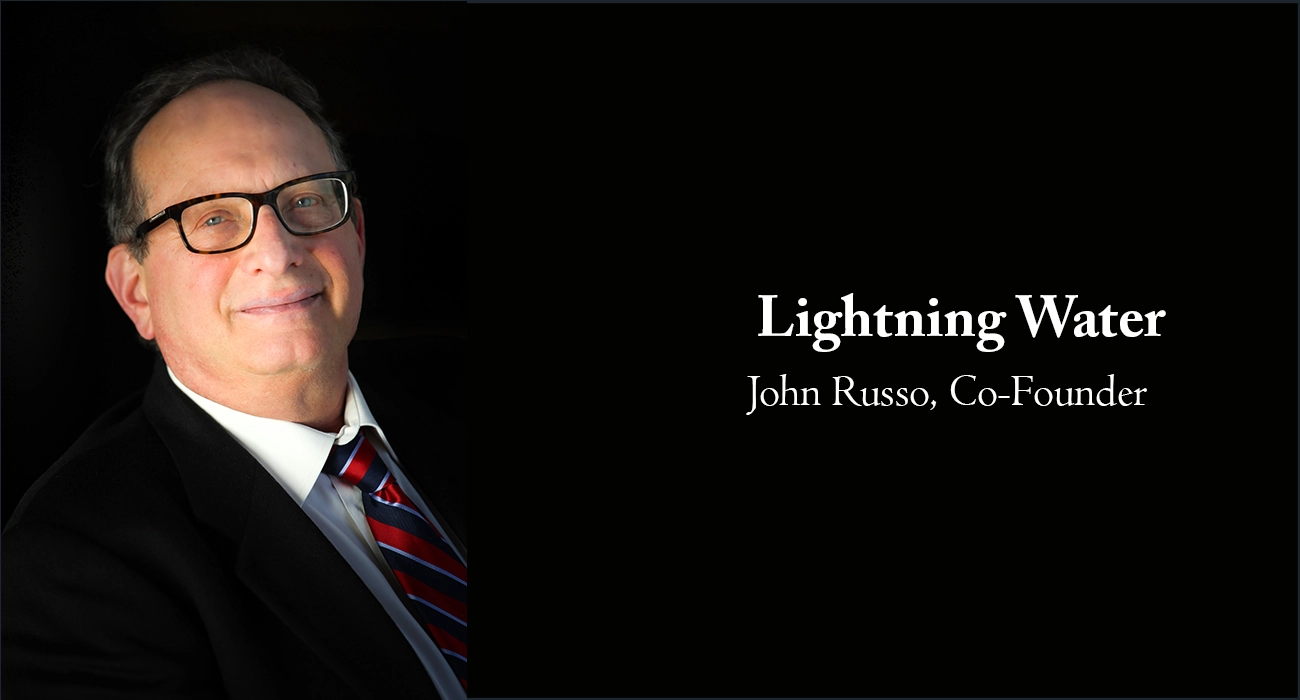
John Russo and Lightning Water are pioneering an innovative approach to water enhancement, exploring how the science behind nature's lightning could transform the way we grow food, use resources, and understand one of life's most essential elements.
Every person on Earth has a relationship with water. We drink it, grow food with it, depend on it for health, and build entire communities around its availability. Yet for something so essential to life, we are still discovering what water can do.
What if water could become more than a resource we consume? What if it could actively contribute to growing healthier crops, improving agricultural efficiency, and reducing our dependence on certain manufactured inputs? These are the questions driving Lightning Water, an emerging agricultural technology company co-founded by entrepreneur John Russo, whose pioneering vision is opening new possibilities for one of the world's most essential resources.
Its approach draws inspiration from one of nature's most extraordinary events: a lightning storm. By bringing together air, water, and electrical energy, Lightning Water is exploring how the chemistry associated with lightning can be recreated in a controlled environment and directed toward practical applications. The implications begin in agriculture. But the potential significance reaches much further—to the food we eat, the resources we share, and the systems upon which our lives depend.
The Science Behind the Lightning
For millions of years, lightning has been part of Earth's natural processes. When electrical energy moves through the atmosphere, it triggers chemical reactions involving nitrogen, oxygen, and other atmospheric components. Some of these reactions contribute to the natural nitrogen cycle, through which nitrogen becomes available in forms that can eventually support plant growth.
Modern plasma science explores how electrically energized gases can produce reactive chemical species under controlled conditions. When plasma interacts with water, it can create what scientists call plasma-activated water, or PAW. This water contains reactive oxygen and nitrogen species whose properties depend on the plasma-generation process and treatment conditions.
Lightning Water is investigating how this activated water can contribute to plant development, nutrient efficiency, and microbial management without synthetic additions. The idea is remarkable in its simplicity: instead of relying exclusively on what we add to water, perhaps we can change what water itself contributes. A miracle in its elegance and premise, the concept brings together chemistry, physics, biology, and engineering around a resource that agriculture already uses every day. It is not magic. It is science revealing new possibilities within something nature has provided all along.
What Could This Mean for Growing Food?
Modern agriculture has accomplished extraordinary things. Farmers produce food at scales previous generations could scarcely imagine. But that productivity also depends on fertilizers, water, energy, transportation, and complex supply chains. When those systems become expensive or disrupted, the consequences extend from the farm to the grocery store.
Lightning Water is exploring another approach: improving the functionality of water already circulating through agricultural systems. In controlled growing applications, Lightning Water reports up to 30% greater harvest yield and a 35% shorter harvest cycle. All while using less water.
Consider what those numbers could mean. A greater yield means more crop produced from a growing operation. A shorter harvest cycle means less time between planting and harvesting. Together, if these results can be consistently replicated across suitable soil and hydroponic mediums, they could represent meaningful improvements in agricultural productivity.
The figures are company-reported results, and further testing across different growing conditions remains important. Nevertheless, they illustrate why the technology deserves attention. For greenhouse operators, hydroponic growers, vertical farms, nurseries, and specialty-crop producers, the improvements in growing efficiency can influence the economics and resource demands of food production.
Lightning Water is not suggesting that conventional fertilizers should simply disappear. Its approach is to investigate whether plasma-activated water can complement existing nutrient programs, improve how resources are used, and potentially reduce reliance on certain conventional inputs. The question is no longer simply how much we can put into an agricultural system. It is how much more intelligently that system can operate.
Plants, Water, and the Difference Between Providing and Nourishing
Plants are living biological systems. They do not absorb every substance placed around their roots indiscriminately. They selectively respond to environmental conditions and possess sophisticated mechanisms for sensing, taking up, and transporting nutrients. That raises an important question for Russo: How do plants know the difference between what helps them and what does not?
Agricultural inputs must be delivered in forms and conditions plants can best utilize. Some nutrients are partially absorbed; others may be lost through runoff, leaching, or other processes. Lightning Water is investigating whether changing the chemistry of water can help improve the efficiency of this relationship. The potential is not simply about growing more. It is about exploring how better agricultural production might work more effectively with enhanced biological processes from what is already present in nature.
Scientific Exploration Meets Entrepreneurial Imagination
Behind Lightning Water is an entrepreneur whose professional journey began far from agricultural laboratories. John Russo grew up in a family with three generations in the fish business, learning early how commerce, relationships, and practical problem-solving intersect. He later helped establish Russo/Grantham Productions with composer Marshall Grantham, building a commercial music enterprise associated with in-house Back Pocket Studios in Manhattan and major advertising agencies.
That experience taught Russo to bring together people, technologies, and ideas that might otherwise remain disconnected. Today, that instinct has taken him into plasma science. Among Russo's close scientific relationships is Dr. Alexander Fridman, John A. Nyheim Chair Professor and Director of the C. & J. Nyheim Plasma Institute at Drexel University.
An internationally recognized plasma scientist, Dr. Fridman's research has explored applications involving energy, biology, environmental control, agriculture, and food processing. Russo regards him as a scientific ally and mentor. Lightning Water has also pursued agricultural research connections involving Dr. Francesco Di Gioia and Penn State's College of Agricultural Sciences, particularly in areas involving microgreens and hydroponic growing systems. These relationships reflect a central principle of the company's approach: imagination may introduce a new possibility, but science must determine what that possibility can accomplish.
Beyond the Farm: Why This Matters to You
Most people will never operate a greenhouse, manage a hydroponic system, or work with plasma equipment. But everyone eats. The efficiency of agricultural production influences food availability, production costs, quality of food, resource use, and the resilience of the systems that supply our communities. When crops can be produced more efficiently, the potential benefits extend beyond growers. Improvements may eventually influence how much food can be produced with available resources and how agricultural systems respond to changing conditions. There is another area of scientific interest: microbial management.
Research involving plasma-activated water and related plasma technologies has investigated activity against foodborne pathogens including E. coli, Salmonella, and Listeria under defined experimental conditions. This opens possibilities for investigating water treatment, agricultural hygiene, and food-handling applications. Such findings do not establish that Lightning Water's specific technology is proven for those uses, but they help explain the breadth of scientific interest in plasma-activated water. For everyday people, the significance is straightforward. Technologies that improve how food is grown, handled, and produced have the potential to affect lives far beyond the places where those technologies are developed.
Nature May Have More to Teach Us
Russo's philosophy begins with a refusal to assume that familiar methods represent the limits of what is possible. His expression “PIGS CAN FLY” reflects a belief that seemingly impossible ideas deserve investigation rather than automatic dismissal. For Lightning Water, that means looking toward nature not simply as a resource to extract from, but as a system whose processes may offer new approaches to persistent problems.
The company continues exploring agricultural applications, scientific relationships, testing, and opportunities to establish measurable benefits under real-world conditions. The long-term ambition is to make plasma-activated water a practical tool for more efficient, adaptable, and resilient agricultural systems. But the larger invitation is for everyone.
We live at a moment when science allows us to investigate natural processes with extraordinary precision. We can examine the relationship between energy and water, understand more about plant biology, and question how the systems sustaining our lives might evolve. Perhaps the next significant agricultural innovation will not begin with a new chemical input, but with a deeper understanding of something already surrounding us.
What if water could do more?
For John Russo and Lightning Water, that is not merely a question. It is a possibility worth pursuing.
“At Lightning Water, we believe nature should not be viewed simply as a resource to extract from, but as a system whose processes may offer new approaches to persistent problems.”
FAQs
What is Lightning Water, and how does it work?
Lightning Water is an agricultural technology company exploring plasma-activated water. The process uses electrical energy to create reactive chemical compounds in water that may support plant growth and improve agricultural efficiency.
How can Lightning Water help farmers improve crop yields?
Lightning Water reports up to 30% greater harvest yields and 35% shorter harvest cycles in controlled growing applications. Further testing is needed to determine how consistently these results can be achieved across different crops and growing conditions.
Can Lightning Water reduce the need for chemical fertilizers?
Lightning Water is investigating whether plasma-activated water can complement existing nutrient programs, improve nutrient efficiency, and potentially reduce reliance on certain conventional agricultural inputs. It is not intended to automatically replace fertilizers.
What role does plasma-activated water play in sustainable agriculture?
Plasma-activated water may help improve resource efficiency, support plant development, and contribute to more productive growing systems. Its potential benefits include better water utilization and more efficient crop production, although results depend on treatment methods and growing conditions.
Who founded Lightning Water, and what inspired its technology?
Lightning Water was co-founded by entrepreneur John Russo. The company's approach draws inspiration from lightning's natural chemical reactions and explores how electrical energy and water can be combined to develop new agricultural applications.















.webp)




.webp)