Best Companies of the year 2026
Business Fortune
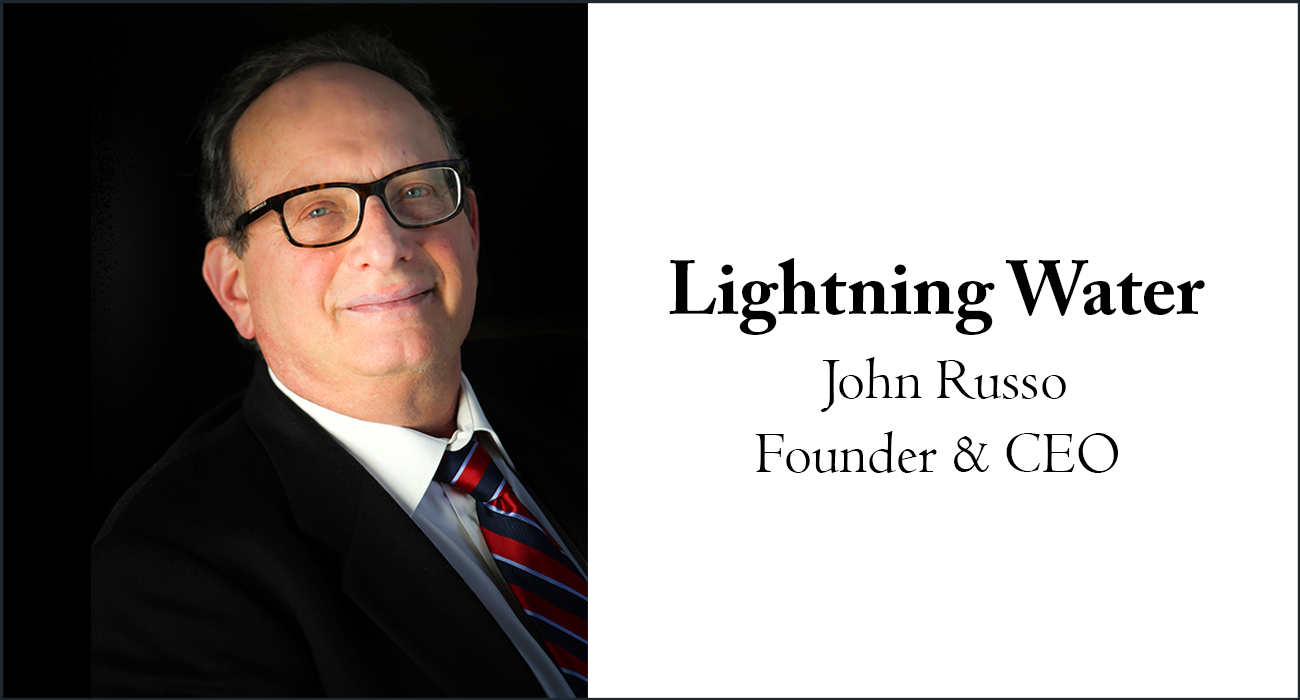
The agriculture sector is at a turning point. Farmers and food producers worldwide tackle with unpredictable climates, soil degradation, and the persistent threat of crop diseases, all while facing mounting pressure to reduce chemical inputs and embrace sustainability. Traditional methods are straining under these demands, leaving growers searching for solutions that are both effective and environmentally responsible. Here comes Lightning Water, a pioneering agri-tech company that has reimagined what water can do for agriculture. By harnessing the power of plasma, ionized air and water energized by high-voltage discharges, Lightning Water transforms ordinary tap water into a nutrient-rich, chemical-free resource that accelerates seed germination, boosts yields, and safeguards crops against pathogens naturally.
The company blends innovative science with sustainability, partnering with institutions like Drexel University to ensure its technology is both innovative and rigorously validated. Lightning Water isn’t just enhancing growth; it’s redefining the future of farming, offering a cleaner, faster, and smarter way to cultivate the food of tomorrow.
In this exclusive interview with Business Fortune, John Russo, the founder of Lightning Water, shared the journey of turning plasma science into a practical, chemical-free agricultural solution, overcoming technical challenges, and pioneering innovations that promise faster growth, healthier crops, and sustainable farming practices worldwide.
What inspired the creation of Lightning Water? Could you share the founding story and the early experiences that shaped the company?
The single largest factor that influenced the creation of Lightning Water LLC was that, at its conceptual core, it gave me the inspiration to follow through on one of my life's ambitions. To be able to take a technology that had heretofore been a physics experiment – a laboratory darling for years – into something that potentially could redefine the entire paradigm of sustainability and chemical free agriculture technology.
My ambition was to use it as my definition of a miracle. Mother Nature has been using it since time immemorial. When lightning strikes rainwater in a storm, it naturally creates plasma activated water. I seek to duplicate and redirect it to a premise and purposeful utilization. In short, I wanted to tangibly contribute to making the world a better place for us all. This was my ticket to try in earnest, an instance of following a true pursuit of the heart.
What were the biggest technical or team challenges you faced while building Lightning Water’s first prototype, and how did they shape your leadership and company culture?
There were many challenges on the technical side of the equation before we could even address the water and air plasma jet exposure optimization set of issues. Creating a reliable, consistent and reproducible end product, resulting in a commercial application was far beyond the capabilities of the lab condition results. The type of power supply the process required was not really available in a reliable format. It forced us to look at solutions outside of the box.
Funnily enough, it prompted us to be more conscious of looking for better answers by identifying the right questions to ask first. By that I mean don't take it upon yourself to invent a new wheel; look at other wheels from other spaces of applications and see how or if they could be happily married to the task at hand. It proved to be the right path for us.
Given plasma science is a relatively new technology in mainstream agriculture, how do you address safety concerns and build trust with growers, regulators, and the broader industry?
Safety concerns surrounding entirely new protocols are not unfounded and need to be addressed. Certainly, from a hardware and technological POV you want to be careful when employing very high voltage electrical componentry. Especially when subjecting that 3,000 volts to a water element. We have taken great pains to overcome that concern. As far as crop safety concern goes, we are very pleased to be using no additives to our water in the plasma activating process. We add nothing. That's part of the miracle of this technology.
We create reactive nitrogen species as fertilizer and reactive oxygen species (such as hydrogen peroxide) naturally as bacteria, viral, mold, and fungi sanitizer, without adding anything to ordinary tap water. We intend to build trust with growers, regulators, and the broader industry by providing them with our Lightning Water brand product and inviting them to use it to their own satisfaction criteria. We want to create our own pool of believers. Believers will then become buyers on the merits it has demonstrated firsthand, not from subjective representations.
Lightning Water promises faster seed germination, stronger yields, and natural surface sterility. Which of these benefits has surprised you the most in real field trials, and why?
The fascinating part of what aspect of Lightning Water is most impressive and what benefits are most profound is our greatest asset. I am happy to say the multi-themed benefits Lightning Water provides are very pleasant and rare instances of an embarrassment of riches. The most impressive are contingent upon what the most pressing issues each grower is challenged in each particular environment. My own personal opinion of what impresses me most is the speed and size of the growth of the crop. Microgreens are of particular note. They have vigor and mass that are very profound when compared to their control counterpart. It is a minimum of 30% improvement. 40% is not uncommon. That is a marvelous result.
How do you explain plasma-activated water to farmers, and how is it different from traditional fertilizers or sanitizers?
I will explain the simple chemistry and the physical science at hand when high voltage pulses of electricity literally create a recombination of the atomic structure of the ambient air (80% nitrogen and 20% oxygen) and water (H2O), and create new molecules by rearranging the electrons in each element. I explain how the nitrogen species created is the finest form of nitrate possible, since it is not chemically synthesized and how the tensility of the water is increased so that the crop can absorb the fertilizer agents more fully and without chemical residues. I explain how the oxygen species serve as a bactericide, virucide, and pesticide, all naturally occurring in the water.
We call this fertigation. Then I say try it out. It's not for sale, but it is available for sharing with the people I feel are open-minded and demonstrate a willingness to embrace change for the better. I leave the rest up to Lightning Water to show the proof itself when the results are seen firsthand. The results are the revelation. Proofs are found when the pudding is served, and its taste is observed.
As you work with farms of different sizes, from small hydroponic growers to larger operations, how do you tailor Lightning Water solutions? What’s one unique use case that stands out?
The size, type grow (soil or hydroponic) and crop of each indoor environment must be assessed on an individual one by one site analysis basis. This is where our strengths show up. Science is one half of the equation. Practical farming practices are the other half. Until now, it was very difficult for both halves to be on the same page at the same time. What I mean is that there wasn't a qualified interpreter counterpart to serve in the role of translator. We have made that great leap from the theoretical into the kinetic with our close relationship with Penn State Agriculture.
Thanks to our association with Dr. Francesco DiGioa, director of Micronutrient Sciences at Penn State, along with our 9-year close relationship with Dr. Alexander Fridman, Director of Drexel University's Nyheim Plasma Institute, we have an expert horticulturist and the world's leading plasma authority working together so that we can walk between both these worlds. We are very focused on developing nutrient and plasma application optimization for microgreens as a specialty. We want to lay claim to becoming the most advanced authority on the planet for microgreen cultivation breakthrough techniques. The world will benefit from these efforts.
Looking ahead, are any new products, markets, or technologies in your pipeline, and what’s driving those future directions?
Looking ahead, the future directions and applications we are aiming for are as bright as they are ambitious. One of the things I hold dear as an intention to aspire to is to put Lightning Water in the hands of the end consumer as a practical product. That would mean making it a retail sale item, sold as an adjunct to drinking water sales pipelines such as Loews, Home Depot, Costco, Walmart type big box outlets, as well as nursery chains and normal grocery chains.
We are currently developing with Acquatree Grow Systems and to encourage these efforts to promote a movement towards food security by the public by growing their own food resources. It's the consciousness that counts. I wish for plant lovers to have the opportunity to give their plants the best possible nourishment, a proud owner can provide for the welfare of their favored indoor housemates and gardens. We wish to share these blessings with as many households in as many applications of appreciation for Nature's gifts to us as we can.
About | John Russo
John Russo is a creative professional with over 25 years of advanced management, marketing, and sales experience in the broadcast and digital media sectors. Committed to developing, implementing, and utilizing new cutting-edge technology. He has a Special focus in fresh concepts that encourage consumer uptake and offer new perspectives on established traditional platforms. And has an outstanding record of strategic vision and problem-solving. Founded three successful organizations and served as President for all of them.


.webp)