Most Innovative Companies to Watch 2026
Business Fortune
The world beneath the ocean's surface is one of extremes; cold temperatures, corrosive saltwater, and crushing pressures force engineers to create systems that just function without the possibility of failure. For many years, subsea sectors like telecommunications, oil and gas, defense, and oceanographic research have battled with unreliable connectors and cabling systems that resulted in expensive downtime and operating dangers. Next-generation subsea communication is more important than ever as underwater systems develop to manage higher data speeds, more sophisticated equipment, and increased power demands.
To solve the industry's ongoing wet-mate connector problems, John Toth founded Deeplinc in 2014. The company developed a portfolio of advanced fiber-optic and electrical connectors, including the flagship DL5500 and the adaptable DL1100 and DL3300 series, focusing on innovation, precision, and deep-sea reliability. Greg Scull, President and COO, brings decades of subsea connector experience and a proven track record in commercializing complex marine systems. Together, John and Greg have built a culture of collaboration and customer-focused engineering, enabling Deeplinc to develop, test, and produce subsea connectivity solutions that meet the strictest environmental standards.
In this exclusive interview with Business Fortune, John Toth, Chairman, and Greg Scull, President & COO of Deeplinc, discussed the company’s journey in developing reliable wet-mate connectors, overcoming industry challenges, and delivering custom subsea connectivity solutions for extreme ocean environments.
Interview Highlights
How did Deeplinc begin? What is the story of the company?
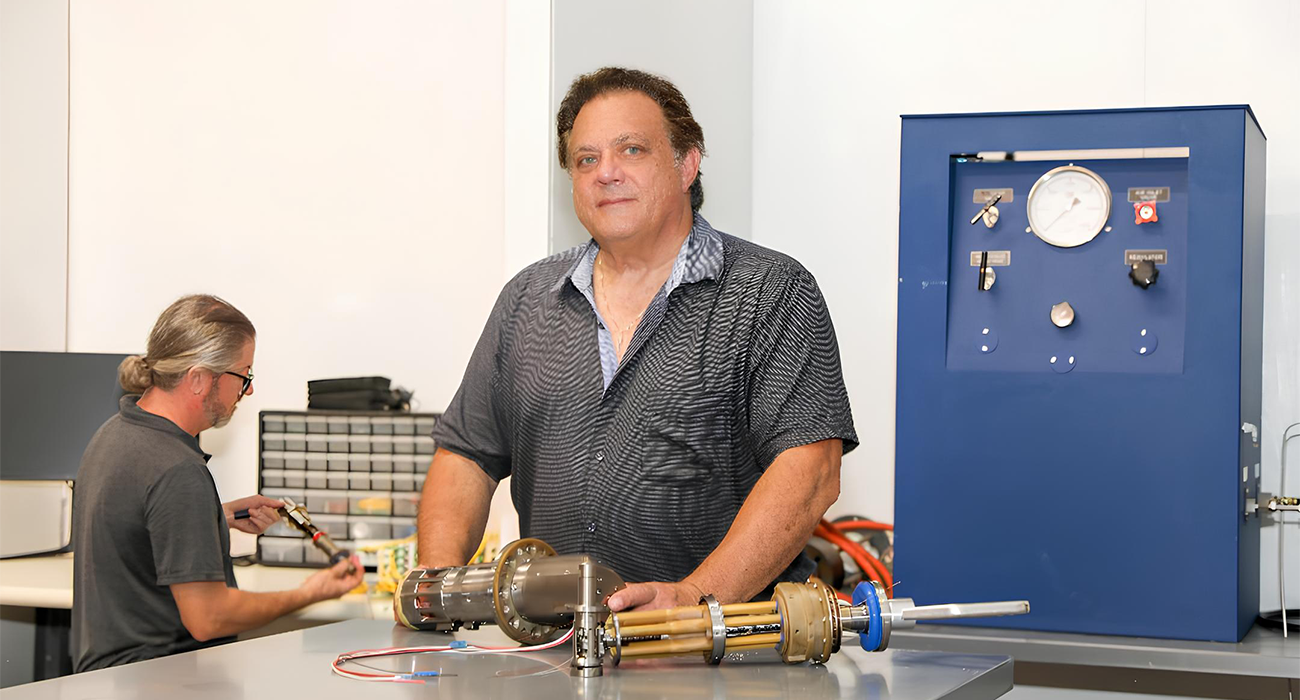
About a decade ago, Deeplinc was formed to address a growing customer need for a wet-mate connector with greater capability and reliability than those available at the time. Our founder, John Toth, spent years working with wet-mate connectors that repeatedly failed in the field. Through this hands-on experience, he gained a deep understanding of what didn’t work and why. Drawing on these insights, John designed a connector from the ground up to overcome these limitations – marking the birth of Deeplinc.
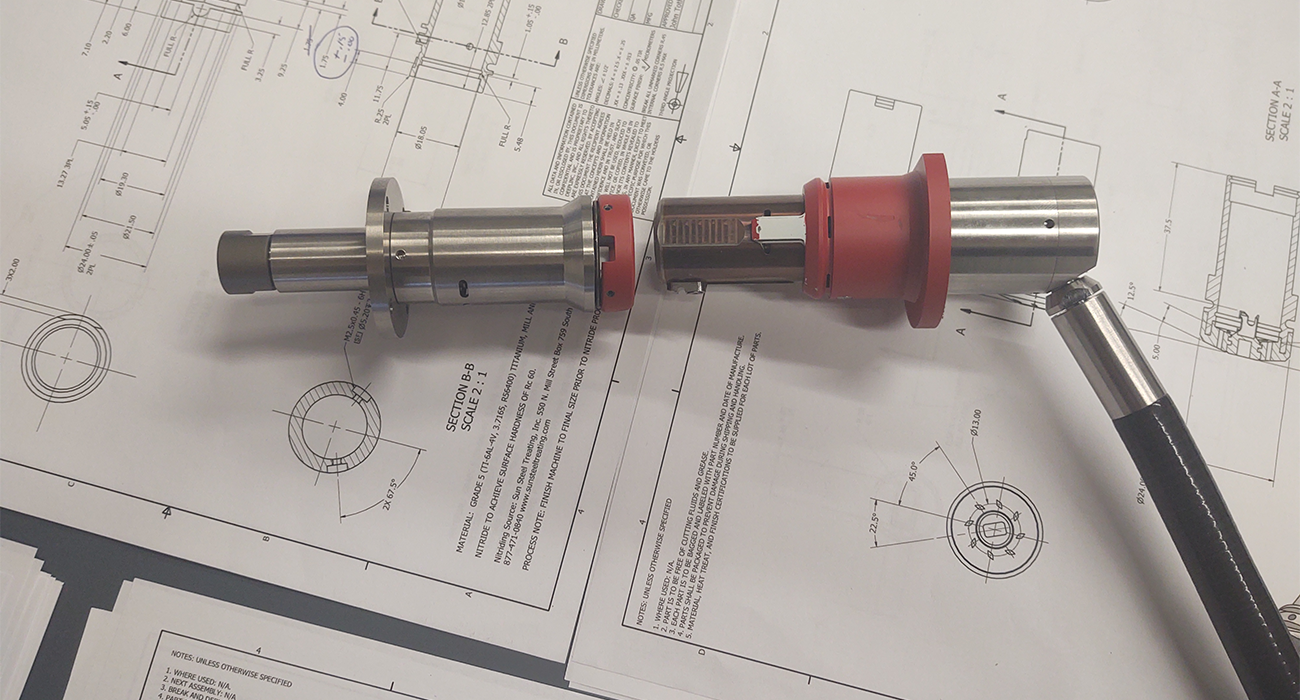
Working around existing wet-mate connector patents, John developed the DL5500 connector, which was designed and rigorously tested over a two-year period from 2015 to 2017. The DL5500 wet-mate connector is a dual-chambered, center-actuated design with multiple seals on its contacts. It can be configured as a hybrid connector, supporting both electrical and fiber contacts, and is capable of handling up to 144 fibers and 12.5 kV electrical capacity. Designed specifically for telecom operations on the ocean floor, the connector can be launched over a sheave and represents the flagship of Deeplinc’s portfolio, the Cadillac of our offerings.
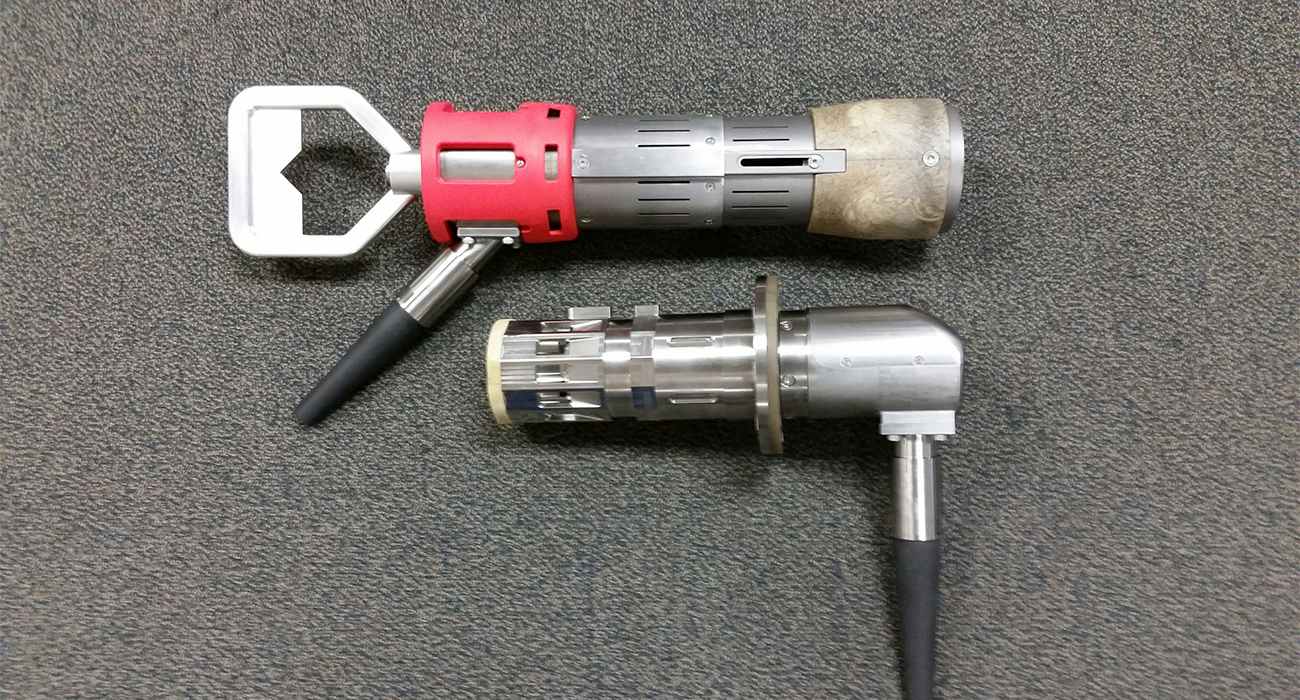
Following customer demand for a less capable and more compact solution, Deeplinc turned its focus to developing a miniature fiber wet-mate connector for submersibles. In 2022, the company launched the DL1100 miniature wet-mate connector, which was very well received and has now been in production for three years.
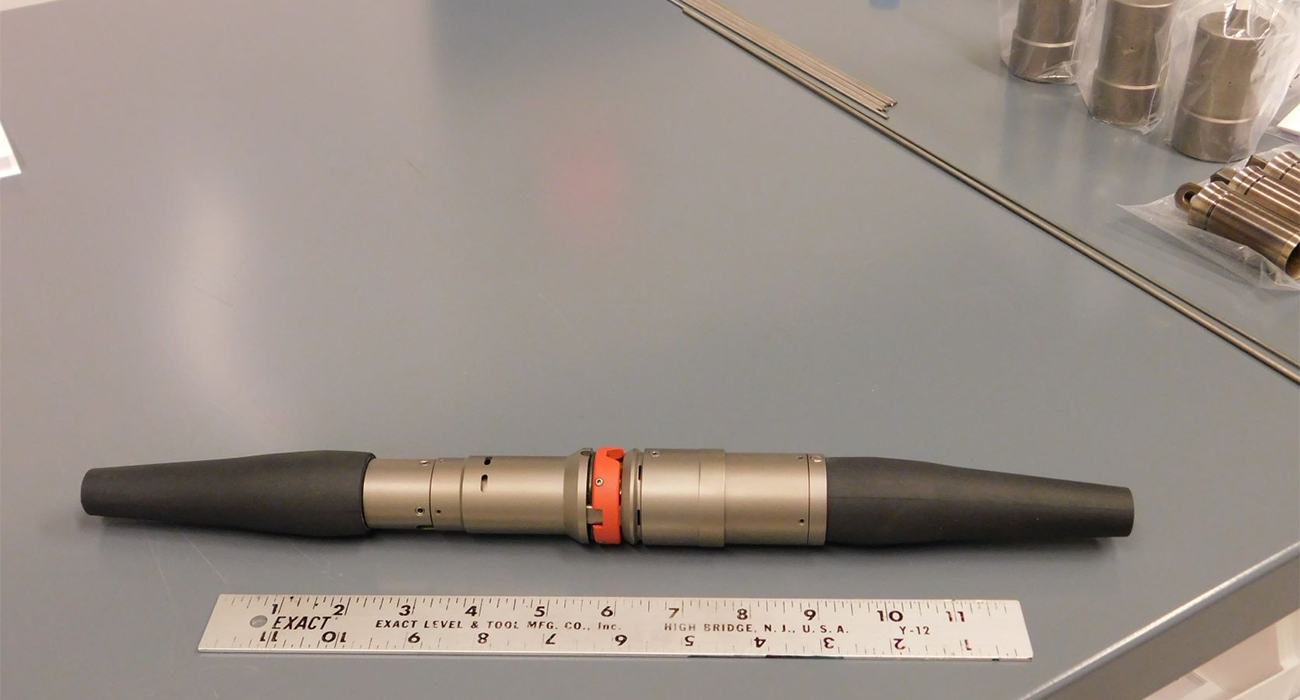
To further expand its product range, Deeplinc developed an equivalent-sized connector tailored for oceanographic and Oil & Gas applications. The DL3300 wet-mate connector was released for manufacturing in 2025. Like the DL5500, it supports higher fiber counts and can be configured as a hybrid connector with electrical contacts. This series reinforces Deeplinc’s ongoing commitment to delivering high-reliability wet-mate connectors for today’s most demanding systems and those of the future.
In addition to connectors, Deeplinc offers accessories such as branching units and panel-mounted connectors. The company also has full in-house capability to manufacture complete cabled systems. Deeplinc connectors are compatible with Pressure Balanced Oil Filled (PBOF) hose or cable, providing customers with flexible and robust options when developing their connection systems.
How has the company grown since its foundation? What are some of the factors that have led to the growth of the company?
Deeplinc’s wet-mate connector technology was ahead of its time when the company was founded in 2014. It was developed to support future underwater systems requiring higher fiber counts and increased voltages. In the early years, Deeplinc faced challenges convincing potential customers of the connectors’ reliability. While many were impressed by the technology, few were willing to be the first to adopt it. Senior engineers, project managers, and executives were often reluctant to risk implementing change, preferring the status quo – even though existing connectors in their systems had known limitations.
During those early years, we experienced fluctuations in our backlog, followed by further slowdowns during the COVID period. In 2022, we made key internal decisions to diversify our connector technology and offer a broader range of connector designs. By that time, underwater systems were evolving, with increasing fiber counts and higher voltage demands. We then encountered an Autonomous Underwater Vehicle (AUV) project that required a miniature-sized wet-mate connector. None of the existing wet-mate connector manufacturers were willing to support this customer. Deeplinc’s connector technology, however, could be scaled up or down to meet a wide range of customer requirements. As a result, we were able to offer the DL1100 miniature wet-mate connector for the program – and that marked a turning point for us.
Following the success of the DL1100, Deeplinc became recognized as a company willing to collaborate with customers from the earliest stages of programs, even for smaller quantity requirements. We began receiving inquiries from customers who had been turned away by larger corporations due to minimum purchase constraints. Deeplinc is the only small business in the world offering wet-mate connectors, and our agility allows us to respond directly to customer needs rather than offering a rigid, unchangeable standard product.
Over the past several years, newer systems with higher fiber counts and voltages have continued to come online. This emerging landscape is driving our growth and increasing industry recognition. The future is bright.
What were some of the Key challenges the company overcame during its lifetime? What were the takeaways?
Deeplinc’s key challenge was sustaining the business until future systems with higher demands came online. We also learned how to navigate COVID as a small business. Looking back, we were able to focus on developing different connector varieties and offering more options to the industries we serve, without simultaneously battling rapid growth. While the road has been long, we have remained steady and consistent. This approach has paid off with our customers, strengthening our reputation as attentive innovators. In the end, the tortoise beats the hare.
What are the products provided by Deeplinc? Can you detail them for our readers?
Deeplinc offers a portfolio of hybrid-capable wet-mate connectivity solutions designed for demanding subsea environments. These include:
-
DL1100 – A small-footprint, miniature wet-mate connector compact enough to fit in the palm of a hand. It supports up to 18 fibers and low-voltage contacts, making it ideal for tight, space-constrained applications where standard connectors are not feasible.
-
DL3300 – A standard-sized wet-mate connector commonly used in Oil & Gas and oceanographic applications. It supports up to 48 fibers and operates at voltages of up to 12.5 kilovolts.
-
DL5500 – A dual-chambered, center-actuated, multi-sealed wet-mate connector. Designed for hybrid use, it accommodates both electrical and fiber contacts, supporting up to 144 fibers and 12.5 kV and beyond in electrical capacity. This connector is typically deployed in naval applications and deep-sea telecommunications networks.
-
Branching Units – Qualified and patented terminations designed for subsea networks that require more than point-to-point communication.
-
Ancillary Products – These include parking positions, caps, test connectors, and bulkhead stands. Deeplinc also supplies pressure vessels for electronic components.
This comprehensive product lineup enables reliable, high-performance connectivity across a wide range of subsea applications.
What engineering and design support does Deeplinc offer for subsea networking products, and do you provide custom-built solutions beyond standard ready-made solutions?
Deeplinc offers custom designs tailored to customer requirements, with the flexibility to scale connector designs up or down to meet specific size constraints. Our connectors
can be terminated to cable or used with Pressure Balanced Oil-Filled (PBOF) hose. Our Specialty is in packaging for subsea environments, and we are capable of designing
individual components as well as complete cabling and communication systems.
Why did Deeplinc choose to specialize into undersea fiber-optic and electrical connection systems and underwater packaging instead of other marine-engineering areas?
Both Founder John Toth and Greg Scull previously worked for a major wet-mate connector manufacturer that began as a small business and was later acquired by Teledyne Marine. They were part of the team that developed one of the early wet-mate connectors and successfully brought it to market for defense, oceanographic, and telecommunications applications. Through this experience, they built an extensive network within these communities and firsthand knowledge of the challenges involved in commercializing such technologies.
Over time, both left the company to pursue separate paths. As John Toth gained deeper insight into the widespread failures of wet-mate connectors through his work as a consultant, he identified an opportunity and applied his engineering expertise to design his own wet-mate connector. He initially licensed the design for manufacturing and began bringing it to market in 2014. During this period, he invited Greg Scull to help market the composite wet-mate connection technology. Drawing on their strong working relationship from earlier projects, the two were able to build on their shared experience and advance Deeplinc’s focus in this specialized field.
Can you explain Deeplinc’s patented underwater Composite Connection System in simple terms, why it matters, and how it differs from traditional underwater connection systems?
Deeplinc’s patented DL5500 underwater Composite Connection System is an advanced wet-mate connector technology designed to deliver significantly higher reliability in harsh subsea environments. It incorporates several distinct design features:
- Dual chambers that act as a foyer, allowing contacts to connect within a clean internal oil environment and preventing debris from entering and shorting the contacts.
- Center-line actuation of contact engagement, which eliminates binding and enables a much higher number of engagement and disengagement cycles.
- Multi-layered contact seals that prevent shorting from one contact to another.
Together, these features provide a 10× improvement in reliability compared to typical single-chamber wet-mate connectors currently available on the market.
What does Deeplinc’s Test and Qualification process involve, and why are these services critical for ensuring reliability in extreme deep-sea conditions?
Deeplinc qualifies its connector designs through a formal qualification program that uses three sets of connectors to ensure interoperability and eliminate reliance on mated pairs. The qualification process consists of a series of tests conducted to industry standards, both on the bench-top and under pressure. During manufacturing, all connectors undergo a Factory Acceptance Test (FAT) to verify contact and continuity on the bench and under pressure.
Failure of wet-mate connectors at subsea depths can be catastrophic, resulting in significant time and cost overruns for a project. The ship time required to return to sea and correct such failures is also extremely expensive. As a result, thorough qualification and FAT testing are critical to ensuring reliability in extreme deep-sea conditions.
The Ocean Engineering Minds Steering Deeplinc
John Toth is Founder and Chief Design Engineer for Deeplinc. John holds 11 US Patents for harsh environment connections. He was Division President and VP of Engineering for Ocean Design. He also worked in Submarine Towed Sonar Array R&D. John holds a Master's, Mechanical Engineering from the University of RI.
Greg Scull is the President of Deeplinc and is responsible for Operations. He held management positions with Ocean Design, Teledyne Oil & Gas, Lockheed Martin Aero and Naval Systems, Litton Poly-Scientific (Now Moog), and Gould’s Advanced Systems Development Division. Greg holds a bachelor’s degree in Industrial Engineering from the University of Maryland.


.webp)