Most Admired Companies of the Year 2026
Business Fortune
Picture someone who has just received CAR-T cell therapy. It’s a powerful treatment, but for years it has meant staying close to the hospital for weeks, sometimes in a ward and sometimes in nearby lodging, with nurses checking all the time. Current Health, a company founded in Edinburgh and now headquartered in Boston, is building the safety net that lets those patients recover at home instead.
The company builds the technology, the nursing support and the data systems that let hospitals, community cancer clinics and drug developers deliver advanced therapies like CAR-T and bispecific antibodies outside the hospital. Patients wear a small monitor on the arm, a team of experienced nurses watches the readings day and night, and doctors are brought in only when they are truly needed.
About Current Health
Current Health started in 2014 with a simple idea that proper care doesn’t always need a hospital bed. By 2021 it had become the largest provider of hospital-at-home technology and services in the US, according to the company. Its focus today is narrower and harder: advanced therapies like CAR-T and bispecific antibodies. These treatments can cure cancers that once had no good answer, but they can also trigger serious reactions, so they have mostly stayed at big academic centers.
Watching for Trouble Before It Shows
The biggest risk after these treatments is cytokine release syndrome, or CRS, along with neurological side effects called ICANS. Fever is usually the first warning sign, but steroids and other drugs can hide it. So Current Health doesn’t rely on temperature alone.
Patients wear a small device on the upper arm that quietly tracks heart rate, breathing rate, oxygen levels, skin temperature and movement. A temperature patch and a blood pressure cuff fill in the rest, and a home hub with its own cellular connection means no Wi-Fi is needed. For brain-related side effects, nurses run short video check-ups, including handwriting samples that can be compared over time.
Does it work? A Mount Sinai study published in 2026 found the system flagged CRS a median of seven hours earlier than standard inpatient nursing. In a Memorial Sloan Kettering study of outpatient bispecific dosing, every CRS event was caught, and all were mild.
The Nurses Behind the Screen
Sensors only tell you something changed. Someone still has to pick up the phone. That’s the job of Current Health’s Clinical Coordination Center, staffed by nurses with emergency room and ICU backgrounds who are licensed in all 50 states and cover nights, weekends and holidays.
They review every alarm, call the patient or caregiver, and follow each hospital’s own protocols. Where standing orders allow, they can start treatment at home. When a patient needs to go in, they arrange transport and call the ER ahead. The company says its nurses resolve 80% or more of patient issues without bothering the hospital team, which matters because more than half of alerts happen overnight.
Tricia Estacio, Director of Nursing for Parnassus Infusion & Apheresis at UCSF Health, put it plainly: “They’re always watching our patients. So we know when we can’t be there, Current Health can.”
Models Built Around Each Therapy
Not every treatment carries the same risk, so Current Health doesn’t treat them the same. For CAR-T, the model is hands-free: patients wear the devices and rest, and the signals flow on their own. For bispecifics, which need lighter oversight, patients send temperature, blood pressure and oxygen readings through an app during step-up dosing.
The results so far are encouraging. Sarah Cannon Cancer Network moved about 90% of its CAR-T patients to outpatient care across four sites. At Memorial Sloan Kettering, 89% of patients who began bispecific step-up dosing outpatient reached their full dose. Programs already delivering these therapies can go live in four to six weeks.
Helping Smaller Practices and Drug Developers
Many patients live hundreds of miles from an academic medical center. Current Health pitches community oncology practices a way to treat them locally, without building an overnight team. It also helps with the unglamorous parts: business plans, staff training, payer contracts and accreditation, with about six months to a first patient for brand-new programs.
On the drug-development side, the company has supported more than 15 clinical trials and helps sponsors collect safety data between clinic visits, delivered in formats trial teams already use. After approval, the same data can show how a therapy performs outside the hospital.
What Comes Next
In October 2026, the company was selected for the FDA’s READI-Home Innovation Challenge for its AI-based CRS detection work. The company notes this is not a marketing authorization, but it does open a line of conversation with regulators. CEO Christopher McGhee said these therapies “must be deliverable in community sites to be accessed by the patients who need them.”
That points to where this is heading. As more bispecifics and cell therapies get approved, the pressure to treat people closer to home will only grow. If detection keeps getting earlier and nurses keep catching problems at the kitchen table, the hospital may become the backup plan rather than the starting point. Current Health is betting on exactly that.
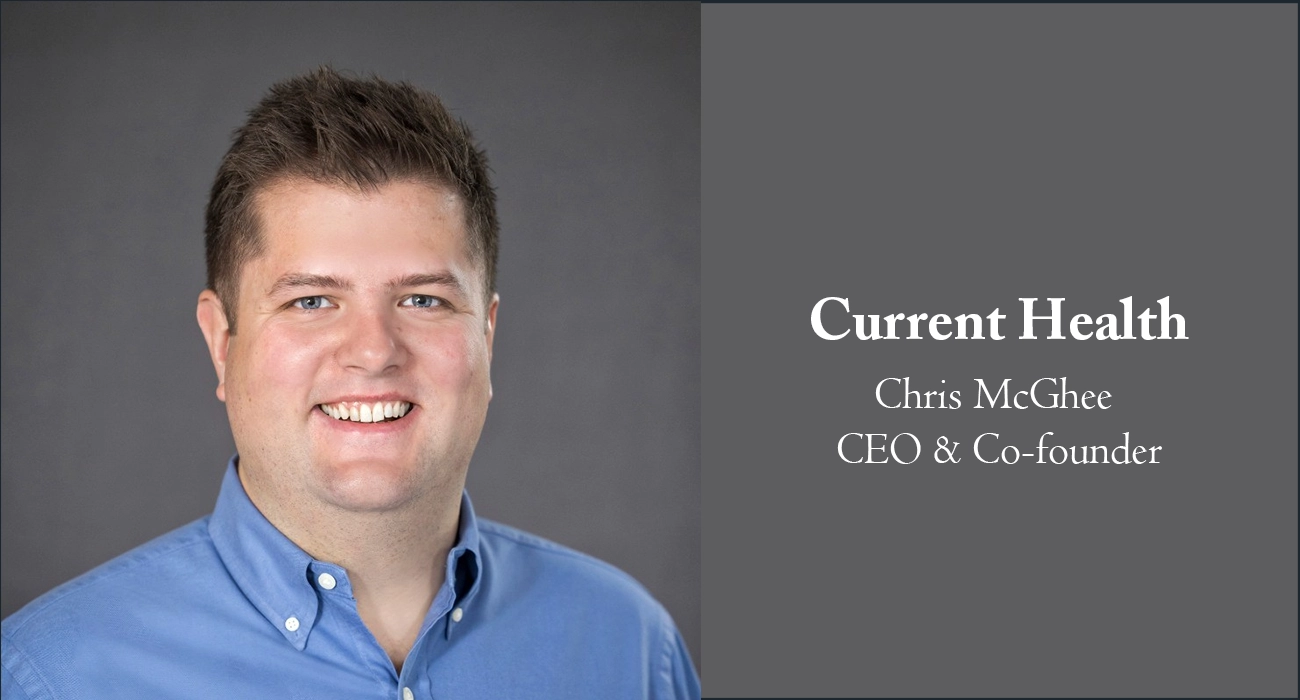
Chris McGhee | CEO and Co-founder
“Our platform is a regulated medical device, and our clinical team handles protected health information every day, for health systems, practices, and trial sponsors.”














.webp)


.webp)