Business Fortune
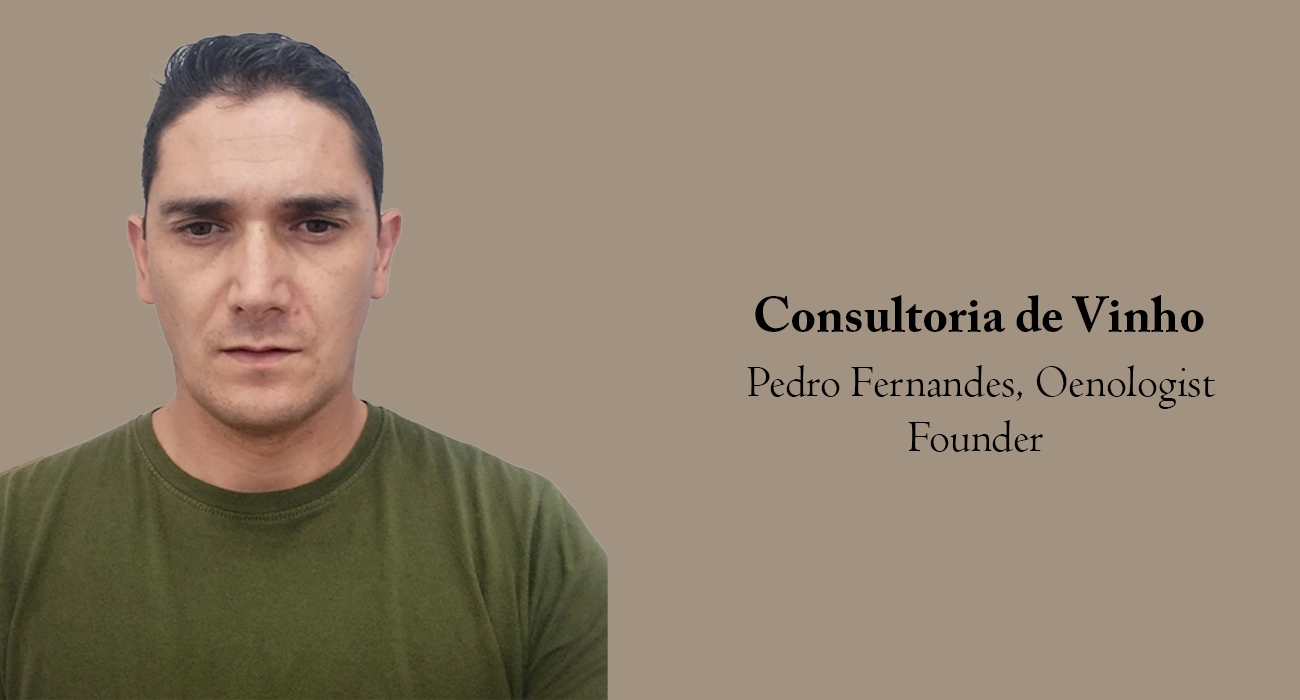
Consultoria de Vinho was founded in 2024, driven by the desire to create a truly integrated service for the wine sector. Throughout his career as an oenologist, Pedro Fernandes realized that many producers, especially small and medium-sized companies, had good wines, vineyards with potential and a strong connection to their territory, but faced difficulties in organizing their businesses and positioning their brands.
The inspiration for Consultoria de Vinho came precisely from this reality. A technically well-made wine does not, by itself, guarantee the sustainability of a company. For Fernandes, there was a need to bring wine production closer to business strategy, supporting producers throughout the entire journey.
It was with this philosophy that he created Consultoria de Vinho. The company aims to provide an integrated approach that connects oenological expertise with the commercial and strategic aspects of the wine industry, helping producers make informed decisions and strengthen their position.
In this exclusive interview with Business Fortune; Pedro Fernandes, Oenologist, Consultant and Founder of Consultoria de Vinho, discusses how the company was created, the challenges faced by wine producers today and the importance of combining technical expertise with business strategy.
How did Consultoria de Vinho begin? What inspired you to start the company, and what is the story behind its foundation?
Consultoria de Vinho was founded in 2024, driven by the desire to create a truly integrated service for the wine sector. Throughout my career, I realized that many producers, had good wines and vineyards, but faced difficulties in organizing their business, positioning their brand, distributing their products and communicating with the market. The inspiration came precisely from this reality. A technically well-made wine does not, by itself, guarantee the sustainability of a company. It was necessary to bring production closer to business strategy, supporting producers from the vineyard to the final consumer. It was with this philosophy that I created Consultoria de Vinho.
Looking back, what is one decision you made in the early years of Consultoria de Vinho that proved to be a turning point in the company's growth?
One of the most important decisions was not to limit the company to traditional oenological consulting. From the beginning, we decided to integrate areas such as viticulture, branding, commercial strategy, digital marketing, distribution, export and new product development. That decision changed the way clients perceived us. We stopped being merely an entity called in to solve a specific problem in the winery and became a partner capable of supporting the project as a whole. Also, our website, technical articles, support tools and social media communication have allowed us to reach producers from different regions.
Consultoria de Vinho supports wineries from vineyard planning to branding and sales. How do you ensure that every recommendation considers both wine quality and long-term commercial success instead of focusing on only one aspect?
Our work always begins with a global diagnosis. We analyze the vineyard, production conditions, wine profile, financial capacity, portfolio, positioning, pricing, sales channels and the producer’s objectives. Wine quality is the foundation, but it must be aligned with a specific market. It makes no sense to recommend expensive processes, new barrels, packaging changes or the launch of several references if the company does not have the capacity to recover that investment. We seek to find the balance between sensory quality, consistency, differentiation, production costs, final price and sales capacity.
Your company brings together viticulture, enology, marketing, sales and business strategy under one roof. Why do you believe this integrated approach is essential for wineries competing in today's global market?
Today, wineries do not compete only on product quality. They compete for consumer attention, distributor trust, space in international markets and the ability to communicate a distinctive identity. When each area works in isolation, inconsistencies often arise.
How do you build trust with winery owners who may have been following the same production methods for generations and are hesitant to embrace strategic or commercial change?
Trust begins with respect. We never assume that tradition is wrong. Many family practices represent accumulated knowledge, identity and a connection to the territory. Changes are presented based on data, tastings, comparisons and concrete objectives. Whenever possible, we start with small interventions, tests or pilot projects. When the producer can observe an improvement in quality, efficiency or sales, resistance naturally decreases. Our role is not to replace the producer’s identity, but to help it evolve without losing what makes the wine authentic.
What opportunities do you believe still remain untapped for Portuguese wineries in international markets and how can strategic consulting unlock that potential?
Portugal has an enormous diversity of grape varieties, regions, styles and stories, but there is still room to transform this richness into greater economic value. Many companies remain overly dependent on price, intermediaries or traditional markets. Commercial preparation also needs to improve. It is essential to have a clear portfolio and consistent pricing. Strategic consulting can help select the right markets, prepare the brand, identify partners, define prices and create a narrative capable of differentiating Portuguese wine.
Every entrepreneur faces setbacks along the way. Can you share a professional challenge that became a valuable lesson and ultimately made both you and Consultoria de Vinho stronger?
One of the greatest challenges was understanding that not all companies are prepared to implement change at the same pace. Sometimes, a recommendation may be technically correct, but not executable due to financial, human or organizational limitations. That experience taught us to adapt projects to each client’s reality.
Are there any new consulting solutions, digital platforms, educational initiatives or innovative services currently in development that you are excited to introduce in the near future?
We are developing digital solutions aimed at improving the organization and monitoring of wine projects. Among them is the TKManager platform, designed to support activity recording, task management, team and partner monitoring and the organization of different areas of the business. We are also working on strategic diagnosis tools, indicator analysis models, annual digital plans and decision-support systems for producers. In the educational area, we intend to strengthen applied training in oenology, marketing, sales, distribution and wine brand management.
Is there an exciting project, milestone or company initiative that we haven't discussed but that you would like our readers to know about?
One of the projects that best represents the philosophy of Consultoria de Vinho is our own brand, Chãos. The project was born from a small family initiative in Provesende, in the heart of the Douro and was developed entirely by our team. Provesende has a very particular micro-terroir, marked by altitude, schist soils, sun exposure and the thermal amplitudes characteristic of the region. These conditions allow the production of grapes with identity, freshness and concentration, reflecting the territory of origin in a very distinctive way. With Chãos, we followed every stage of the project: viticultural planning and management, definition of the wine profile, winemaking, oenological monitoring and the construction of the brand identity. We also developed the name, logo, labels and wine box, seeking to create an image consistent with the authenticity, family dimension and Douro origin of the project.
About | Pedro Fernandes
Pedro Fernandes is an Oenologist, Consultant and Founder of Consultoria de Vinho. His connection to the sector began in childhood, accompanying his family in the vineyard, an experience that sparked his interest in viticulture and wine production. His vision is based on the idea that a great wine must combine identity, technical quality, consumer understanding and economic sustainability. Through Consultoria de Vinho, he seeks to help producers transform their potential into a competitive, coherent brand prepared for the future.


.webp)