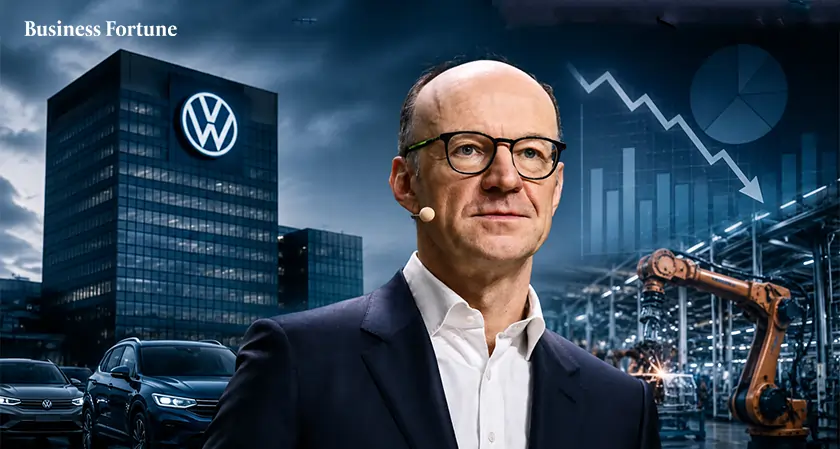
As tariff costs, competition, and a declining revenue outlook reshape the automaker's future, Volkswagen's CFO warns that weaker profits necessitate deeper restructuring.
Volkswagen CFO warned that the German automaker may need deeper restructuring measures as the company reported weaker-than-expected second-quarter profits amid rising costs, intensifying global competition and ongoing operational challenges. The company lowered its 2026 sales outlook, expecting revenue to decline by up to 3%, while preparing major changes across its operations, including potential job cuts and cost reductions to strengthen profitability.
Volkswagen Faces Profit Pressure amid Global Challenges
Volkswagen posted an operating profit of €3.5 billion for the April to June quarter, nearly 10% lower than the previous year and below analyst expectations. The decline reflects increasing tariff expenses, competitive pressure from Chinese electric vehicle manufacturers and difficult market conditions.
The automaker also warned that its margin performance remains under pressure, with Chief Financial Officer Arno Antlitz describing the current profitability level as a signal for further restructuring. Volkswagen aims to reduce costs, improve productivity and increase factory efficiency.
Key factors affecting Volkswagen’s performance include:
-
Lower quarterly profits amid rising operational expenses
-
Reduced 2026 revenue outlook following market challenges
-
Growing competition from Chinese electric vehicle brands
-
Higher tariff costs affecting global automotive operations
-
Planned restructuring targeting long-term business efficiency
Volkswagen Plans Major Restructuring Measures
Volkswagen is considering deeper changes after revealing plans to cut up to 100,000 jobs, double the previously discussed figure. The company is also evaluating options for German facilities, including plants in Hanover, Zwickau, Emden and Audi’s Neckarsulm site.
CEO Oliver Blume stated that Volkswagen’s costs are significantly higher than comparable companies, requiring additional measures to strengthen competitiveness. The company previously reached an agreement with unions to avoid forced redundancies and factory closures until 2030.
The Volkswagen restructuring strategy focuses on lowering expenses while maintaining production capabilities. Executives said alternative solutions for factory capacity would be explored before considering permanent closures.
Automotive Transformation Faces Uncertain Future
Volkswagen’s challenges highlight wider difficulties affecting the global automotive industry. The company has experienced pressure from geopolitical tensions, trade conflicts, strict regulations and changing consumer demand for electric vehicles.
The automaker recently ended production of the ID.4 electric SUV at its Tennessee facility due to challenging conditions in the US electric vehicle market. Volkswagen leadership said the business is entering a new phase of transformation while searching for future growth opportunities.
The Volkswagen electric vehicle strategy remains central to its long-term plans, but competition from China’s expanding automotive sector has increased pressure on traditional manufacturers.
Thus, Business Fortune is of the view that Volkswagen’s restructuring efforts will determine its ability to restore competitiveness and sustainable growth.
FAQs
Why did Volkswagen report weaker-than-expected second-quarter profits?
Volkswagen's second-quarter profits declined because of rising tariff costs, increasing competition from Chinese automakers, and higher operating expenses that affected overall profitability.
Why did Volkswagen lower its 2026 sales revenue forecast?
Volkswagen now expects sales revenue to decline by up to 3% in 2026, citing weak market demand, geopolitical uncertainty, trade conflicts, and continued pressure on global automotive sales.
How will Volkswagen's restructuring plan affect its workforce?
The restructuring plan could result in up to 100,000 job cuts as Volkswagen works to lower costs, improve productivity, and strengthen its long-term financial performance.
Which Volkswagen factories are under review during the restructuring?
Volkswagen is assessing future options for its factories in Hanover, Zwickau, Emden, and Audi's Neckarsulm facility while exploring alternatives to permanent closures.
What challenges is Volkswagen facing in the global automotive market?
Volkswagen is dealing with tariff-related costs, stronger competition from Chinese EV manufacturers, regulatory pressures, geopolitical risks, and slowing demand in key automotive markets.


.webp)






























Comments