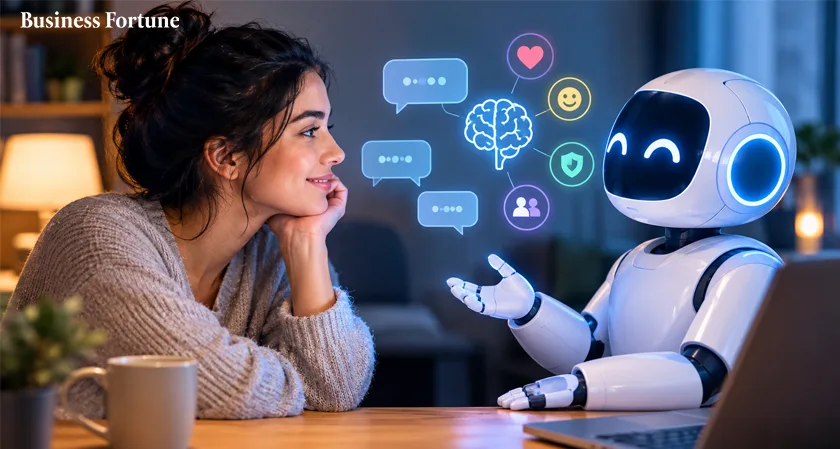
The difficulties people encounter in obtaining "traditional" mental health care are brought to light by the societal shift towards AI therapy.
There is a growing body of expert commentary regarding AI large language models (LLM) and their potential—or lack thereof—to replace actual, human, trained psychologists, despite the fact that the technology is developing and evolving more quickly than the academic community can examine and publish evidence-based studies on it.
The outdated text-prompt chatbot ELIZA, created in the middle of the 1960s, will be remembered by some of us. However, like nearly all technology, it can't really be compared to what's available now, over fifty years later. ELIZA was a closed-off, programmed software whose predictable answers made it more and more boring.
Additionally, even if the existing models—such as ChatGPT-4, Claude, and Gemini—are far from sentient, their designs exhibit a level of adaptability that has never been observed before. And for better or worse, it will only become better.
A monthly membership may cost more than $400, but online therapy with a human on the other end of the phone or laptop is a little more accessible. Beyond financial, geographic, and physical obstacles, in-person talk therapy can be difficult for people with attention-deficit/hyperactivity disorder (ADHD) and autism spectrum disorder (ASD), even though it is quite helpful for both disorders.


.webp)