Innovative Companies to Watch 2026
Business Fortune

Innovation in healthcare often begins with rethinking everyday clinical routines and finding ways to make them easier for caregivers and less burdensome for patients. Blood collection is one of the most common hospital procedures, yet many patients still experience repeated needle sticks even when IVs or central lines are already in place. Despite existing vascular access, diagnostic testing frequently relies on repeated venipunctures, leading to discomfort, vein damage, and unnecessary pain and stress. Recognizing this persistent challenge, Vascular Integrity set out to rethink blood collection through a more intuitive, nurse-centered approach.
The company emerged when experience, regulatory preparedness, and opportunity aligned. Michael Brewer identified an FDA-cleared legacy technology substantially equivalent to standard syringes and vacuum holders. Partnering with Robert Brown, he acquired the manufacturing capability and intellectual property to advance the solution. Chonna Bartholomew, RN, Vice President of Clinical Affairs at Vascular Integrity, brought the crucial clinical perspective. A nurse, healthcare professional, and innovator with more than 30+ years of experience spanning bedside practice, nursing management, vascular access technology implementation, and clinical workflow improvement, she recognized the opportunity to modernize and standardize blood collection from existing vascular access lines. Her insight addressed inconsistent workflows and connector variability that often lead hospitals to default to repeated venipuncture.
The outcome is a streamlined device combining a syringe and vacuum collection system, enabling nurses to draw blood during IV insertion, from existing lines, or from patients with difficult venous access, while maintaining sample quality.
Business Fortune spoke exclusively with Chonna Bartholomew, RN, Vice President of Clinical Affairs at Vascular Integrity, about how the company is working to modernize blood collection by integrating familiar clinical tools into a workflow-focused platform designed to reduce unnecessary venipunctures, support consistent sample integrity, and improve the bedside experience for patients.
Interview Highlights
Pre-analytical errors continue to affect diagnostic accuracy, patient safety, and hospital efficiency worldwide. What gap did Vascular Integrity identify in the blood collection process, and how did that insight shape the development of the ByPass Syringe platform?
In addition to sample labeling issues, pre-analytical errors, particularly contamination and cellular damage, remain among the most common sources of diagnostic inaccuracy in blood collection. These errors continue to be costly and clinically disruptive for hospitals. The quality of blood samples can be affected by factors such as skin flora, hub manipulation, device variability, inconsistent techniques, and fragmented workflows.
We identified a structural gap in the process. While syringes and vacuum holders function effectively on their own, clinicians must often choose between them depending on vessel condition, product availability, workflow requirements across care settings, or personal preference. Historically, most solutions have focused on correcting individual steps, such as skin antisepsis, diversion devices, or removing needleless connectors, rather than standardizing the overall workflow.
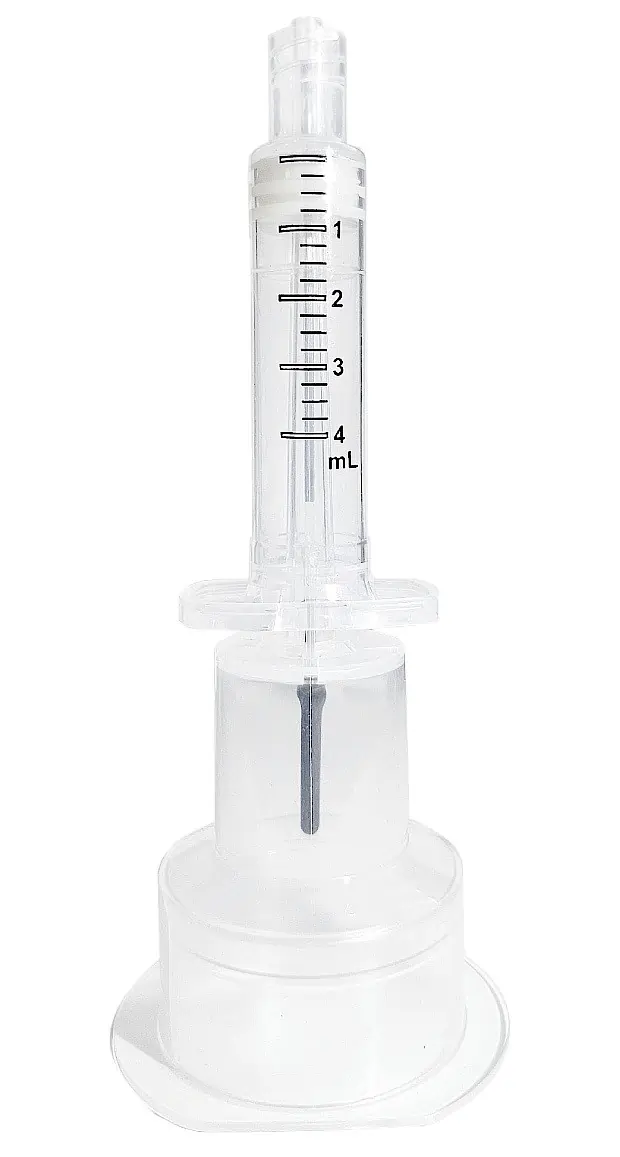
The ByPass Syringe integrates both functions into a single platform.
The manual syringe component allows controlled aspiration and desired waste volume collection (0–4 mL).
The integrated collection holder accommodates bottles and tubes without requiring disconnection or specimen transfer.
The closed-connection configuration supports syringe draws and subsequent line maintenance in accordance with institutional protocols.
By reducing device switching, transfers, and unnecessary manipulation, the design specifications and bench testing suggest improved control over flow dynamics and specimen handling, factors closely associated with poor sample quality.
The ByPass Syringe does not guarantee specific testing sample rates. Instead, it supports standardized blood collection in bottles or tubes, whether obtained through venipuncture, during line insertion, or from an existing line. The objective is to reduce manipulation and variability in the collection process. By simplifying and aligning the workflow, the device helps create a more consistent approach to blood collection.
The VI Sliding Fluid Seal® and VI Velocity Reduction® Technology are central to your devices. Can you walk us through how these innovations improve sample integrity while maintaining vessel health, and what makes them distinct from conventional collection methods?
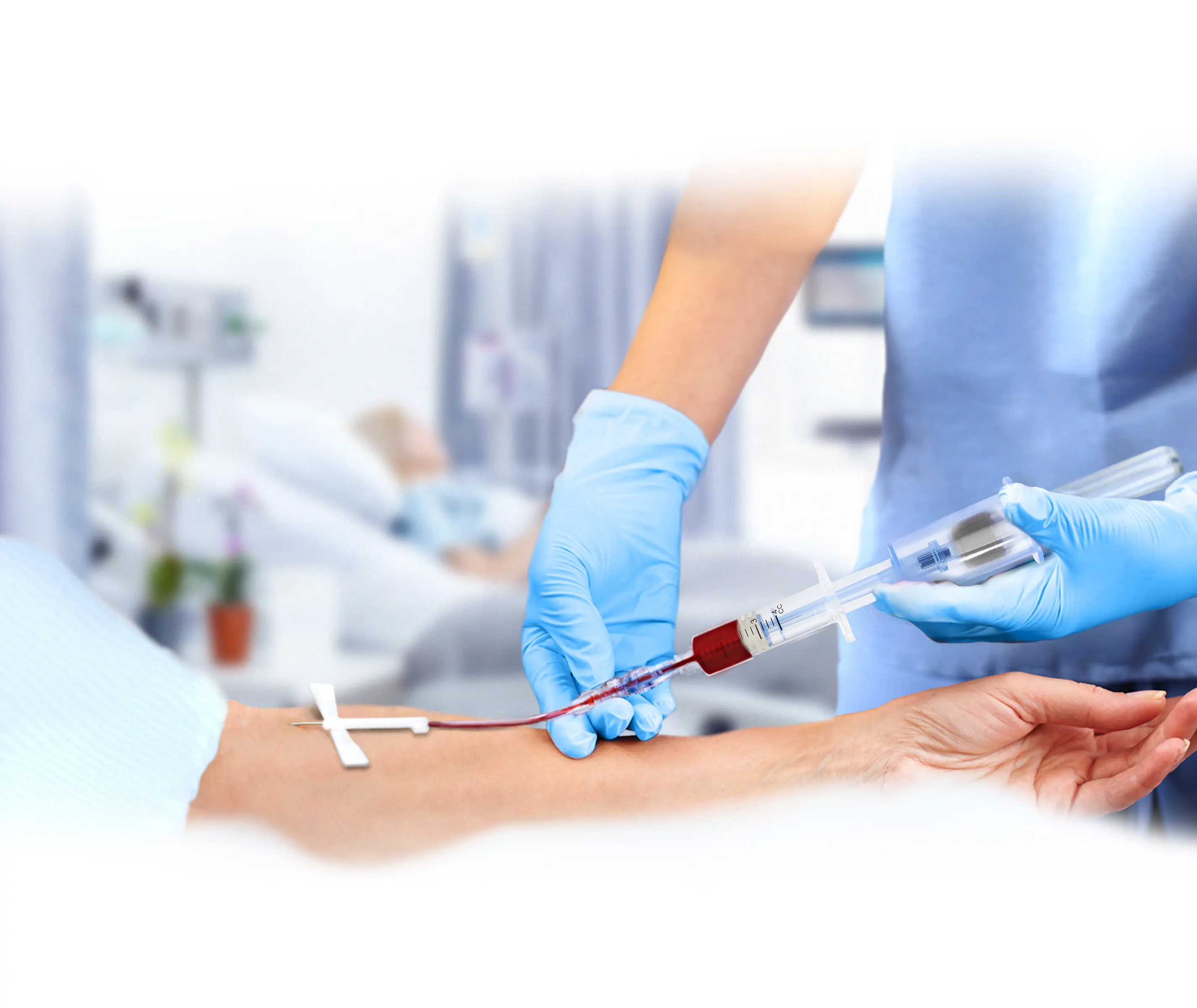
The VI Sliding Fluid Seal® and VI Velocity Reduction® technologies work together to moderate aspiration forces and fluid dynamics during blood collection. Traditional syringe draws require clinicians to manually generate aspiration pressure. When excessive negative pressure is applied, particularly in small or fragile vessels, it may lead to vessel collapse or cellular trauma, while insufficient pressure can result in failed or incomplete draws.
The Sliding Fluid Seal supports separation during the collection process, while the Velocity Reduction design moderates flow during aspiration. Together, these features support successful blood draws across variable vessel sizes, reduce abrupt pressure changes during aspiration, preserve sample integrity, and facilitate the separation of line lock fluid contamination from whole blood when indicated.
What distinguishes this approach from conventional methods is the emphasis on controlled fluid dynamics rather than relying solely on operator technique during blood collection.
The ByPass Syringe is FDA-cleared for use as a blood and body fluid collection device and is considered substantially equivalent to traditional syringes and vacuum holders. It incorporates ISO-compliant luer specifications and standardized volume markings (cc to mL), representing a workflow-integrated evolution designed to bring greater consistency to blood collection across healthcare settings.
Clinicians are already familiar with syringes, vacuum holders, and transfer devices. Because the ByPass Syringe combines these familiar elements, the technical transition is generally straightforward.
The most successful implementations focus on empowerment rather than mandates, offering nurses and phlebotomists a combined tool that allows them to perform blood collection in a way they already understand while potentially saving patients from an additional venipuncture.
Both phlebotomists and nurses appreciate having both syringe control and vacuum capability in a single device. This is especially valuable for patients with DIVA (difficult IV access), where the ability to choose between collection methods can help reduce the likelihood of redraws.
Looking ahead to 2026 and beyond, what unmet needs in blood collection and indwelling line preservation still concern you most, and how is Vascular Integrity positioning itself to lead the next phase of innovation in this space?
The 2024 Infusion Therapy Standards of Practice from the Infusion Nurses Society introduced several important language shifts. These include careful risk–benefit analysis before choosing venipuncture versus a vascular access device (VAD), consideration of cost-effective diversion processes for blood culture collection, and replacement of needleless connectors prior to blood culture draws.
Separating protocols for skin antisepsis or products based on the specific test ordered may be unrealistic at the bedside. However, these distinctions recognize that line-based collection carries both opportunity and risk. A key concern is that changes in INS Standards language are made every 4-5 years, making it difficult for hospitals to keep written policies and practices current. Hospital policy revisions often lag years, sometimes even decades, behind updates to professional standards.
Workflow-integrated technology that reduces manipulation and standardizes methods is therefore essential. The ByPass Syringe, currently in its early phase, is positioned as a potential standardization platform across microbiology, hematology, and chemistry collections, with functionality substantially equivalent to syringes and vacuum holders.


.webp)