Business Fortune
In the interconnected architecture of modern enterprise, a company's cybersecurity perimeter extends far beyond its own servers it encompasses every vendor, partner, and third-party service with network access. A single vulnerability in a supplier's system can serve as the entry point for a catastrophic breach, a reality Sling was founded to address. The company operates on a foundational premise: to understand cyber risk, one must think like an attacker. Sling’s platform provides a continuous, data-driven assessment of third-party vulnerabilities, but its true innovation lies in its data sourcing. By leveraging a decade of intelligence gathered from Darknet communities and cybercrime forums, Sling’s algorithms analyze risk from the adversary’s perspective, offering a predictive score that reflects genuine threat levels rather than theoretical compliance checklists.
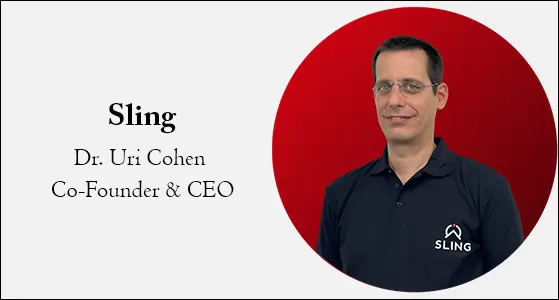
Under the leadership of Dr. Uri Cohen, Sling has positioned itself as a critical line of defense in the increasingly opaque digital supply chain. The platform’s core product, the Sling Score, functions as a dynamic cyber risk rating. It autonomously discovers a vendor’s digital assets, maps its attack surface, and continuously monitors for emerging threats, leaked credentials, and indicators of attack preparations. This agentless approach requires only a domain name to initiate, delivering initial insights in seconds and a comprehensive risk picture within 24 hours. For Chief Information Security Officers, this transforms third-party risk management from a periodic, manual audit into a real-time, automated surveillance system.
The financial imperative for such a platform is clear. A third-party data breach can lead to direct financial loss, regulatory fines, operational disruption, and irreparable brand damage. Sling’s predictive threat analysis and continuous monitoring serve as a financial safeguard, enabling companies to identify and remediate vendor vulnerabilities before they are exploited. This proactive stance directly protects revenue by preventing the immense costs associated with a major security incident, making cybersecurity a measurable component of risk management rather than an abstract IT expense.
The Intelligence Core: Sourcing Risk Data from the Adversary’s Playground
What fundamentally differentiates Sling is the provenance of its data. While many security tools scan for known vulnerabilities, Sling’s threat intelligence is harvested from the hidden corners of the internet where cybercriminals operate. This includes tracking discussions on ransomware campaigns, the sale of stolen credentials, and preparations for targeted attacks. This intelligence provides context that generic vulnerability scanners miss, revealing which vulnerabilities are actively being exploited and which vendors are being actively targeted.
This adversary-led intelligence directly influences resource allocation and risk prioritization. By filtering out theoretical risks to focus on active, imminent threats, Sling enables security teams to concentrate their limited resources on the vendors and vulnerabilities that pose the most immediate danger to business continuity. This strategic focus prevents wasted expenditure on low-priority issues and ensures that security budgets are deployed against genuine, quantifiable threats.
The Automation Mandate: Replacing Manual Audits with Continuous Vigilance
Sling’s platform addresses a critical operational bottleneck: the traditional vendor risk assessment, which is often a slow, questionnaire-based process that provides only a snapshot in time. Sling replaces this with continuous, automated monitoring. Its system autonomously discovers new digital assets, tracks changes in a vendor’s security posture, and provides real-time alerts on security incidents, ensuring that a company’s risk awareness is always current.
This shift from periodic to continuous monitoring creates significant operational efficiencies and cost savings. It eliminates the manual labor associated with sending, tracking, and evaluating countless vendor questionnaires. This allows internal security teams to scale their oversight without a linear increase in headcount, managing a vast vendor ecosystem with precision and speed, thereby reducing the operational overhead of compliance and risk management.
The AI-Powered Future: Embedding Expertise into the Workflow
Looking forward, Sling’s ROSE AI represents the evolution of its platform from a monitoring tool to an active participant in the risk management lifecycle. This AI cybersecurity assistant is designed to provide expert guidance, automate remediation steps, and offer predictive analysis on the likelihood of vulnerability exploitation. It translates complex threat data into actionable recommendations, democratizing access to high-level security expertise.
The integration of AI directly accelerates risk resolution and enhances decision-making. By providing clear, prioritized steps for mitigation, ROSE AI reduces the time between threat identification and remediation, shrinking the window of exposure. This not only strengthens security postures but also empowers less specialized staff to manage complex risk scenarios, embedding expert-level decision-making directly into the security workflow.
In an era defined by digital interdependence, Sling provides the visibility required to navigate a perilous ecosystem. By fusing unique Darknet intelligence with automated, continuous monitoring, Dr. Cohen’s company offers a pragmatic solution to one of modern business’s most intractable problems. The platform doesn’t just assess risk; it provides a dynamic, attacker-informed map of the threat landscape, allowing enterprises to fortify their weakest links before they are discovered and exploited by adversaries.