Business Fortune
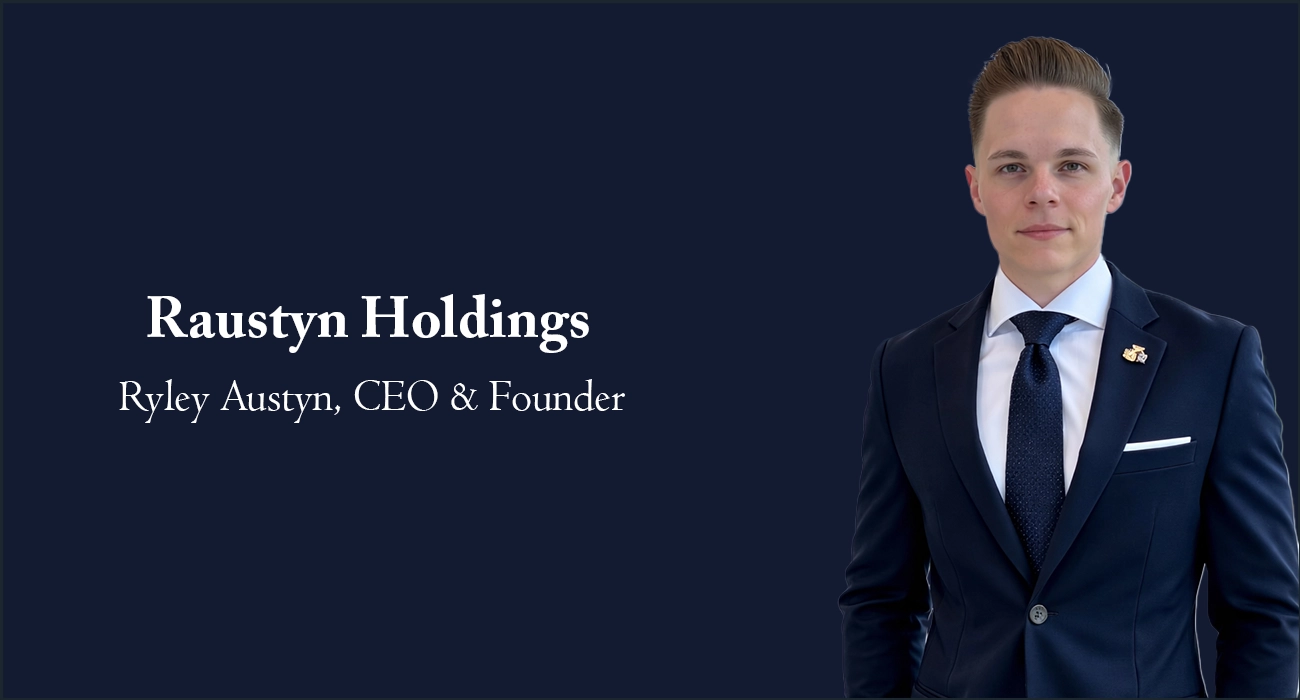
When a disaster happens, the recovery work never falls on just one group. A fire, flood, or major property damage brings in many different people at once, from restoration teams and insurance professionals to adjusters and specialists who handle specific types of recovery work. All of them are working toward the same goal to resolve the damage. The problem is that these groups have often worked separately, even though their tasks are closely connected. This lack of coordination can cause confusion, delay and make an already difficult situation even harder to manage.
This is where Raustyn Holdings founded by Ryley Austyn, work to bring order and unity to an industry that has mostly worked in separate parts for years. Instead of treating restoration and related services as individual efforts, he built a connected platform where different specialists can work together in a more organized way.
From contents and textile restoration to electronics recovery, document services, and other essential trades, each business within the network continues to operate with its own expertise and identity. The difference is that they are now linked through a shared framework that improves communication, speeds up response times, and makes the overall process more efficient for everyone involved.
Over time, this model has expanded beyond restoration alone. It now includes adjacent essential services that naturally support and strengthen the ecosystem, creating a more complete and resilient structure. As a result what emerges is a system built to cut through confusion when things are already difficult.
In this exclusive interview with Business Fortune, Ryley Austyn, Founder and CEO of Raustyn Holdings, shares how the company is building an integrated ecosystem across restoration and skilled trades while preserving legacy businesses and improving industry efficiency through collaboration and smart operational systems.
Your portfolio spans sectors like content restoration, HVAC, plumbing, electrical, and insurance claim advisory. Where do you see the biggest structural gaps in these industries today, and how is Raustyn positioned to address them?
One of the biggest structural gaps across the restoration, skilled trades, and insurance claim industries is fragmentation. Many businesses in these sectors are highly specialized, but they often function independently despite being united throughout the lifecycle of a claim or project. As a result, insurance carriers, restoration contractors, and policyholders are frequently forced to coordinate multiple vendors and service providers with limited operational alignment, inconsistent communication, and varying levels of quality control.
When even one part of a project underperforms, the entire claim experience can suffer. This affects not only timelines and costs, but also the policyholder’s trust and overall experience during what is often a highly stressful event.
Raustyn Holdings was built specifically to address these inefficiencies by creating a more integrated ecosystem of complementary service providers operating under aligned leadership, systems, and operational standards. Our model is designed to improve communication, accountability, speed, and consistency across the entire claim process while still preserving the specialized expertise of each operating company. By consolidating critical service lines and creating operational synergy between them, we believe we can deliver a more seamless experience for carriers, contractors, and clients alike, while elevating the overall standard of the industry.
Many restoration and service-based companies face succession challenges as owners look to retire. How does Raustyn Holdings approach succession planning differently from traditional acquisition models?
Raustyn Holdings takes a different approach to succession planning compared to many traditional private equity acquisition models. While that approach may deliver financial efficiency, it can overlook the human reality behind companies built over decades of effort, relationships, and reputation.
Many of the businesses we work with are founder-led and shaped through years of sacrifice and commitment. Some owners are looking to scale and want to remain involved as part of a larger platform that provides additional resources, systems, and infrastructure. Others are preparing for retirement and want assurance that their employees, customers, and legacy will be protected once they step away, particularly when there is no family succession plan in place.
Our approach is intentionally relationship-driven and highly personalized. We invest time in direct conversations with founders to understand their goals, concerns, and vision before discussing structure or terms. Each transaction is built around the specific needs of the owner and the business rather than applying a one-size-fits-all framework. We also prioritize cultural preservation, employee stability, and operational continuity so that the business can continue to perform and grow after the transition.
For us, succession planning is not just about acquiring companies. It is about becoming long-term stewards of the businesses, people, and legacies that founders have spent their lives building.
Innovation in restoration services is often overlooked compared to tech-driven industries. What role does technology, data, or process innovation play in improving response time, accuracy, or customer outcomes within your network?
Unlike industries such as cybersecurity, AI, or renewable energy, restoration and skilled trades have traditionally been slower to adopt technology, develop data infrastructure, and implement process innovation. Many businesses still operate with fragmented systems, manual workflows, and limited visibility across active projects, leading to inefficiencies and delays. We saw this gap as a clear opportunity for improvement.
At Raustyn Holdings, we do not see technology as a replacement for craftsmanship or service. We view it as a tool to improve operational efficiency, accountability, and the overall customer experience. Across our portfolio, we have prioritized systems that enhance communication, improve project visibility, streamline workflows, and enable real-time data tracking across internal teams and external stakeholders.
A major focus has been improving day-to-day operations for field teams. By simplifying processes, improving access to information, and reducing administrative burden, teams can focus more on execution and client service rather than outdated systems.
On the customer side, expectations for transparency and communication have increased significantly. Clients expect real-time updates, clear project visibility, and confidence that their property and claims are being managed properly. We have implemented systems that improve communication, strengthen documentation, and enhance tracking visibility, especially in warehousing and contents restoration, where personal property may be stored for months during recovery.
The restoration industry often depends on deeply local, relationship-driven businesses. How does Raustyn Holdings balance preserving the identity and legacy of acquired companies while still driving scale and operational efficiency across the portfolio?
One of the most important aspects of our acquisition philosophy at Raustyn Holdings is preserving the identity, culture, and legacy of the businesses we partner with. These are not simply companies on a spreadsheet; they are organizations that founders and employees have spent decades building through hard work, sacrifice, relationships, and reputation within their communities. We believe there is tremendous value in honoring that history rather than replacing it.
When we evaluate a business, we are often drawn not only to its operational strength but also to the culture and foundation that made it successful in the first place. In many cases, the very reason we want to become involved is because of the reputation, trust, and legacy the founder and their team have established over time.
Our approach is centered on collaboration rather than disruption. Instead of forcing dramatic change, we focus on enhancing and modernizing areas where operational inefficiencies exist while preserving the core identity of the organization. That can include investing in systems, infrastructure, technology, communication processes, or operational support that allows the business to operate more efficiently and scale more effectively without losing the character that made it successful.
We have found that this approach creates a smoother transition for employees, customers, and leadership teams alike. It also gives founders confidence that the business they built will continue evolving in a way they can be proud of. In many cases, there is renewed excitement when founders see their companies being refreshed, supported, and positioned for long-term growth through a collaborative partnership rather than a complete overhaul.
At scale, operational efficiency is important, but we believe the strongest platforms are built by preserving what makes local businesses exceptional while providing them with the resources, infrastructure, and strategic support to thrive at a higher level.
Climate-related damage, water events, and property restoration needs are increasing globally. How is Raustyn adapting its strategy to meet rising demand while maintaining service quality at scale?
As climate-related events, severe weather patterns, and large-scale property losses continue to rise, demand for restoration and essential trade services is increasing across both residential and commercial markets. The real challenge is not just meeting that demand, but doing so while maintaining consistency, quality, communication, and strong execution at scale.
Raustyn Holdings has been positioning itself for this shift through joint venture partnerships, integration initiatives, and consolidation across complementary service lines and geographic regions. By building a more interconnected platform, we have developed a scalable service footprint that allows us to deploy people, equipment, and resources more efficiently during major events.
Our structure also enables us to leverage centralized infrastructure, technology systems, back-office support, and strategic advisory resources across the portfolio. This creates operational consistency while allowing local operators to stay responsive within their markets. During periods of high claim volume or catastrophic events, access to a wider network of talent and equipment is critical to maintaining service quality and response times.
We continue investing in communication systems, workflow management, training, and operational processes that strengthen coordination across the platform. Scale alone is not enough. The real advantage comes from combining scale with accountability, quality control, and a strong customer experience.
Through partnerships and joint ventures, Raustyn has expanded into new verticals such as plumbing and specialty restoration services. What signals do you look for when deciding a new sector or company is the right fit for your platform?
At Raustyn Holdings, we take a deliberate and disciplined approach to evaluating new verticals, partnerships, and expansion opportunities. Our strategy is not about diversification for its own sake, but about identifying subsectors that naturally complement the restoration, insurance claims, and essential home services ecosystem we already operate within.
When assessing a company or sector, the first priority is operational alignment with our existing platform. We evaluate whether the business improves the customer journey, strengthens referral networks, enhances service continuity, or fills a meaningful gap in the broader ecosystem. Areas such as plumbing, specialty restoration, foundation systems, and related essential repair services are strong examples, as they support the same end users without competing with our core operations.
Cultural alignment is equally important. We prioritize founder-led businesses with strong reputations, long-standing customer relationships, operational integrity, and leadership teams committed to quality and service.
We also consider whether a business can benefit from integration into a larger platform through shared resources, technology, infrastructure, operational support, and collaborative growth. The goal is a partnership where both sides strengthen each other while preserving identity and expertise.
Ultimately, we are building a connected ecosystem of essential service providers working together operationally and strategically to create a more seamless experience for contractors, insurance carriers, and property owners.
Looking ahead to 2026 and beyond, what does long-term success look like for Raustyn Holdings, both in terms of industry impact and the legacy of the companies within your portfolio?
Long-term success for Raustyn Holdings goes far beyond building a larger portfolio of companies. While expansion and scale matter, our vision is focused on creating lasting impact for the businesses we partner with, the people within our organizations, and the communities we operate in.
At the center of our philosophy is the belief that businesses should create opportunity. One of the most meaningful parts of building this platform has been seeing individuals grow into leadership roles, build careers, support their families, and access opportunities they may not have otherwise had. As we expand, we want that impact to grow across every company and market we enter.
From an industry standpoint, our goal is to raise the standard within restoration, essential trades, and insurance-related services by building a more integrated, efficient, and people-focused ecosystem. There is a clear opportunity to modernize and professionalize these industries while preserving the local relationships, craftsmanship, and entrepreneurial spirit that define them.
We are also building with permanence and legacy in mind. Projects like the long-term vision for Raustyn Tower represent more than a structure; they reflect the foundation, culture, and generational intent behind what we are building. Our aim is to create an organization that endures over time, continues generating opportunity, and supports communities well into the future.
We believe success is measured not just by the companies we build, but by the lives we impact and the legacy those businesses carry forward for generations.
About | Ryley Austyn
Ryley Austyn is an entrepreneur and the founder and CEO of Raustyn Holdings, a privately held investment firm focused on acquiring and scaling companies in the specialty restoration and essential services sectors. Known for his disciplined approach and long-term vision, he has built a scalable platform aimed at reshaping the restoration industry.
He has been mentored by respected business leaders, strengthening his ability to identify undervalued opportunities and unlock their potential. Under his leadership, Raustyn Holdings has grown into a significant presence in the national market, earning the trust of employees, founders, shareholders, and financial partners through consistent performance and execution.
Ryley remains focused on raising industry standards, empowering leadership teams, and building a lasting, long-term enterprise.

.webp)