Business Fortune
Kaplan is a global provider of educational services that offers instruction and training to organizations, people, and schools and institutions worldwide. Founded in 1938 by Stanley Kaplan, the company offers individuals, universities, and businesses a diverse array of services, including higher and professional education, test preparation, language training, corporate and leadership training, student recruitment, online enablement, and other university support services.
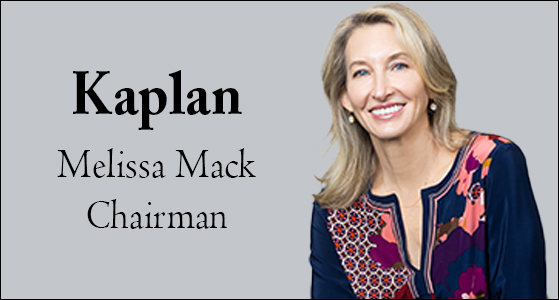
The Business Fortune has an exclusive interview with Melissa Mack, Chief Communications and HR Officer at Kaplan, on how her organization assists students at all career and life stages in realizing their goals and constructing their futures.
Interview Highlights
What conditions or incidents gave rise to Kaplan? Please give us a quick overview of the past.
The son of immigrants, Stanley Kaplan excelled academically at New York City's City College. Anti-Jewish admissions quotas destroyed Stanley's hopes of attending medical school, so he converted a part-time job educating kids in the neighborhood into a full-time company. When Stanley set up shop at his parents' Brooklyn house in 1938, the company that is now known as Kaplan was created.
Stanley's experience of being turned down for medical school inspired him to embark on a new life goal: helping children from all backgrounds achieve SAT success so they might have access to higher education and, consequently, "the American Dream." He understood that achieving high test scores gave other working-class or immigrant pupils a chance to establish their worth and level the playing field.
Eighty-five years later, Kaplan's global presence now includes more than 25 countries, but the company's primary goal of assisting people in passing exams, obtaining certifications, or earning degrees in order to progress and realize their goals still stands.
As one of the oldest companies in the education sector, how has Kaplan's mission evolved over time, and what lessons has it learned?
Well-known for helping students ace difficult admissions exams, Kaplan has expanded from its foundations in educational access and development to become a valuable collaborator with colleges and businesses, specializing in the cultivation of talent for the workforce of the future.
Although Kaplan's goal of assisting people in achieving success and advancement hasn't altered, the techniques in which it does so have grown considerably. Providing career-focused higher education programs for working people, developing work-integrated learning models, opening up pathways to higher education for overseas students, and developing online learning alternatives are a few examples of what this entails. Today, Kaplan is a leading global authority on education, assisting businesses in maximizing employee recruitment, development, and advancement as well as helping students progress their education and professions. Kaplan also assists colleges in attracting and supporting students.
How does Kaplan support underprivileged students in realizing their college dreams, increasing their access to education, and transforming their learning?
Regardless of background, Kaplan has always been dedicated to providing equal opportunities for all of its students. Here are just a handful of the instances Kaplan has gone above and beyond its access mission:
- Kaplan provides free test preparation to low-income kids in collaboration with ACT, the organization that administers the ACT college admissions exam.
- In order to create "All-Access" programs that allow these colleges and universities to offer free graduate school and professional licensing exam prep for all of its students, Kaplan has partnerships with a number of colleges and universities, including eight historically black colleges and institutions. First-generation students and/or underrepresented minorities make up half of all students using All-Access.
- In collaboration with Amazon, Kaplan coaches assist over 750,000 front-line employees who qualify by helping them clarify their long-term professional objectives and take advantage of Amazon's free tuition advantages to obtain the degree or certification that will set them up for further study and career growth.
- In order to help its employees progress in their careers, Kaplan has partnered with meal-kit provider HelloFresh to offer free GED prep.
In what ways are the innovations of your company advancing the education sector?
Many people are beginning to doubt the value of higher education as a result of rising college fees, a widening gap between education and employment, and the growth of quicker and less expensive alternatives to higher education, including boot camps and credentialing programs.
In light of this, a lot of Kaplan's most recent inventions aim to assist academic institutions in adjusting to the shifting environment and improving their relevance to the constituents they serve. Our Prelum ("pre-alumni") programs assist colleges in introducing students to job exploration at an earlier age, allowing them to make better informed college decisions, forge connections with businesses and academic institutions, and establish possible career pipelines. With the help of our Credegree ("credential + degree") programs, academic institutions may combine their degree programs with choices for credentialing and licensing, better preparing their students to enter the workforce with the knowledge and expertise employers seek. This increases their competitiveness and marketability.
Kaplan has long demonstrated a record of innovation since its inception, including launching the first online law school (Concord Law School) in 1998, building one of the world’s first online universities, and, in 2018, pioneering a new higher education paradigm by selling Kaplan University to Purdue University in a groundbreaking deal that signaled critical changes in higher education. Innovations like these have encouraged many others to consider ways they could serve students online, years before the COVID pandemic forced everyone to move to virtual options.
Tell us about Kaplan's upcoming plans.
Numerous issues confront higher education: enrollment is dropping, there are issues with cost, quality, and accessibility, and employers are complaining that graduates aren't prepared for the workforce. Contrary to popular belief, however, the pandemic actually helped to spur higher education into action in ways that point to a far more bright future for the industry. These opportunities are largely due to digital education, which holds great promise for providing high-quality instruction to a larger and more diverse student body. That involves training bigger numbers of underprivileged and unconventional learners, expanding hybrid models that are particularly helpful for integrating work and learning, and mixing online and in-person models to generate unique methods for global study. These are the domains where Kaplan excels.
With so many colleges facing a demographic cliff, Kaplan's background developing creative, adaptable curricula to meet shifting demands in the workforce is becoming more and more valuable. It's not limited to colleges either. Kaplan will continue to work directly with students in addition to our thousands of university partners, as well as our thousands of corporate and business partners.
About | Melissa Mack
Melissa Mack is Kaplan's Chief Human Resources and Communications Officer. In addition, Mack is the Chairman of the Kaplan Educational Foundation, a public organization that she oversaw from its founding and assisted in founding.
Mack graduated from Brown University with honors in his B.A.


.webp)