Fastest Growing Companies to watch 2026
Business Fortune
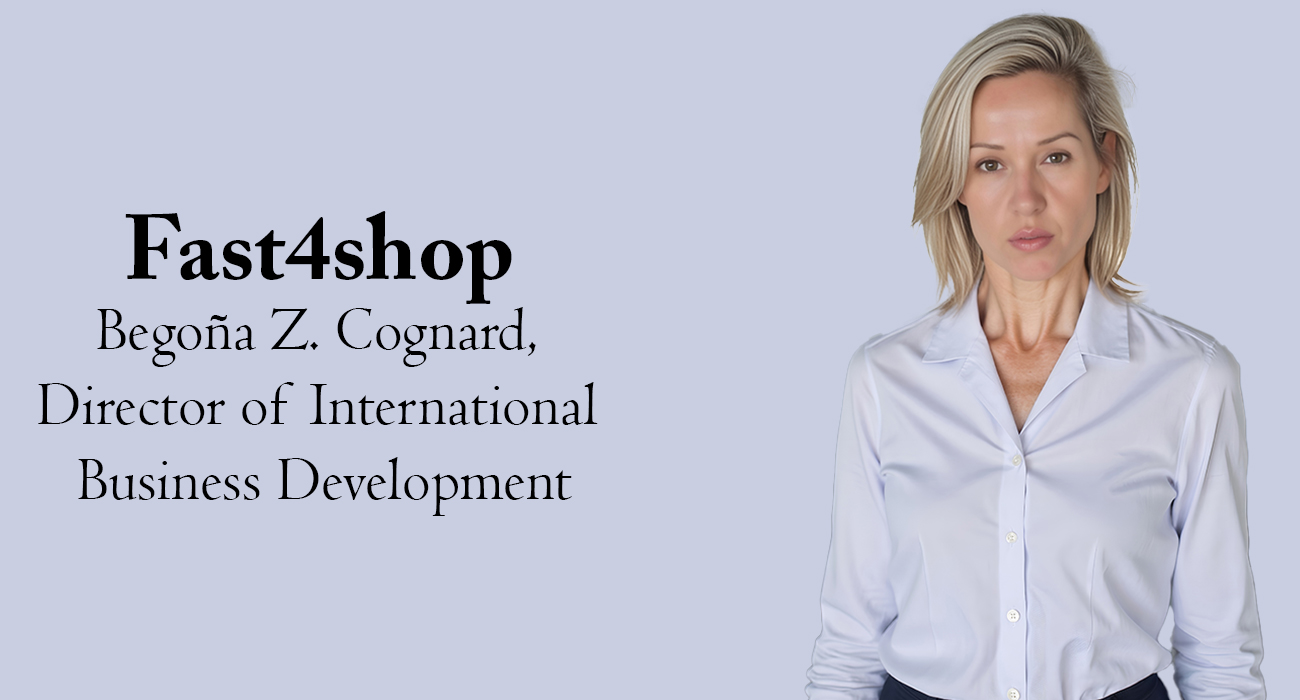
Founded in 2021, Futurian has established a pioneering operating model by introducing RFID technology to the pharmaceutical sector. This advancement lays the crucial infrastructure for the transition toward Pharmacy 4.0. This evolution goes far beyond mere logistical optimization; it responds to a critical need for biosecurity. Recognizing that touchscreens act as transmitters of pathogens, Futurian has positioned itself as the driving force behind the new standard of Aseptic Retail.
This vision comes to life through Fast4shop, a completely contactless self-service and self-checkout ecosystem. By combining smart sensors with item-level RFID identification, the system eliminates the need for physical interaction with surfaces. As a result, users can safely process their purchases in under 15 seconds.
Although still in the early stages of global expansion, Fast4shop has already received industry recognition, including awards for its innovation in contactless checkout. As it grows internationally, the company is positioning itself as a key player in the future of Retail 4.0, where speed, automation, and biosecurity go hand in hand.
In this exclusive interview with Business Fortune, Begoña Z. Cognard shares how Fast4shop is transforming pharmacy retail through a contactless self-checkout ecosystem. Ahead of its imminent international rollout, she details a vision for faster, safer, and biosecure patient care.
Global expansion typically creates technological friction when integrating new systems into legacy infrastructures. Fast4shop addresses this by proposing a framework designed to adapt to diverse ecosystems. From an architectural perspective, how have you built your core to ensure interoperability?
The key engineering decision was to develop a highly decoupled architecture. We are currently initiating our international expansion, with the first implementations scheduled for June in Portugal. At the same time, in other European markets such as France and Spain, as well as in non-EU regions across LATAM (Brazil, Chile, Mexico) and Asia (India, the United Arab Emirates), we are seeing a steady flow of enquiries and technical evaluations from potential clients. These strong early signals validate our roadmap, demonstrating clear pre-operational traction and confirming market interest, which is a critical first step before establishing a physical presence in these regions.
To ensure this expansion does not require re-engineering existing client systems, Fast4shop operates as an intelligent sensor layer that integrates smoothly with current infrastructure. This is enabled through our Universal Integrator (UI-ERP-f4s), which uses hybrid architecture to separate data flows based on urgency and volume. The system supports bidirectional scalability across both standalone local servers (on-premise) and multi-tenant cloud environments (SaaS), effectively isolating high-load processes from point-of-sale transactions.
In the contemporary software industry, onboarding tends to be remote. However, you require your international partners to travel to your headquarters in Valencia. What is the technical rationale behind this normative requirement?
The Fast4shop ecosystem integrates complex sensor technologies, including infrared, RFID, RF, AM, and QR. We treat our software and hardware as a single, inseparable system whose reliability depends on precise final-stage assembly.
For this reason, we do not rely on virtual training for critical processes. We require partners to attend in person at our headquarters in Valencia, where local technicians can directly learn from our developers and fully understand the system’s complexity. Official certification is granted only after successfully completing a final technical qualification exam. This academic standard is reinforced by a strict legal framework within our distribution agreements, ensuring consistent service standards on a global scale.
The margin for error in a clinical environment must be nil. How is the Fast4shop architecture structured to guarantee high availability and the proactive detection of anomalies?
In a frontline healthcare setting, operational continuity is critical. We have moved away from reactive maintenance toward a system built on predictive prevention. The initial phase begins during manufacturing, where each unit undergoes rigorous stress testing to eliminate premature component failures and improve overall reliability. The second phase is our telemetry
layer.
If a Fast4shop checkout unit detects an internal anomaly during startup, the system automatically generates and sends an incident report to our headquarters. This built-in autonomy allows the support process to begin even before the local operator reports the issue, significantly reducing downtime.
The global pharmaceutical sector operates with traditional ERPs and fragmented regulations. How does the system guarantee comprehensive traceability and zero latency in transactions?
Conventional ERPs manage inventory using generic barcodes (EAN-13), which is not sufficient to handle the volume and complexity of IoT-driven identification. Fast4shop addresses this gap by operating as a peripheral Warehouse Management System (WMS) that provides unit-level traceability (SKU/EPC), amplifying the ERP without altering its source code.
At the network level, the Universal Integrator (UI-ERP-f4s) uses an HTTPS-encrypted REST API with token-based micro-transactions, allowing sales to be processed in under 15 seconds without adding latency to the main server. At the same time, it supports bulk data transfers through an SFTP channel secured with SSH authentication. In local environments, this data flow is automated through a Windows service (f4sInteWin), while in SaaS-based infrastructures, it is managed through dedicated routes on corporate SFTP servers.
What role do native integrations with payment gateways play in the viability of the expansion?
Delegating payment processing to third-party software can introduce security vulnerabilities and latency that invalidate the 15-second-per-transaction metric. To address this, our architecture includes native, certified integrations with leading players in the transactional ecosystem, including Verifone, SIBS, and Getnet.
The integration with Getnet reflects our regulatory preparation for expansion into South America, helping us navigate local compliance requirements and acquiring barriers in markets such as Brazil and Chile. By ensuring secure and seamless transactions through cards, smartphones, or smartwatches, we eliminate friction at the point of sale. This is especially important for high-margin, non-prescription products, where a smooth checkout experience directly supports and protects the retailer’s profitability.
Historically, RFID was confined to warehouse logistics. What is the clinical rationale for positioning it within the user environment under the Aseptic Retail model?
On an operational level, Fast4shop is the only platform that simultaneously deactivates Acousto-Magnetic (AM at 58 KHz) alarms, Radio Frequency (RF at 8.2 MHz) alarms, and RFID tags at the time of payment. However, the primary focus is clinical. The Royal Society has provided strong evidence that public touchscreens (TUIs) can act as transmission vectors (fomites) for pathogens such as the Influenza virus (the flu) and Staphylococcus aureus.
The Aseptic Retail standard removes the need for tactile interfaces in commercial settings. Using ambient computing and gesture-based interactions, sensors process transactions without the risk of cross-contamination through physical contact.
We aim to show that true Pharmacy 4.0 is not defined only by inventory efficiency, but by how technology becomes almost invisible to support human interaction and personalized care. Automating checkout in an aseptic way serves a larger clinical purpose, reflected in our motto: “The counter for those who need it.” By removing repetitive scanning tasks, we give practitioners more time to focus on expert advice, ensuring that the pharmacy of the future is, above all, a space for biosecurity and high-value clinical care.


.webp)