Business Fortune
In the world of large-scale conferences, exhibitions, and international business events, success is often measured by what delegates experience on the ground — a smooth hotel arrival, reliable transport movement, clear communication, responsive support, and the confidence that every detail has been anticipated.
While the stage, speakers, exhibition halls, and branding may capture the spotlight, the real test of event delivery often takes place behind the scenes. Accommodation blocks, airport arrivals, transport providers, hospitality desks, hosted buyers, VIP movements, speakers, registration teams, and onsite coordinators must all work in alignment. When these functions operate separately, the result can be confusion, delays, duplicated effort, and uneven delegate experiences. Burnaby Solutions was built to address this operational gap.
Based in Singapore and serving the MICE, hospitality, and travel sectors, Burnaby Solutions has built its reputation as an integrated event hospitality and operations partner.
Rather than treating accommodation, transport, and event support as separate functions, Burnaby Solutions connects them into one coordinated ecosystem. This allows event organisers to focus on their strategic objectives while Burnaby manages the operational complexities that directly affect delegate experience.
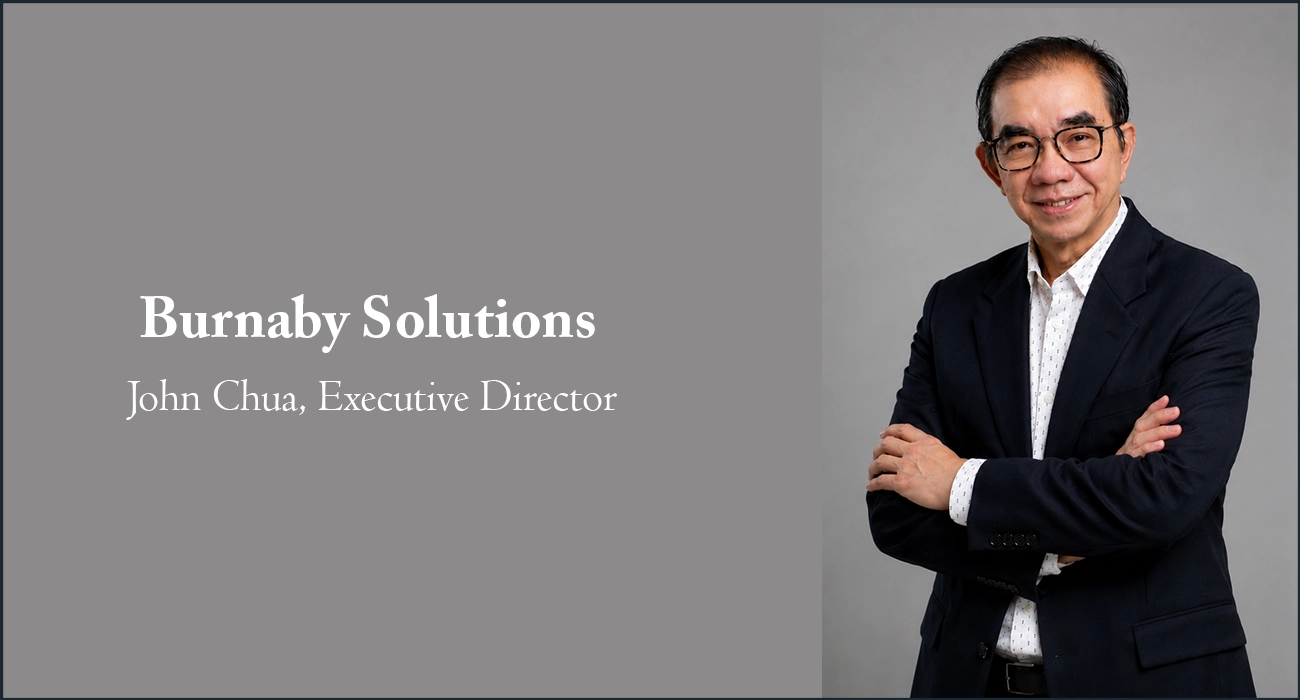
In this exclusive interview with Business Fortune, John Chua, Executive Director of Burnaby Solutions, discusses how the company is reshaping integrated operations across hospitality, travel, and the MICE industry and his vision to deliver seamless, technology-driven event execution backed by strong on-ground coordination.
Burnaby Solutions operates at the intersection of hospitality, travel, and event management. How would you define your core value proposition in today’s evolving MICE industry?
Our core value proposition lies in providing integrated, end-to-end hospitality and operational support for the MICE industry. We do not position ourselves simply as a travel agency, hotel booking provider, or transport coordinator. Our role is to help organisers manage the full hospitality journey of delegates, hosted buyers, speakers, VIPs, exhibitors, and corporate guests.
In today’s MICE environment, clients require more than isolated service providers. They need a partner who can understand the full event ecosystem — from hotel room block planning and delegate accommodation to airport arrivals, shuttle movements, onsite helpdesk support, and last-minute operational changes.
Burnaby Solutions brings these moving parts together. We act as the central coordination point between organisers, hotels, transport vendors, airport teams, and onsite staff. This helps reduce communication gaps, improve service consistency, and give clients better operational visibility.
Our strength lies in combining hospitality experience with hands-on ground execution. We understand that in events, small operational details can affect the overall delegate experience. A late coach, unclear pickup point, wrong rooming list, or delayed communication can create pressure for organisers. Our role is to anticipate these issues, coordinate quickly, and provide practical solutions on the ground.
What are the biggest operational or structural challenges currently facing the global events and hospitality sector, and how is your company addressing them?
The events and hospitality sector continues to face several key challenges, including rising operational costs, manpower constraints, changing travel patterns, fluctuating demand, and increasingly complex client expectations. International events also require greater contingency planning due to flight changes, supply chain disruptions, geopolitical uncertainty, and unpredictable delegate behaviour.
Another major challenge is fragmentation. In many events, accommodation, transport, travel, registration, and onsite support are handled by different parties. When communication is not centralised, organisers may find themselves managing too many vendors and resolving operational issues directly.
At Burnaby Solutions, we address this by building a more integrated operating structure. We support organisers through detailed pre-event planning, clear communication protocols, structured supplier coordination, scalable manpower deployment, and real-time onsite response.
For large events, we establish operational command channels involving organisers, hotels, transport vendors, airport coordinators, shuttle coordinators, and onsite teams. This allows information to flow quickly to the right people and enables faster decision-making when situations change.
We also place strong emphasis on accountability. Clients need confidence not only in the service promise, but also in how issues are handled when they arise. Our approach is to remain close to the ground, maintain visibility across service points, and support organisers with practical, timely solutions.
Technology is reshaping travel and event logistics. What role does digital transformation play in your operations, and where do you see the biggest room for innovation?
Digital transformation plays an increasingly important role in improving efficiency, accuracy, and communication in event hospitality operations. For Burnaby Solutions, technology is not about replacing human service. It is about giving our teams, clients, hotels, and partners better visibility so they can make faster and better decisions.
We use digital workflows to support hotel booking management, delegate communication, confirmation processes, rooming list coordination, reporting, and onsite updates. Online booking links, digital hotel confirmation letters, shared cloud-based rooming lists, and real-time communication channels help reduce manual errors and improve response time.
There is significant room for innovation in areas such as integrated event dashboards, automated delegate communication, AI-assisted logistics planning, predictive operational analytics, and real-time reporting for organisers. These tools can help organisers understand booking patterns, transport requirements, rooming status, and service issues more clearly.
At the same time, hospitality remains a people-driven industry. Technology can improve visibility and coordination, but it cannot replace the importance of human judgement, empathy, and service recovery. Our focus is therefore on combining digital tools with experienced onsite teams who can respond quickly and professionally.
The future of event management will depend on this balance — using technology to improve operational control while maintaining the personalised human touch that delegates and clients value.
How does Burnaby Solutions differentiate itself from traditional travel agencies and destination management companies in a highly competitive market?
Traditional travel agencies are often focused on air ticketing, hotel bookings, and transactional travel arrangements. Destination management companies may focus more on tours, local experiences, and destination programmes. Burnaby Solutions operates differently because our strength lies in integrated hospitality operations for business events.
We specialise in environments where accommodation, transportation, delegate handling, hosted buyer support, and onsite event logistics must work together seamlessly. Our team is involved not only before the event, but throughout the entire event cycle — from planning and contracting to rooming list management, airport arrivals, shuttle deployment, concierge support, onsite coordination, and post-event reporting.
This gives clients a single partner who understands both the hospitality and operational demands of the event. We are able to support hotel room block management, group arrivals, VIP handling, transport movements, left-baggage arrangements, hospitality desks, and issue escalation in a coordinated manner.
Another important differentiator is our hands-on operating style. We do not simply hand over bookings or vendor contacts. We stay actively involved in the coordination process and work closely with organisers, hotels, and suppliers to ensure responsibilities are clearly understood.
Our business is built on trust, transparency, and long-term relationships. We believe clients value partners who are responsive, accountable, and willing to take ownership of the operational details that affect the success of an event.
Sustainability is becoming a key expectation in global events. What steps are you taking to make your hospitality and event operations more sustainable and responsible?
Sustainability is increasingly important across the events and hospitality industry, and we recognise our responsibility to support more responsible event operations.
For Burnaby Solutions, sustainability must be practical and operationally achievable. We encourage digital documentation to reduce paper usage, including digital hotel confirmation letters, shared digital rooming lists, and online communication workflows. This reduces unnecessary printing while also improving efficiency and accuracy.
In transport planning, we support consolidated movement strategies wherever possible. For example, where delegates are staying near designated shuttle hotels, common coach pickup points can help reduce unnecessary vehicle deployment and improve route efficiency. We also encourage operational practices such as switching off coach engines while vehicles are parked, reducing unnecessary fuel usage and emissions.
In hospitality planning, we work with hotel partners that adopt recognised environmental practices, such as energy-efficient systems, reduced single-use amenities, paperless check-in options, and sustainability certifications where available.
We also support circular practices within event operations, including the reuse of luggage tags, signage materials, and operational templates where practical. These may seem like small measures, but across large events, they contribute to reducing waste and improving responsible operations.
Moving forward, we believe sustainability should become an integral part of event planning rather than an afterthought. Our role is to help clients adopt practical measures that support sustainability without compromising service quality.
Can you share how your company’s approach has evolved to better support clients in managing complex, multi-location international events?
Over the years, our approach has evolved from supporting individual event functions to managing more integrated and complex event hospitality programmes. International events today often involve multiple hotels, different delegate categories, staggered arrival patterns, hosted buyers, VIPs, speakers, exhibitors, and regional participants arriving from different countries.
Managing this complexity requires more than booking services. It requires structured planning, supplier alignment, real-time communication, and the ability to respond quickly when unexpected situations arise.
We have strengthened our project management capabilities, standardised our communication workflows, and improved our operational escalation processes. We also place greater emphasis on pre-event briefing, onsite command channels, contingency planning, and post-event review.
For multi-location and regional events, consistency is especially important. Clients need assurance that delegates receive a similar level of service across different hotels, airports, venues, and destinations. Burnaby Solutions supports this by creating clearer operating procedures, stronger supplier coordination, and centralised reporting structures.
Our experience has shown that successful event hospitality depends not only on planning, but also on adaptability. Even with strong planning, last-minute changes will happen. The ability to respond quickly, communicate clearly, and maintain service standards is what makes the difference.
Looking ahead to 2026, what strategic priorities or innovations do you believe will define Burnaby Solutions as a company to watch in the industry?
Looking ahead, our strategic priorities are focused on operational integration, technology adoption, regional expansion, and service innovation.
We aim to strengthen Burnaby Solutions’ position as a trusted integrated hospitality and event operations partner for exhibitions, conferences, corporate events, hosted buyer programmes, and international delegations across Singapore and the region.
Technology will continue to be an important area of investment. We want to improve digital workflows, reporting visibility, booking management, delegate communication, and operational tracking. These improvements will help clients gain better control over event hospitality arrangements and allow our team to respond faster on the ground.
We are also focused on building stronger partnerships within the hotel, transport, travel, and event ecosystems. Large-scale events require collaboration, and the quality of these partnerships directly affects service delivery.
Most importantly, we believe the future belongs to companies that can combine technology with strong operational discipline and personalised client support. Events are becoming more complex, but clients still value responsiveness, reliability, and human service.
Burnaby Solutions intends to continue growing in this direction — supporting clients with practical solutions, strong coordination, and the ability to deliver seamless hospitality experiences behind the scenes.
About | John Chua
John Chua is the Executive Director of Burnaby Solutions, with extensive experience in hospitality operations, travel management, and MICE event coordination. Over the years, he has been involved in managing accommodation logistics, transportation planning, and integrated event operations for international exhibitions, conferences, and corporate events across the region.
With a strong operational background and hands-on leadership style, John has focused on building Burnaby Solutions into a company known for reliability, adaptability, and integrated service delivery within the hospitality and events industry. His experience spans hotel coordination, delegate management, transportation logistics, and strategic event planning, with a commitment to delivering operational excellence and long-term client partnerships.


.webp)